Economic Growth
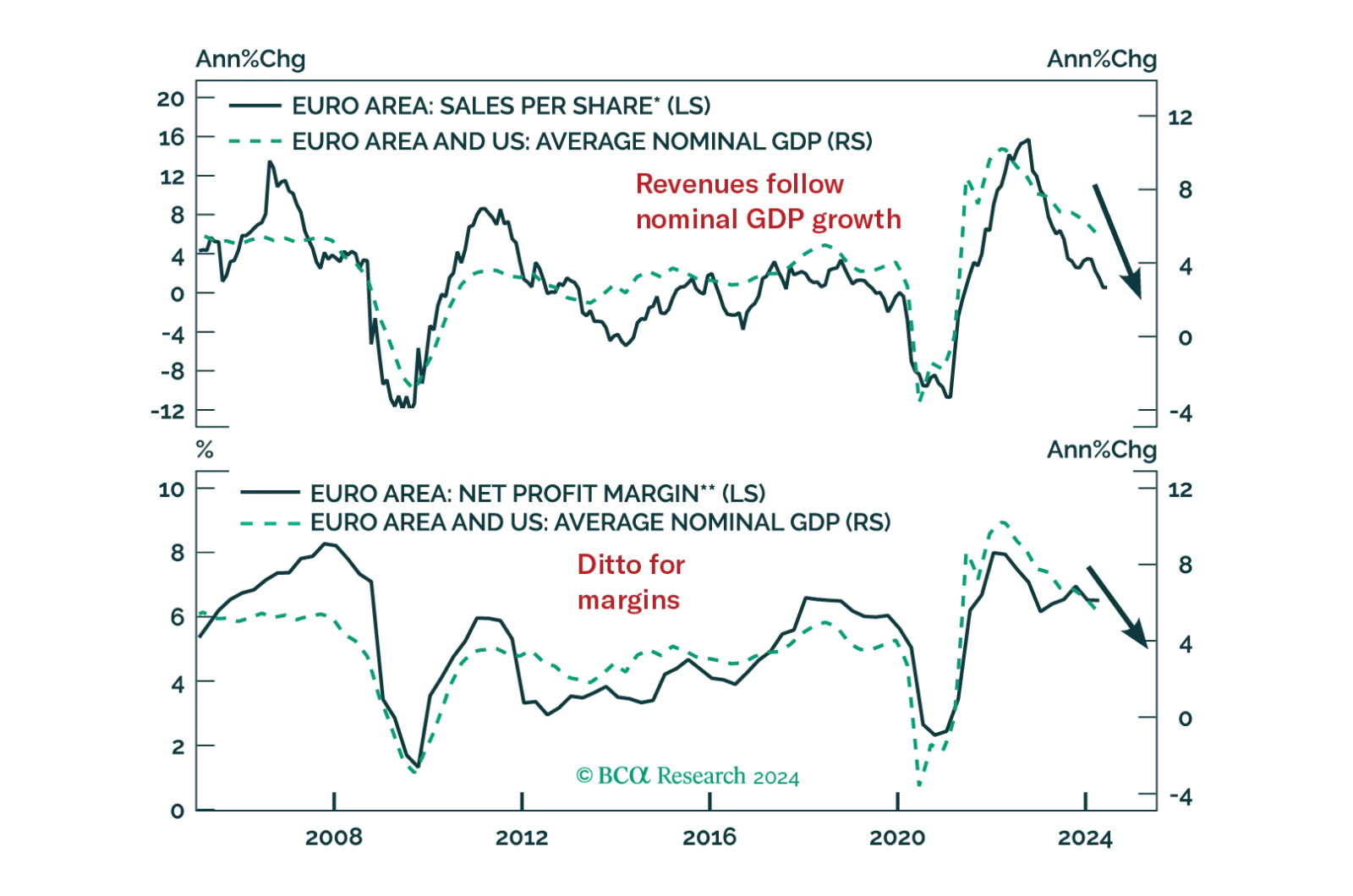
The real threat to European equities is growth, not political risk. How low will Eurozone earnings fall during the coming recession and how much will equities decline in response?

Subdued demand for credit among Chinese private-sector businesses and households persisted through June. The stock of outstanding bank loans grew by 8.3% year-on-year, marking the slowest pace since records began in 2003. Additionally, bond issuance from…
After having peaked in mid-April, Citigroup’s global economic surprise index has been in negative territory for the past few weeks. The sub-zero reading indicates that economic data have been surprising to the downside and signals deteriorating economic…
According to BCA Research’s Global Investment Strategy service, investors are overstating the degree to which bond yields will rise under a Trump presidency. For one thing, the team expects the US to fall into recession by the end of 2024 or early 2025. A…
South African stocks, domestic bonds, and currency have all rallied since BCA’s Emerging Markets Strategy team upgraded South African assets last month following the formation of the new national unity government. The rally's persistence, however, will depend…
An investor looking at the low unemployment rate and elevated job vacancy rate could reasonably conclude that the US expansion will continue. However history suggests that recessions often start seemingly out of the blue. Solid growth in the fourth quarter…
According to BCA Research’s Emerging Markets Strategy service, extremely disappointing corporate profit growth has been the main reason for EM's poor equity performance in absolute terms and massive underperformance relative to the US/DM. EM earnings per…
As highlighted in Wednesday’s edition of BCA Live & Unfiltered, the Chinese economy and its financial markets face several daunting challenges. Its demographic outlook is unfavorable, with a low birthrate stifling population growth; the grim math of…
Copper has experienced a roller-coaster ride so far this year, with front-month futures on the Chicago Mercantile Exchange gaining nearly 40% from early February to late May, tumbling nearly 15% in just over five weeks, and bouncing around 7% over the last…
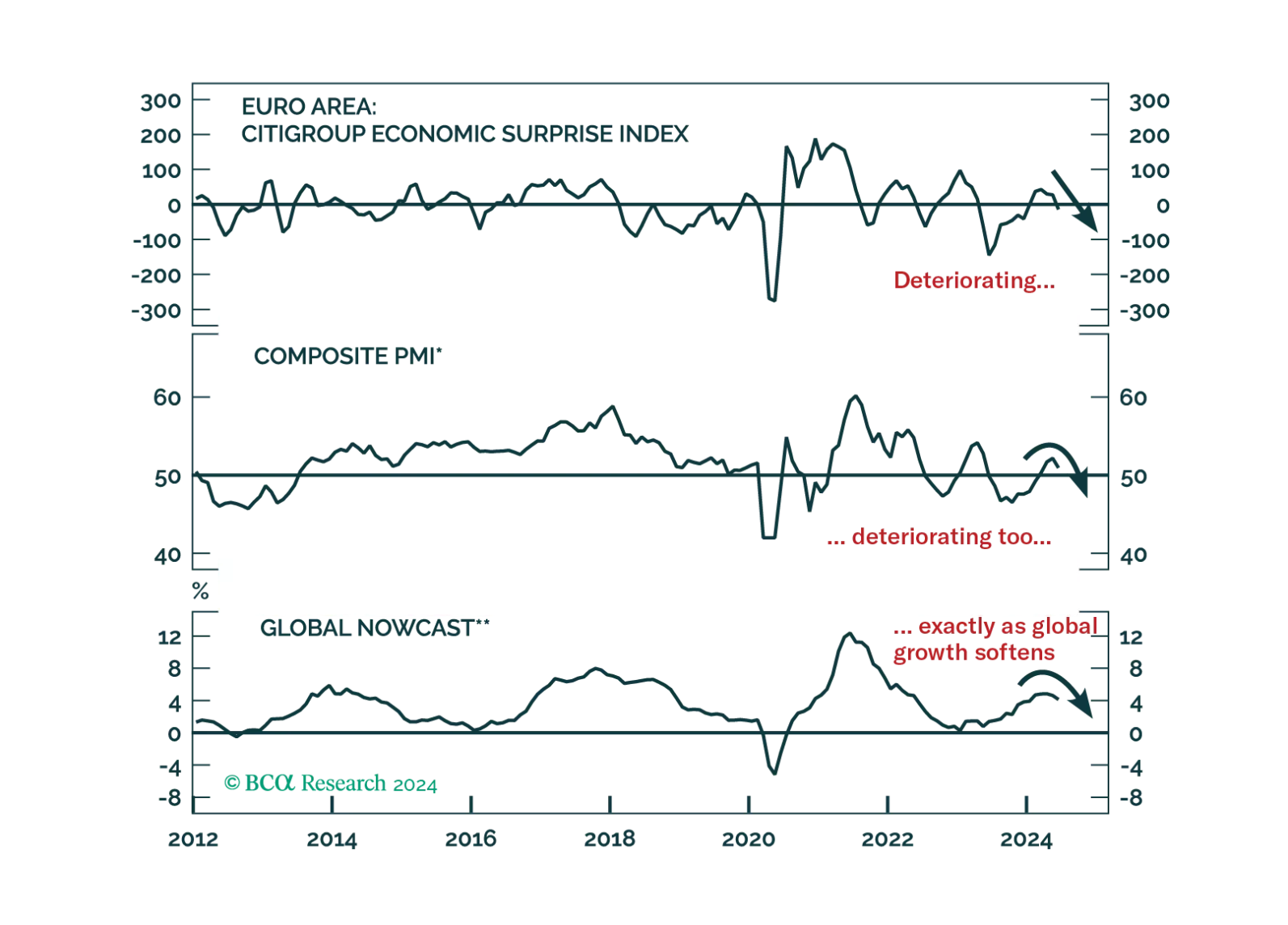
Does the incipient slowdown in European data herald a soft landing and a goldilocks period for equities? We have our doubts.