Sorry, you need to enable JavaScript to visit this website.
Skip to main content

Economy

The redeployment of pandemic-era excess savings has been a significant driver of US consumption growth and helped the economy avoid a recession last year. Although pandemic-era fiscal support was less generous in China, households nevertheless accumulated CNY…
Sweden is a small export-oriented economy and its high sensitivity to global trade makes it a good bellwether of global growth developments. The headwinds from high borrowing costs are relatively more pronounced in Sweden where a large share of households…

We close our overweights to Energy and Aerospace & Defense. The macroeconomic backdrop is deteriorating for Energy. As for A&D, the good news is already priced in.

Although the comprehensive economic surprise indexes continued weakening in May, the metrics in our equity downgrade checklist haven’t softened enough to check more boxes now. While we continue to expect the US economy will enter a recession before year end, it is not yet certain and we remain tactically neutral.

The ECB is now firmly in easing mode, even if it refuses to pre-commit to a specific rate path. What does this data dependency mean for the euro and European yields?

US nonfarm payrolls grew by 272 thousand in May, accelerating from 165 thousand in April, and swamping expectations of 180 thousand. Average hourly earnings increased by 4.1% y/y from an upwardly revised 4.0%. However, the unemployment rate unexpectedly…
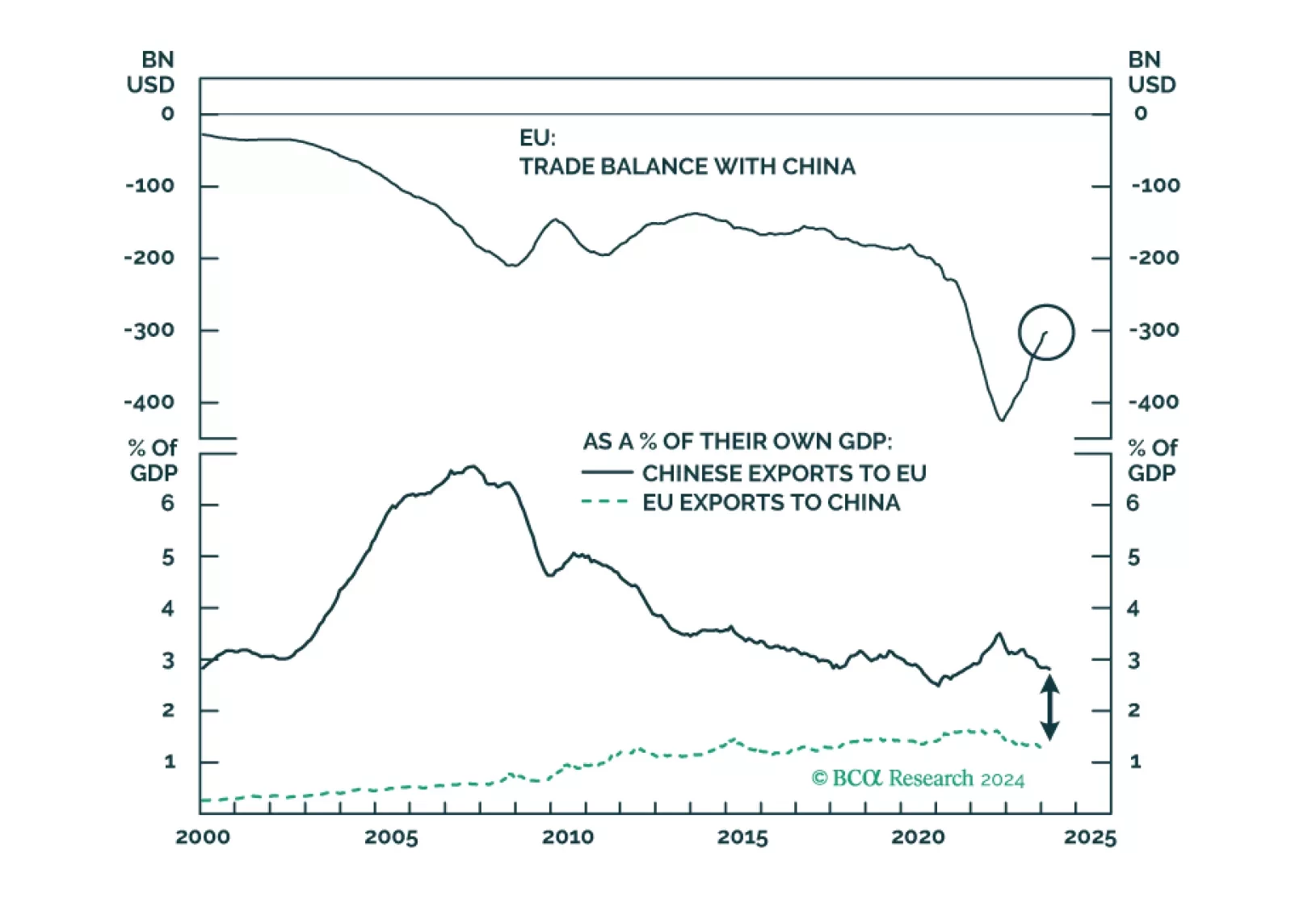
China’s exports in USD terms surged 7.6% y/y in May, from 1.5% in April, surpassing expectations of a 5.7% gain. However, base effects largely overstate the strength of Chinese exports given that they contracted by 8% y/y in May 2023. Subsequent declines…
Global growth expectations for 2024 have been revised higher. Investors now forecasts 2024 GDP growth to clock in at 3%, up from 2.6% at the beginning of this year. A 1.1% upward revision in US growth expectations since January is driving the increased…
Our colleagues at Global Investment Strategy have shown that postwar US (and global) manufacturing cycles have tended to last 3 years, divided equally between an 18-month up leg and an 18-month down leg. This framework has been a useful gauge for the…

US Treasury yields bounced after this morning’s employment report. We offer our updated views about how long the recent trading range will hold.