Sorry, you need to enable JavaScript to visit this website.
Skip to main content

Economy

The broad market took a significant step backward in April, as market jitters gripped investors, stoking fears of higher for longer monetary policy. However, our roundtable investor poll has demonstrated that the majority remain constructive on equities, and have plenty of cash ready to be invested, which could prolong the rally. Economic data is deteriorating while inflation is stubborn. However, so far, bad news is good news as many believe that a “Fed put” is still on.

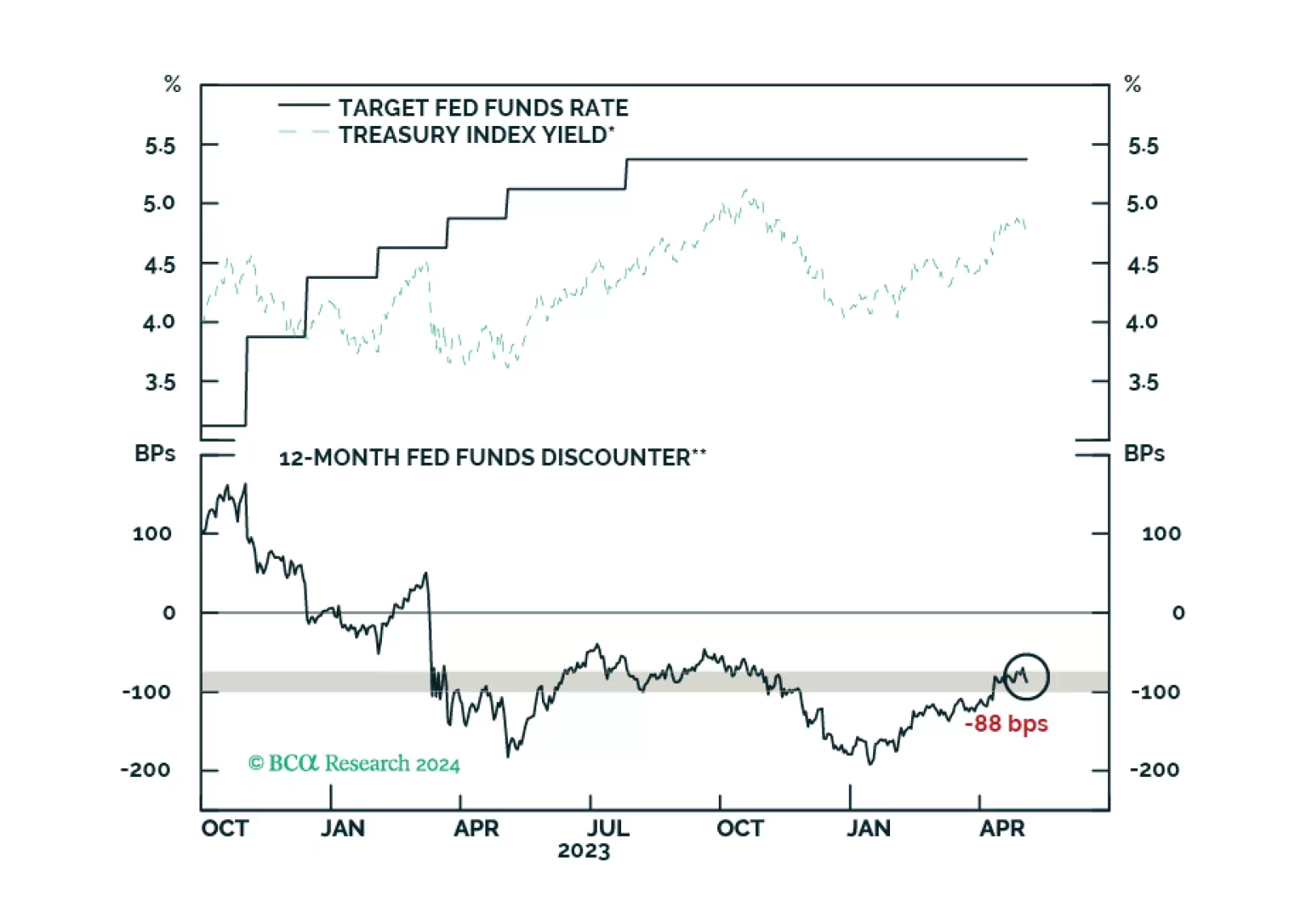
Average hourly earnings growth slowed to 0.2% m/m in April from 0.3% m/m in March and came in below expectations. On a year-on-year basis, they decelerated from 4.1% to 3.9%, the lowest since June 2021 and below expectations of 4%. Nonfarm payrolls growth…
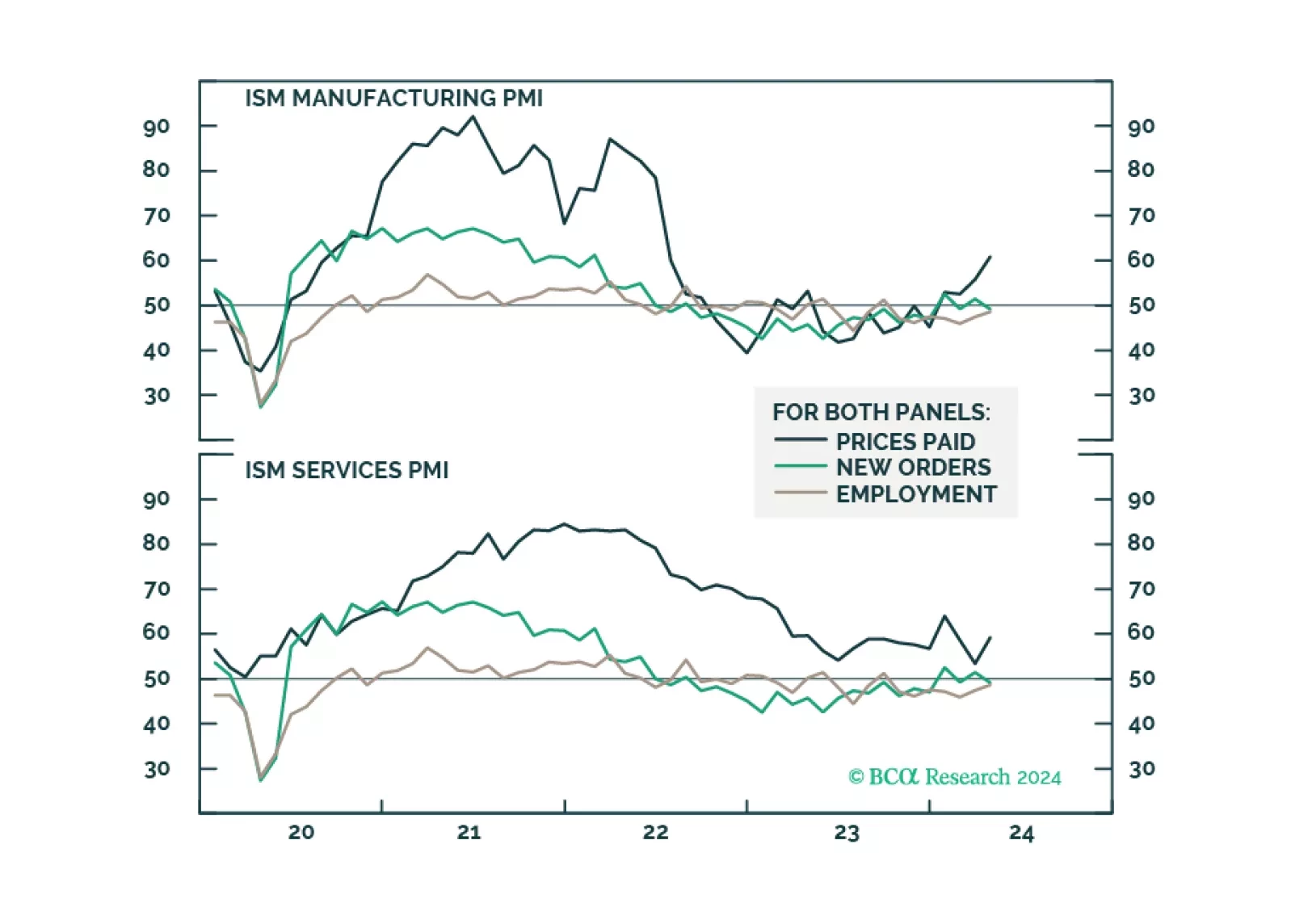
The ISM Services PMI largely disappointed in April. The headline index fell to 49.4 from 51.4, below expectations of a faster pace of growth. April’s contraction ends a streak of 15 consecutive months of services-sector expansion. Two alternative…
The Federal Reserve has a target inflation of 2%. But what level of inflation does the American public actually prefer? A recent NBER paper titled “Inflation Preferences” by Afrouzi, Dietrich, Myrseth, Priftis, and Schoenle surveyed one thousand…
The cyclical outlook is gloomy for EUR/USD. We subscribe to neither the soft-landing nor the no-landing view and expect a recession to occur in late 2024/early 2025. The pro-cyclical euro would suffer in a global downturn while a recession would support the…
According to BCA Research’s Commodity & Energy Strategy service, commodity prices typically rally toward the end of the business cycle. In the past six recessions, the S&P 500 peaked before commodity prices. While there is significant variability…

Some thoughts on this morning’s employment report and recent trends in US economic data.
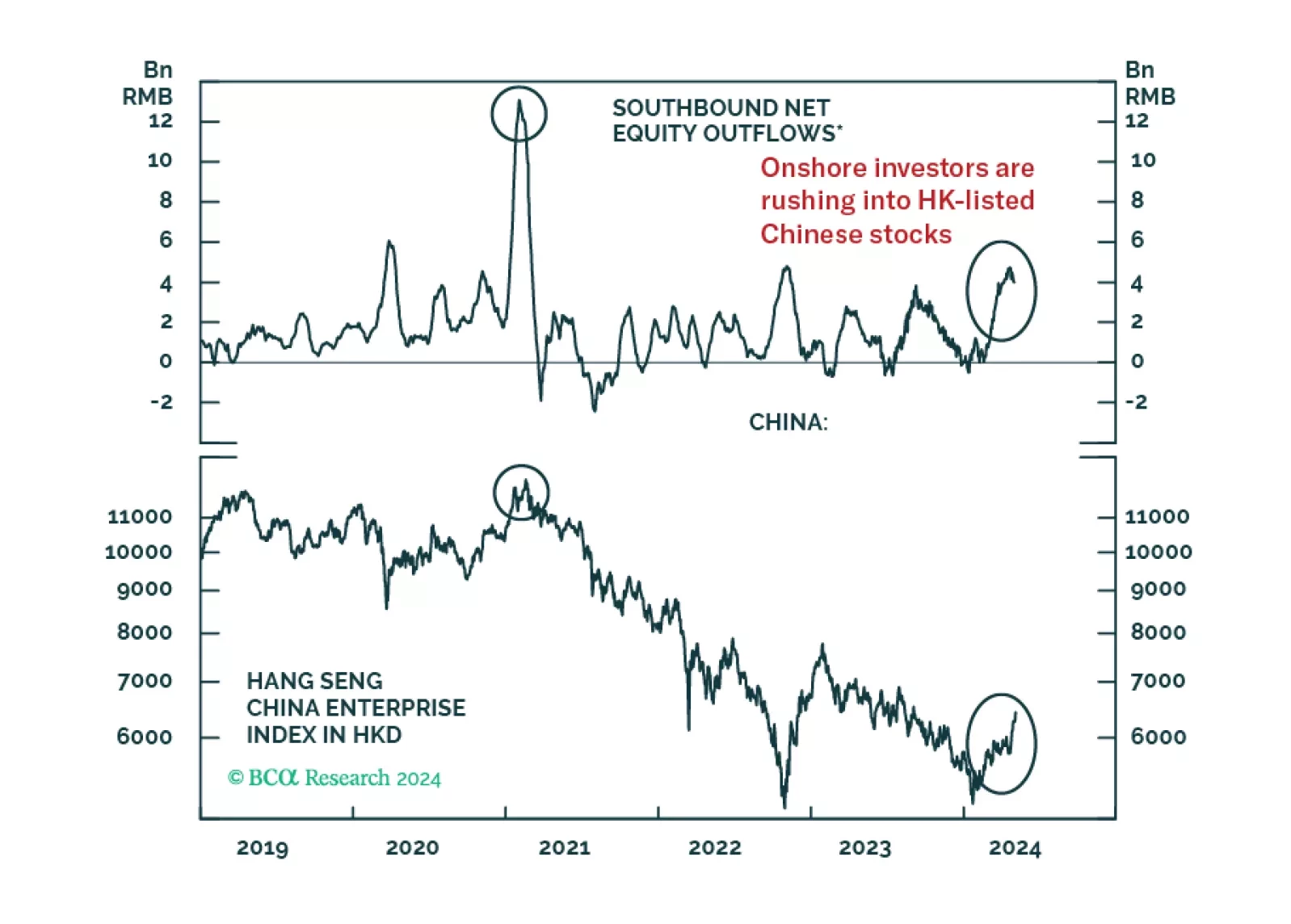
Mainland residents’ investments in gold, other metals, and Hong Kong-traded stocks are a form of capital outflow. Chinese authorities will counter any excessive capital flight with stricter administrative controls. Thus, markets benefiting from these flows will likely be hurt.
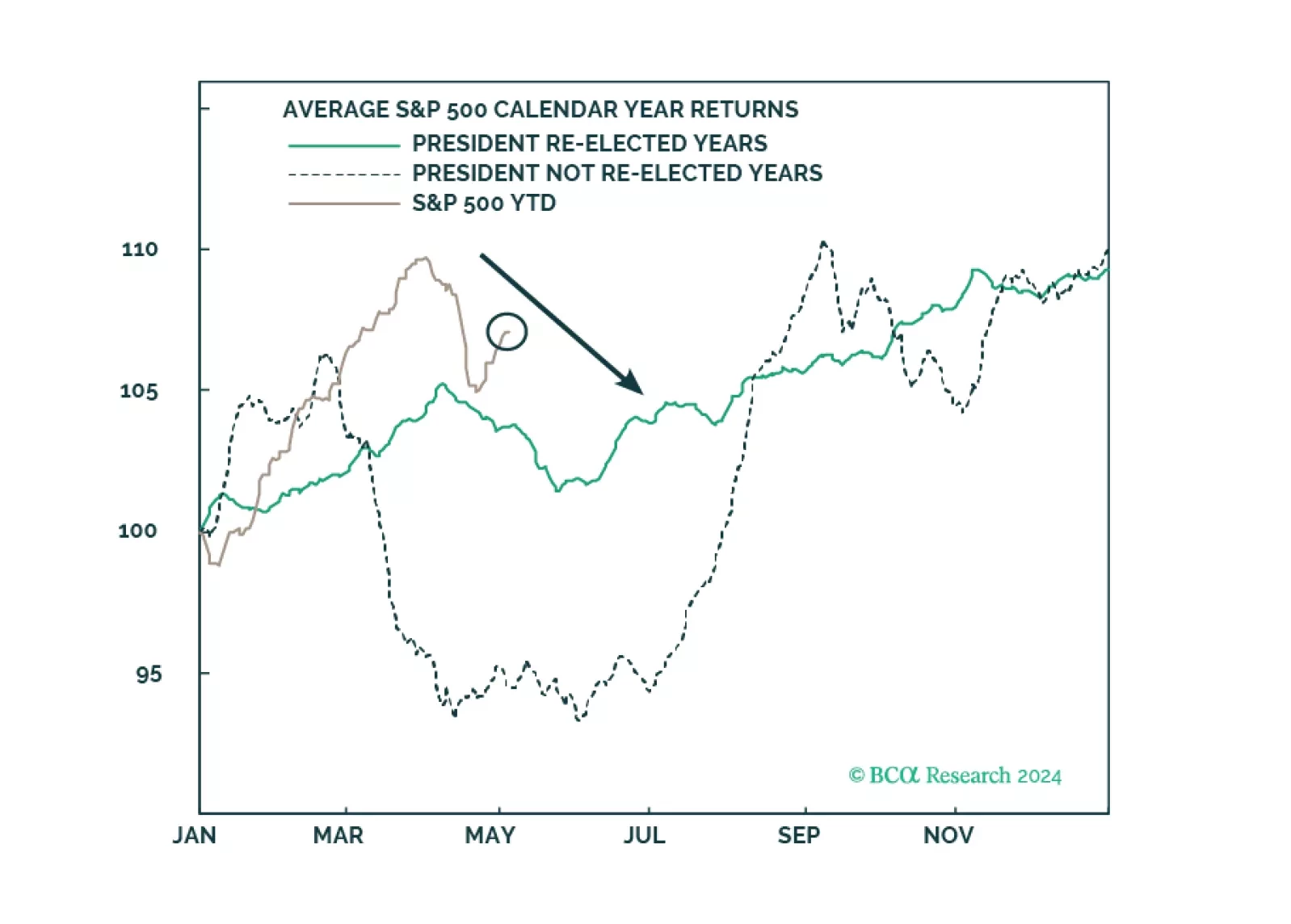
Investors should prepare for economic data to weaken even as policy uncertainty and geopolitical risk skyrocket ahead of the US election.

The preliminary nonfarm labor productivity estimate increased by an annualized 0.3% in Q1, below both the previous quarter’s 3.5% rate and expectations of 0.5%. Meanwhile unit labor costs increased by 4.7% annualized in Q1, a sharp acceleration from 0.4% in…