Sorry, you need to enable JavaScript to visit this website.
Skip to main content

Equities

The preliminary February University of Michigan Consumer Sentiment Index missed estimates, falling to 67.8 from 71.1 in January. The decrease came from both expectations and the assessment of current conditions. Measures of 1-year and 5-10 year inflation…

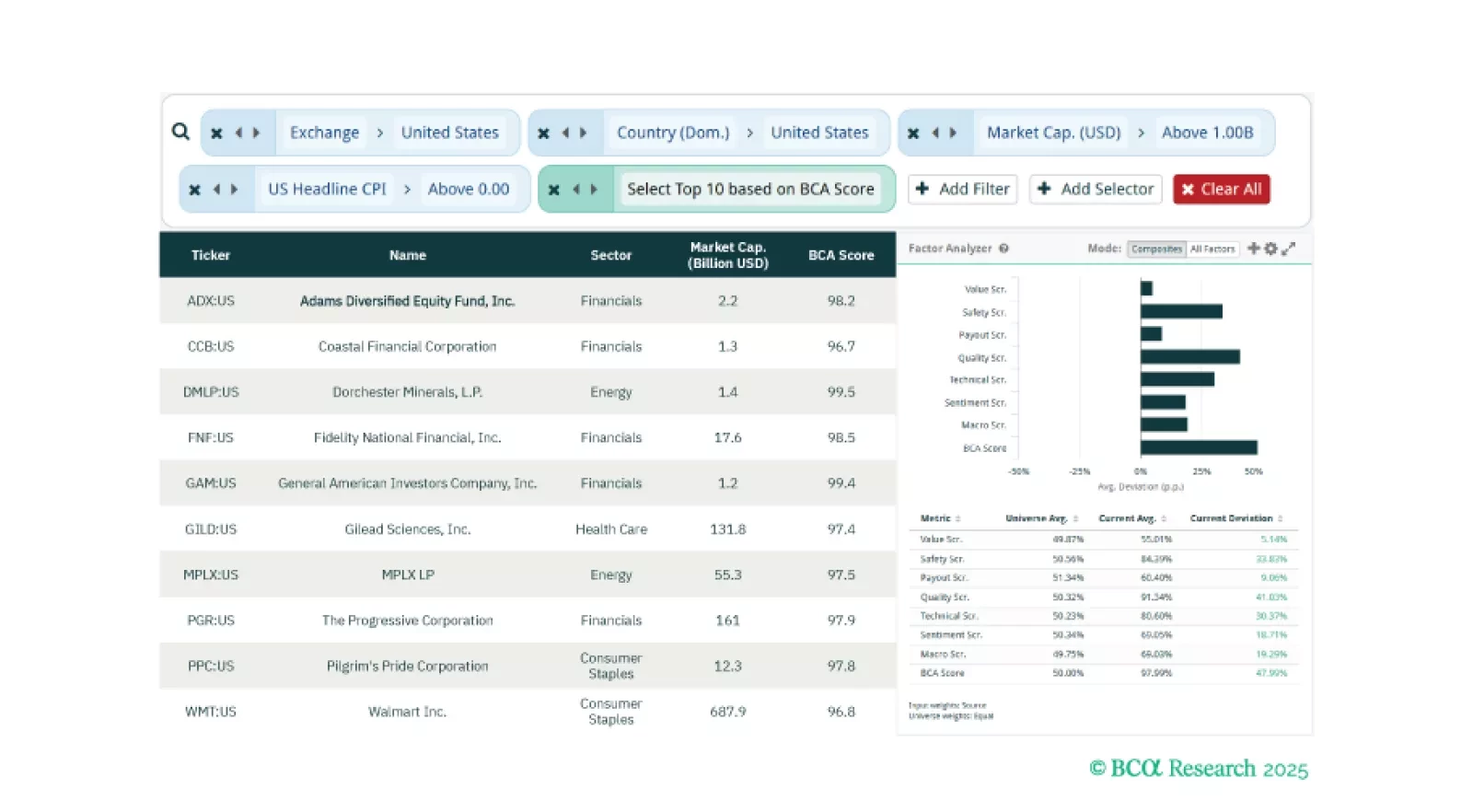
This week, our three screeners focus on providing equity insights based on the impact of tariffs, and trade policy uncertainty in general, helping clients identify stocks exposed to these shocks.   

The January ISM Services missed estimates, decreasing to 52.8 from 54.0 in December. The move was driven by activity components, while employment and suppliers’ delivery times increased. Additionally, the prices paid measure decreased, reversing the…
 China’s Caixin PMIs decelerated in January, with the composite ticking down to 51.1 from 51.4. The decrease was driven by both manufacturing, which fell to 50.1 from 50.5, and services, which fell from 52.2 to 51.0. The data is consistent with the…
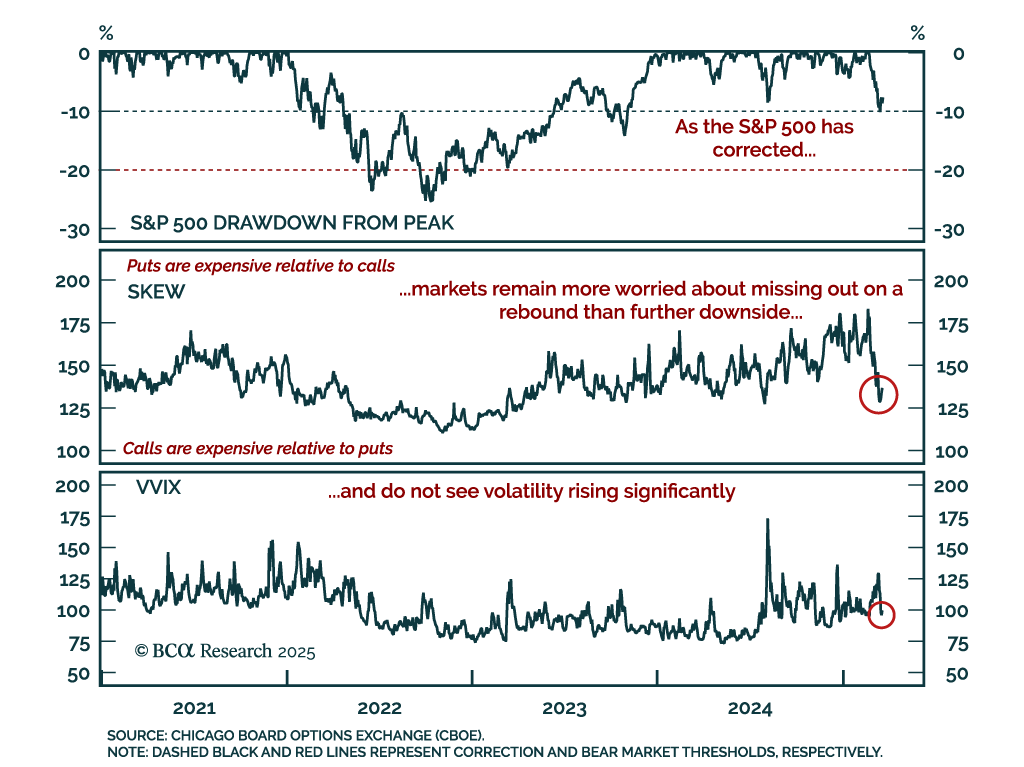
Despite disruptive headlines, equity market volatility remains contained. The S&P 500 has been in a tight range since the last VIX spike, and news of a disruptive, cheaper AI technology has not sustainably brought down US tech stocks. Both implied and…

The US High-Quality (USHQ) portfolio slightly outperformed in January, returning 3.4%, whilst its SPY benchmark returned 2.9%. That said, we think the USHQ portfolio will have a solid run through the first half of 2025, benefitting from rising market risk on the back of President Trump’s tariff agenda. USHQ’s underlying Quality and Safety Score factor tilts will be increasingly favored as market uncertainty grows.  

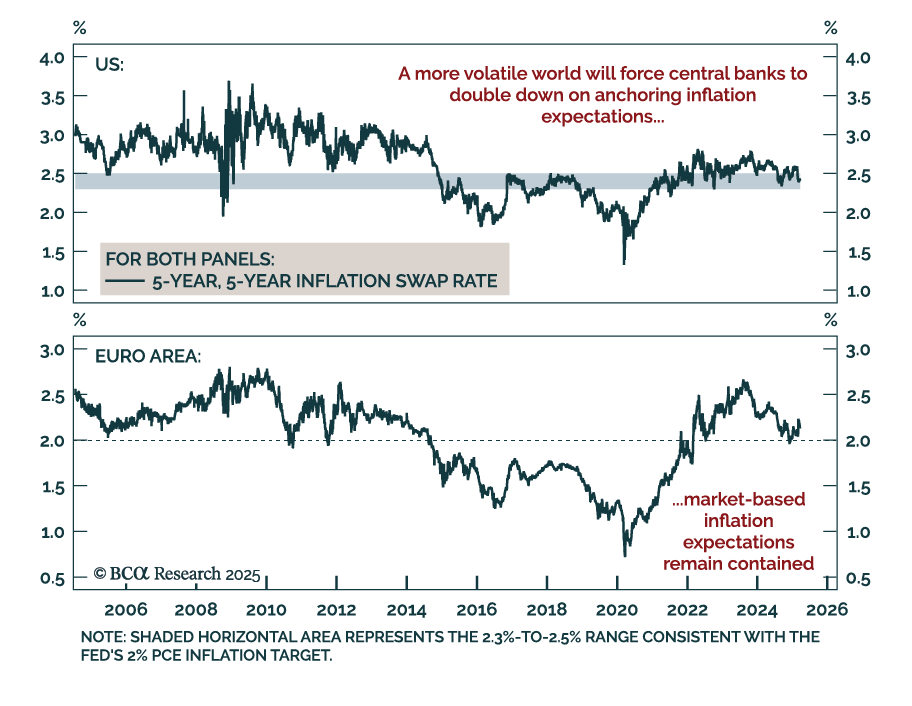
Trade tensions muddy the outlook for global central banks. The 2010s were an era of low growth and low inflation that called for easy monetary policy. The post-COVID era has been marked by overheating and high inflation calling for tight policy. The second…
President Trump shot the opening salvo of his second trade war, announcing 25% tariffs on Canada and Mexico, with a more modest 10% on China and Canadian energy. Both countries retaliated with tariffs and non-tariff measures. Financial markets initially sold…

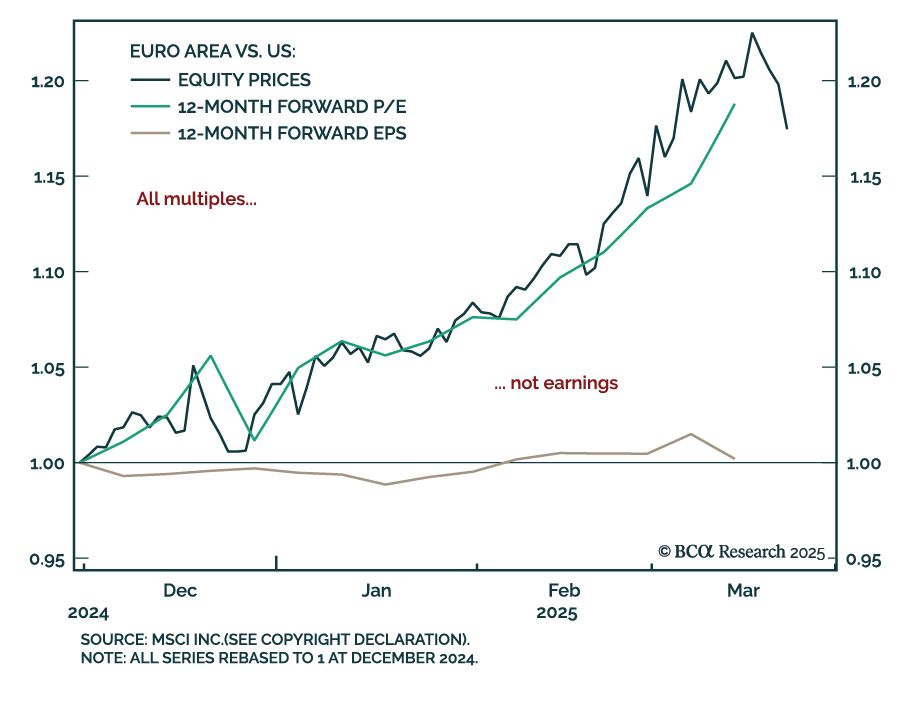
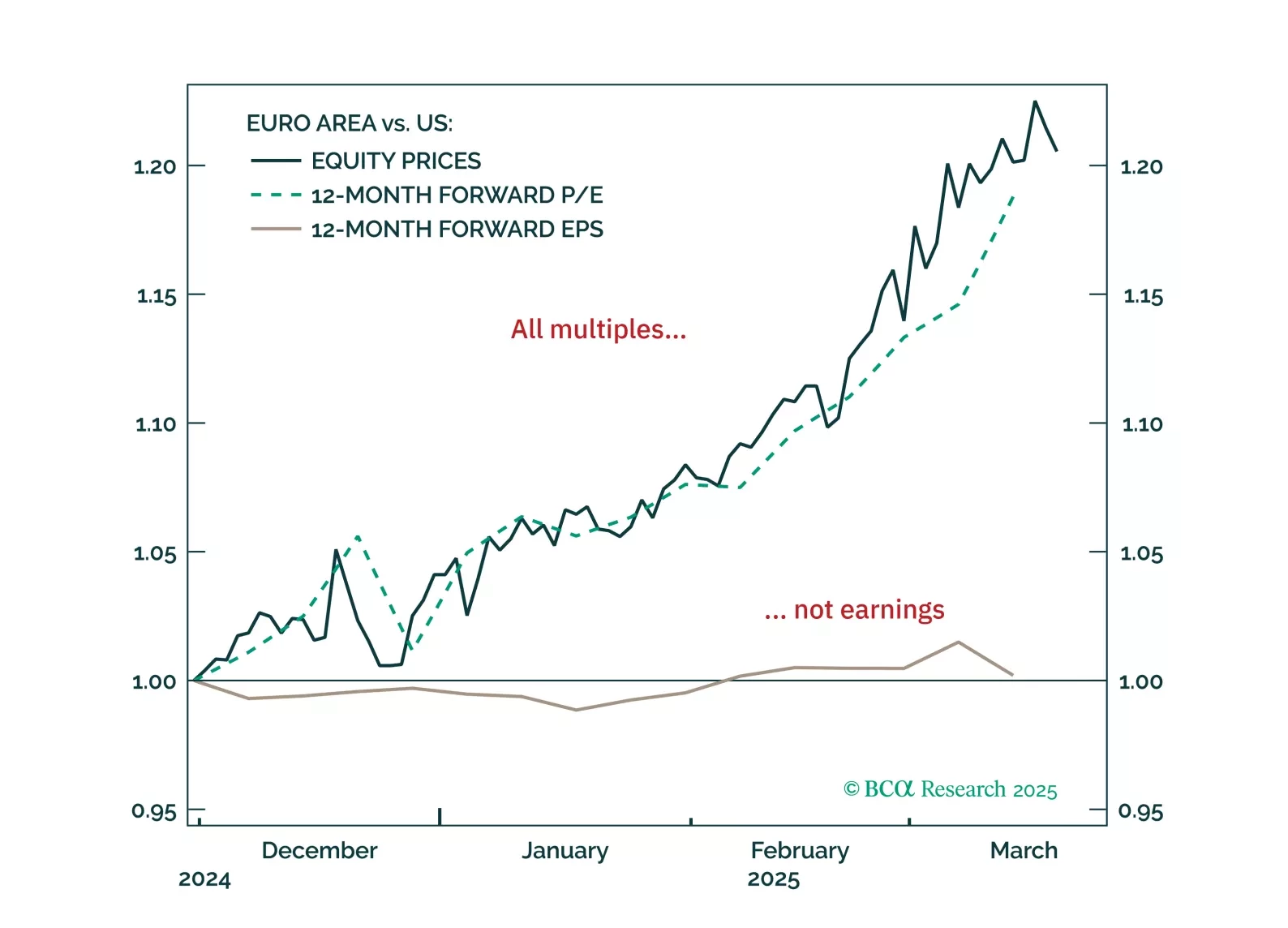
Markets and forecasters anticipate a “Golden Age” for Trump’s America, with US growth expectations soaring while the rest of the world lags. However, this extreme optimism means that there is a lot of room for disappointment. Cooling income growth, weak housing and less deficit spending than expected will result in US growth underperforming expectations. Maintain a modest underweight to equities and modest overweight to fixed income. US markets have become more expensive relative to the rest of the world even as quality differentials have stabilized. Prepare to downgrade US equities to underweight and to upgrade Euro Area and China to overweight. We will wait to pull the trigger until we have more clarity on trade policy and when the dollar's momentum turns negative.

The latest version of the MacroQuant model suggests that the bull market in US stocks is winding down. The model expects Treasury yields to fall later this year but is not ready to go long duration just yet.