Sorry, you need to enable JavaScript to visit this website.
Skip to main content

Geopolitics

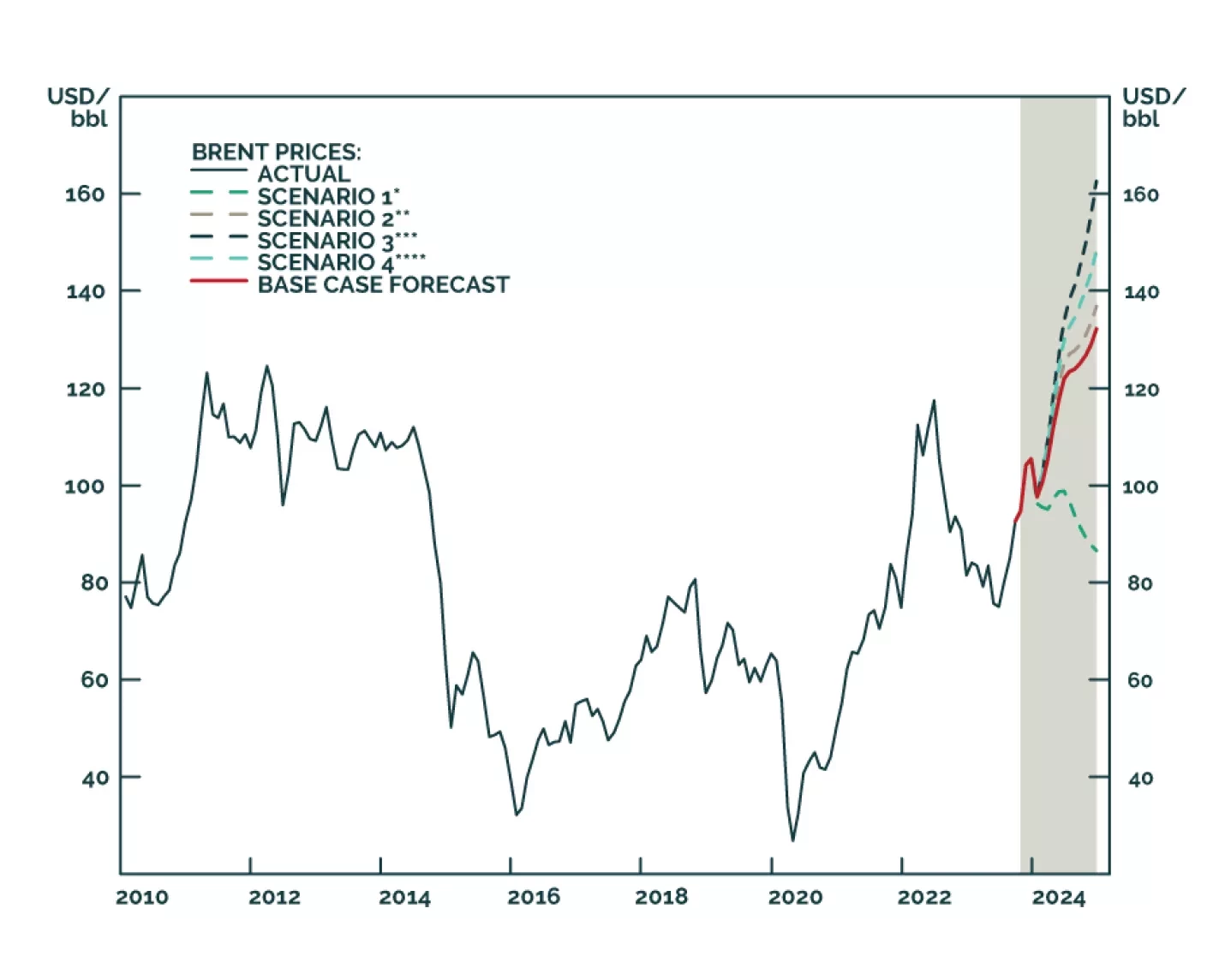
The odds of Russia cutting oil output will rise going into 4Q23, as Ukraine’s endgame increases pressure on it, and it actively seeks to undermine President Biden’s re-election. We reckon a 2mm b/d cut would push Brent above $140/bbl by December 2024. This would push inflation and inflation expectations higher and raise the odds of more Fed rate hikes. BCA Commodity & Energy Strategy will remain long the COMT and XOP ETFs. At tonight’s close, we will be getting long December 2024 $100/bbl Brent calls.

The Supreme Court is a generator of certainty rather than uncertainty for US markets. In the event of a constitutional crisis, a court intervention will likely reduce volatility.

BCA Research’s Commodity & Energy Strategy service expects steady demand for EVs will be able to absorb increasing lithium supplies in the short-to-medium term. The team is getting long the LIT ETF at tonight’s close. Demand for lithium-ion batteries…

In Section I, we audit the market’s “soft landing” narrative in response to a meaningful challenge to our cautious stance from recent financial market developments. We acknowledge that US economic growth was stronger in the first half of the year than many investors expected, but we are unmoved by the recent uptick in “soft landing” hopes. A “soft landing” outcome very likely necessitates interest rate cuts before recessionary dynamics emerge, and it is far from clear that rate cuts or (especially) an easy monetary policy stance are likely to materialize over the coming year. As such, we continue to believe that conservative portfolio positioning is appropriate. In Section II, we discuss some simple approaches that we use when valuing the major asset classes that we cover. We conclude that global ex-US equities and ex-US developed market currencies are the main assets that can be considered “cheap” today.

Wheat and corn prices have surged by 16% and 11%, respectively since Russia refused to renew the Black Sea Grain Initiative after it expired on July 17. The deal, which was negotiated with Turkey and the UN, allowed shipments of Ukrainian grain from Odessa. …

The snap election which took place on Sunday resulted in a political deadlock in Spain. No single party has won enough seats to form a government. More importantly, both the left-wing bloc and the right-bloc fell short of the 176-seat majority needed in the 350-seat lower house. Negotiations are taking place as we publish, but neither side can see a clear and straightforward path to form a working government. Spain is heading into a political deadlock.

The looming risk of an economic downturn, geopolitical risk and inconsistent government policy are feeding commodity markets with volatility, additional to the market specific uncertainty-generating factors. Amidst heightened event-based uncertainty and a possible general economic deterioration, investors will pay more attention and react to events, increasing overall uncertainty levels, which in turn will further fuel commodity price volatility. Commodity producers will be disincentivized from making future supply investments against heightened price volatility and policy uncertainty.

Spain is holding a general election this Sunday and the country is likely to veer to the right. Will this shift threaten European unity and herald a new period of tensions in the Eurozone?

China’s slowdown confirms BCA’s Geopolitical Strategists’ view that persisting structural challenges would cause China’s economic reopening to disappoint (see The Numbers). In this context, Canada and Mexico are two notable markets that are largely…

Falling inflation enables central banks to pause rate hikes, which is good news. But time goes on. Restrictive monetary policy, Chinese debt-deflation, energy supply shocks, US and global policy uncertainty, and extreme geopolitical risks will undermine hopes of a soft landing and beautiful disinflation.