Global
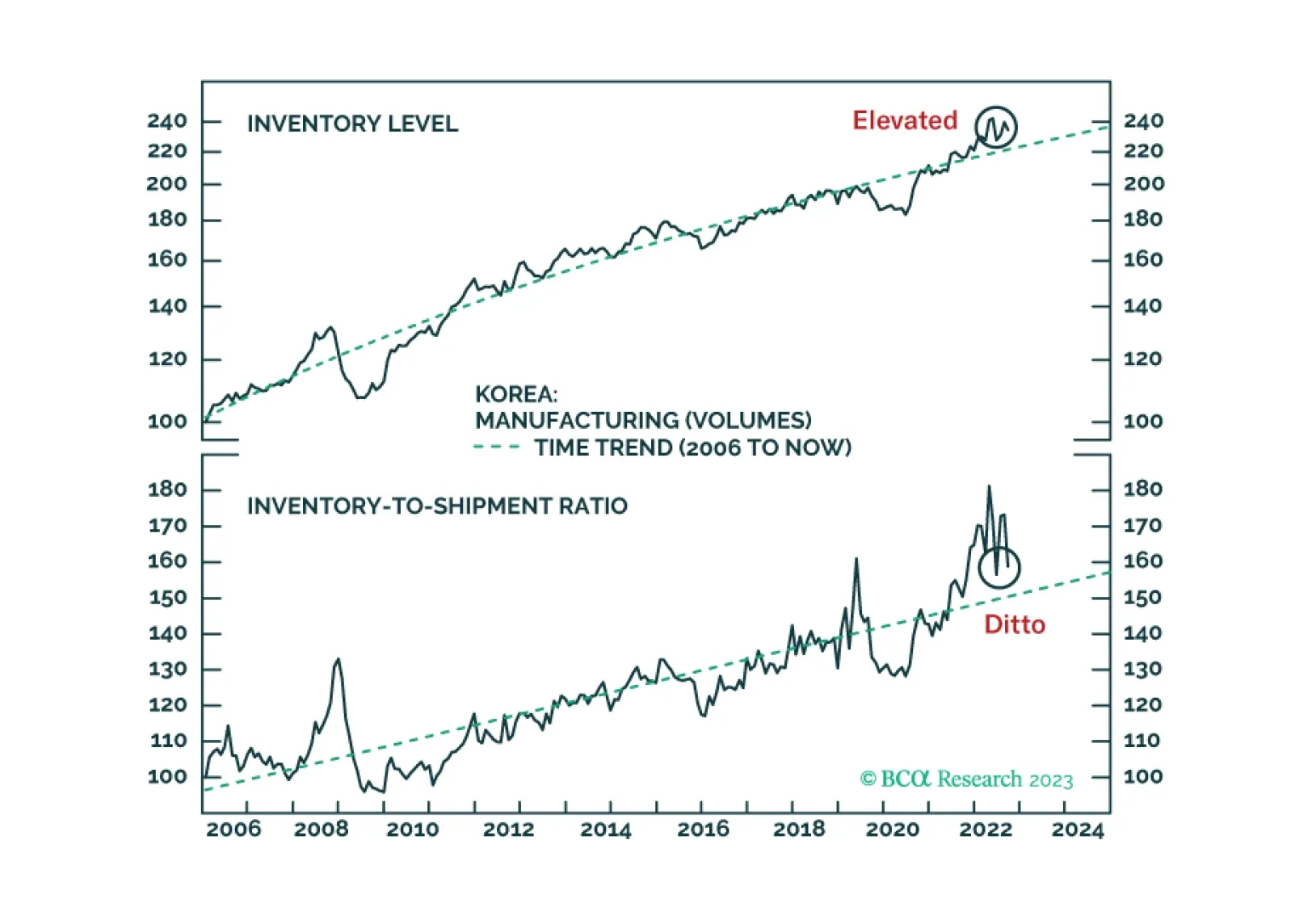
Contrary to the prevalent belief in the global investment community, goods/merchandise inventories in the US and East Asia are rather elevated. Financial markets respond to final demand fluctuations, not inventory restocking. Global manufacturing/trade will continue contracting, even though the pace of contraction might moderate in the near run. We recommend that investors fade the current rally.

Global equities have had a stellar 2023, rising by 16% year-to-date and outperforming global bonds by roughly the same amount. However, the large concentration of US stocks in the Magnificent Seven has called into question the legitimacy of this rally. There…
After dipping into negative territory between June and early August, the Global Economic Surprise Index has since rebounded, signalling an improvement in economic momentum. Initially, this rebound was isolated to the US. However, the trend has been broadening…
To the extent that Taiwanese export orders act as a bellwether for global trade dynamics, we often monitor the release to gain a sense of the state of the manufacturing cycle. On this front, the October update provided a positive signal. The pace of decline…
Singapore is a small open economy that is highly sensitive to fluctuations in the global manufacturing activity. As such, Singapore’s non-oil domestic exports (NODX) are a bellwether for global growth. Singapore’s NODX delivered an upside surprise on…
BCA Research's Commodity & Energy Strategy service continues to expect Russia to reduce oil exports next year by up to 2mm b/d (25% probability), in an effort to reduce US President Biden’s chances of being re-elected. Resilient oil exports and global…
Throughout most of the second half of this year, the copper-to-gold ratio has been relatively stable, gyrating within a tight range. However, it is starting to show some tentative signs of bottoming. After the copper-to-gold ratio initially fell in the first…
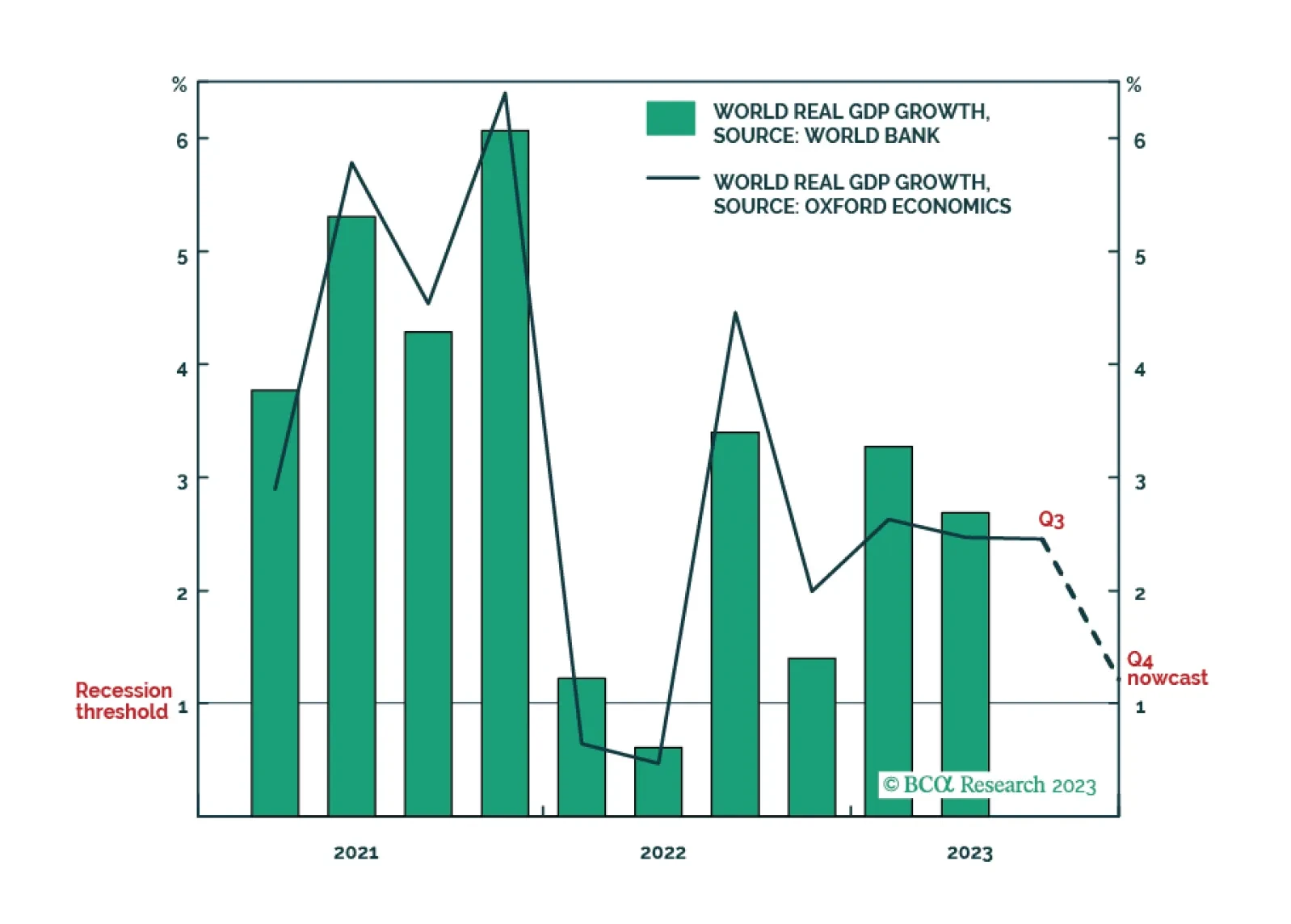
The latest ‘nowcast’ for world economic growth in the fourth quarter has plunged to just 1.2 percent, marking the cusp of another world recession. One important implication is that expectations for oil demand growth and industrial metal demand growth are way too optimistic.
Our equally weighted global cyclical equity index has outperformed equally weighted defensives for most of this year. By October 17, this outperformance stood at about 12.6%. This outperformance is consistent with US Treasury market dynamics. The relative…
In the short run – i.e., over the current Northern Hemisphere winter – natural gas storage levels will be sufficient to balance heating and industrial demand with flowing supplies, assuming a normal winter in the EU and US, according to our colleagues at BCA…