Sorry, you need to enable JavaScript to visit this website.
Skip to main content

Labor Market

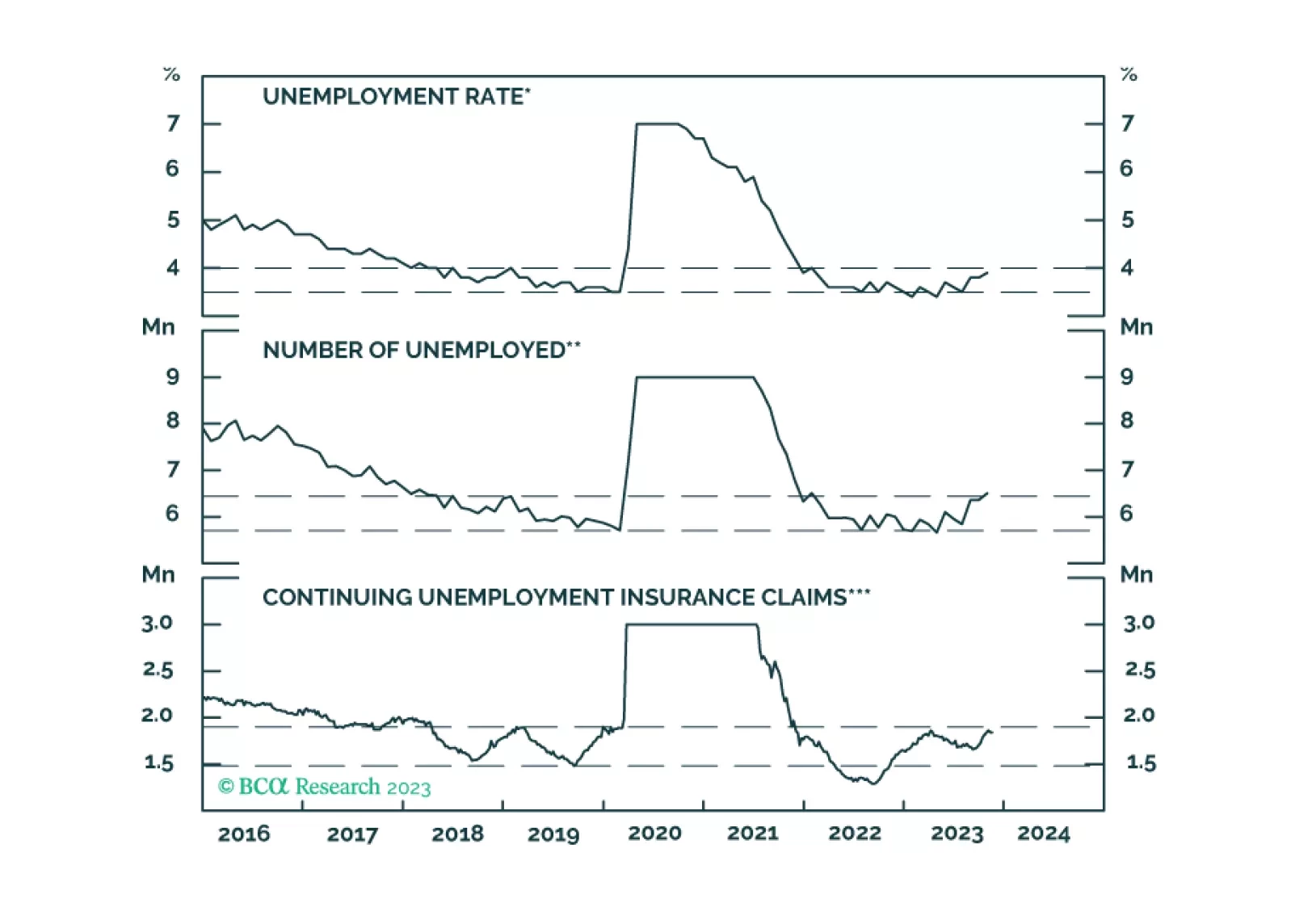
Thursday’s release of US weekly jobless claims and continuing claims delivered a positive surprise about labor market conditions. The decline in initial jobless claims to an eight-month low of 201 thousand came in below expectations of an increase from 221…
According to BCA Research’s US Bond Strategy service, the 2006/07 roadmap remains a good one for bond investors. The Fed held the funds rate steady this afternoon and made no material changes to its policy statement. That said, meeting participants did…
According to BCA Research’s European Investment Strategy service European inflation is likely to remain stubborn through the remainder of the decade, since the working-age population’s decline will keep the labor market tight. European rates have…

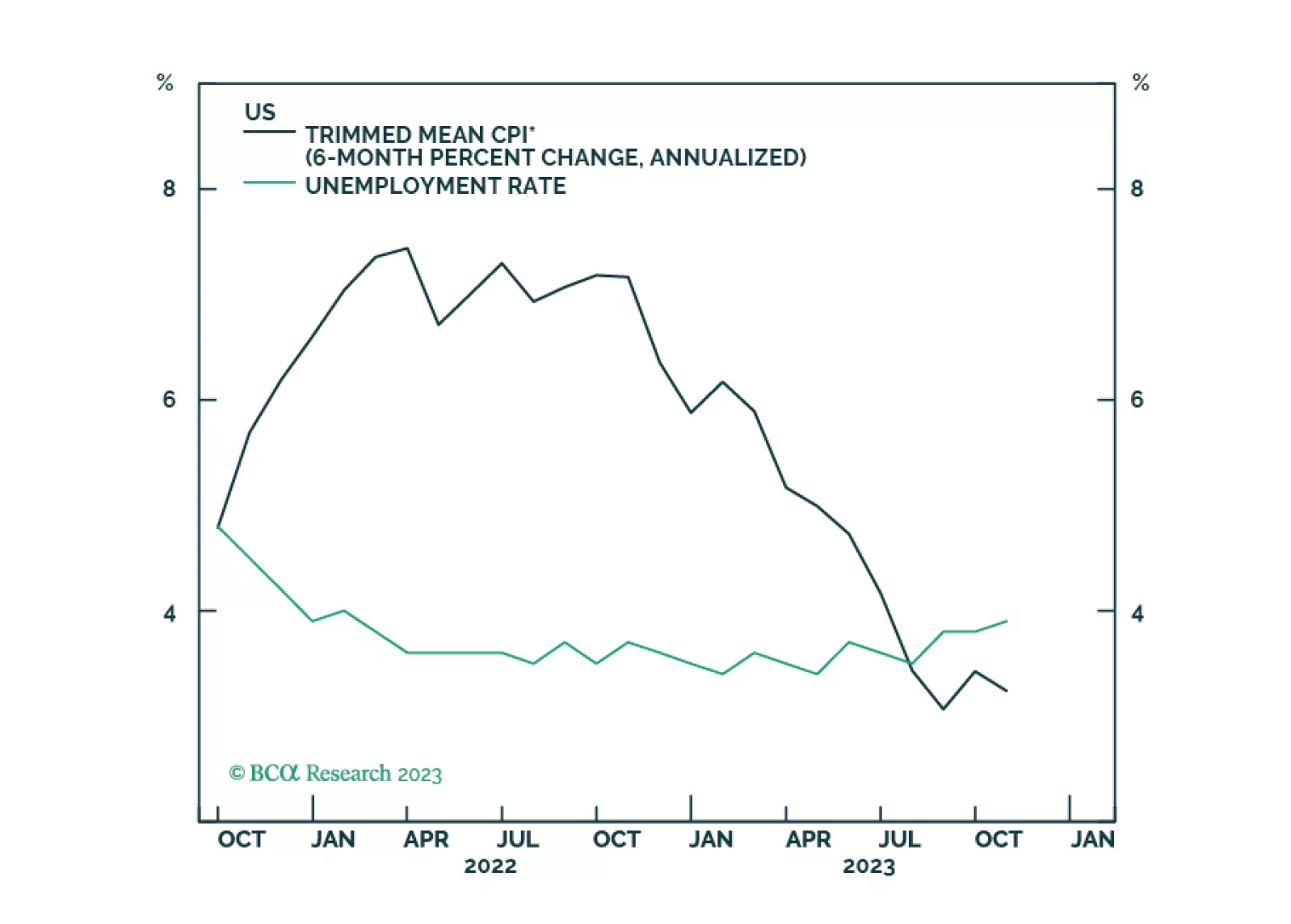
While we are sympathetic to the view that the Fed could temporarily achieve a soft landing, we are skeptical that it could stick that landing for very long. Stocks could strengthen into year-end, with small caps potentially leading the charge. But the rally will fizzle out next year as the global economy begins to sink into recession.

Stocks perform worse in presidential election years than average years, especially in the first half of the year, and especially if the ruling party ends up falling from power. Investors should take risk off the table until the unemployment rate peaks.

Japanese economic data delivered a negative surprise on Friday. Q2 GDP growth was revised down from 1.5% q/q to 1.2% q/q, below expectations of 1.4% q/q. The downwards revision reflects a 1% q/q decline in business spending (down from the preliminary…
The US ISM delivered a positive signal about service sector activity in August. The headline index unexpectedly jumped by 1.8 points to a six-month high of 54.5, surprising expectations of a 0.2-point decline to 52.5. Importantly, the details of the report…
According to BCA Research’s Counterpoint service, Goldilocks is just a fairy tale. In the near-term, this will be negative for stocks, neutral for bonds, and positive for the dollar. The Fed can win the war against inflation, but not without much higher…
The AUD was the worst performing currency on Tuesday after the Reserve Bank of Australia kept its cash rate target unchanged at 4.1% for the third consecutive month. In particular, outgoing Governor Philip Lowe underscored that the uncertain economic outlook…

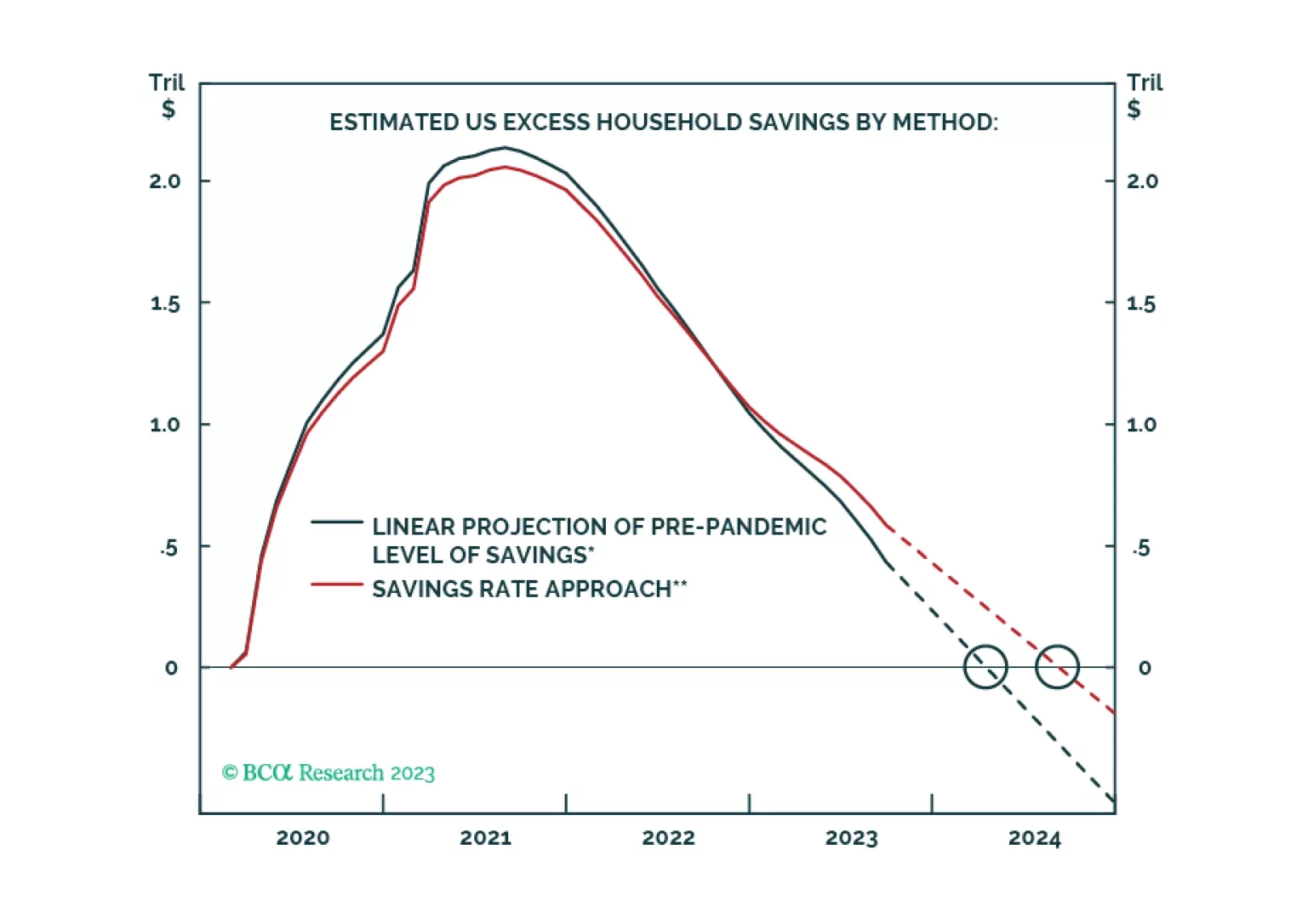
The resiliency of consumers through 2023 has surprised investors. However, consumer strength will fade into yearend as factors supporting growth in income and spending are waning. i.e., job gains are slowing, wage growth is decelerating, and excess savings are running out. Consumers are starting to feel the pressure from tighter monetary policy as financial obligations rise. Hence, as consumer spending decelerates, economic growth will slow into yearend. We confirm our underweight of the Consumer Discretionary sector.