Recession-Hard/Soft Landing
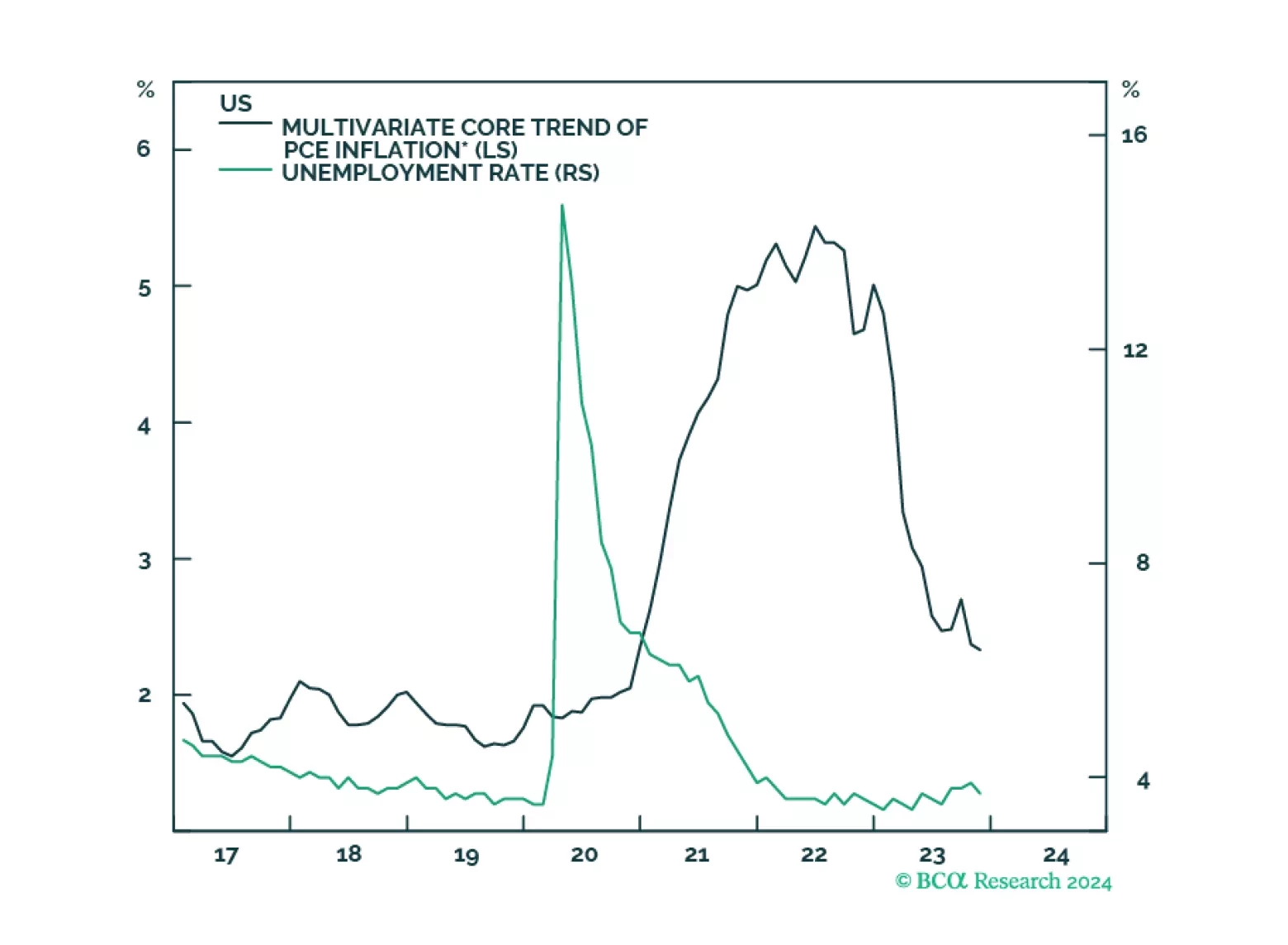
A soft landing can be achieved but not maintained. We are cutting our tactical recommendation on stocks from overweight to neutral and scaling back our long-duration stance.

Results of the November JOLTS survey indicate that the US labor market is softening. The number of job openings slowed from 8.85 million to 8.79 million – the lowest since March 2021 and slightly below expectations of 8.82 million. This brings the ratio of…
According to BCA Research’s European Investment Strategy service, the euro has ample attractive features that justify a positive long-term outlook. However, its pro-cyclicality and the dollar’s negative correlation to risk assets constitute important…
Minutes from the Fed’s December 12-13 FOMC meeting suggest that policymakers are more confident that inflation is on track to return to target. While they continued to note that inflation remains elevated and that they are highly attentive to inflation risks,…
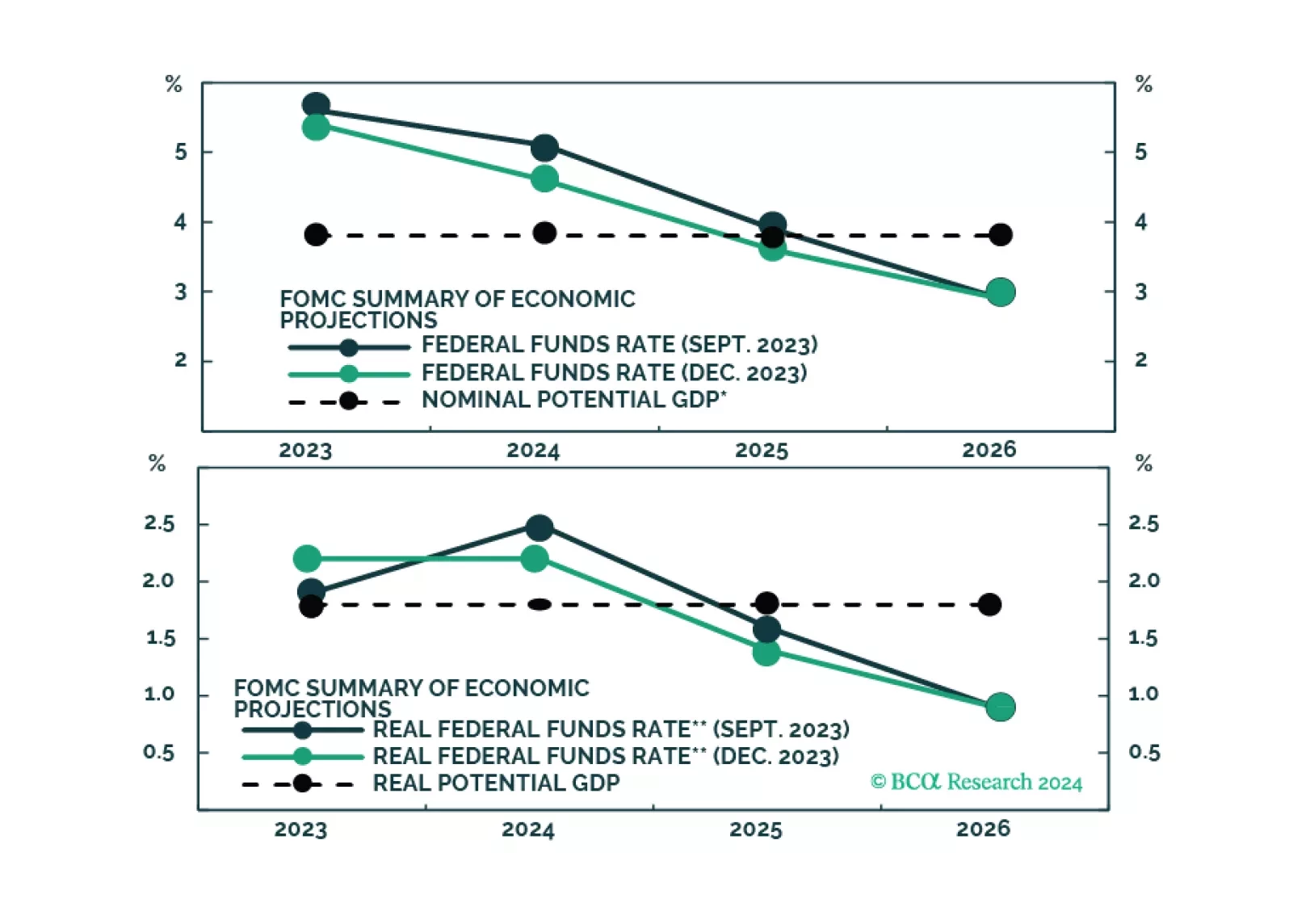
The market is excited by the idea that the Fed will cut rates early this year, even without a recession. But is that likely, with inflation still set to be around 2.8% mid-year?
According to BCA Research’s Global Fixed Income Strategy service, the timing and pace of rate cuts in 2024 will differ across countries, representing a big sea change from the highly correlated rate hiking cycles of the past two years. Currently, the…
December PMIs indicate that the global manufacturing sector is not experiencing a meaningful rebound. The Global Manufacturing PMI declined from 49.3 to 49.0 in December, marking the sixteenth consecutive month of a sub-50 reading. The output, new orders,…
Economists have been consistently revising up their 2024 US GDP forecasts over the past 4 months. The consensus now anticipates US growth to clock in at 1.3% this year. According to the latest estimate from the Atlanta Fed’s GDPNow model, this will follow…

In this, our final report of the year, we present our main global fixed income investment themes and recommendations for 2024.
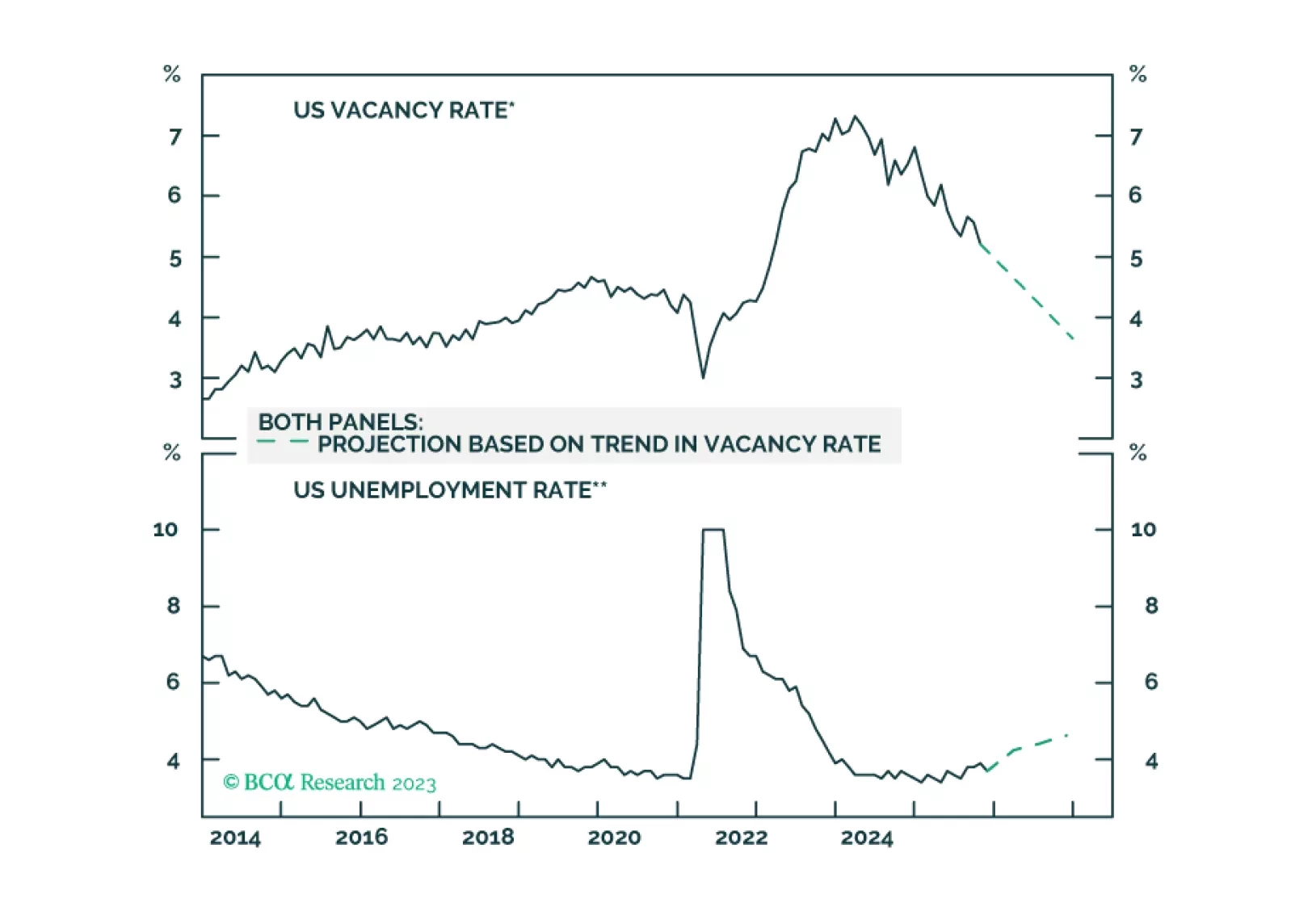
Our outlook for the Fed’s interest rate and balance sheet policies in 2024.