
Sorry, you need to enable JavaScript to visit this website.
Skip to main content

United States

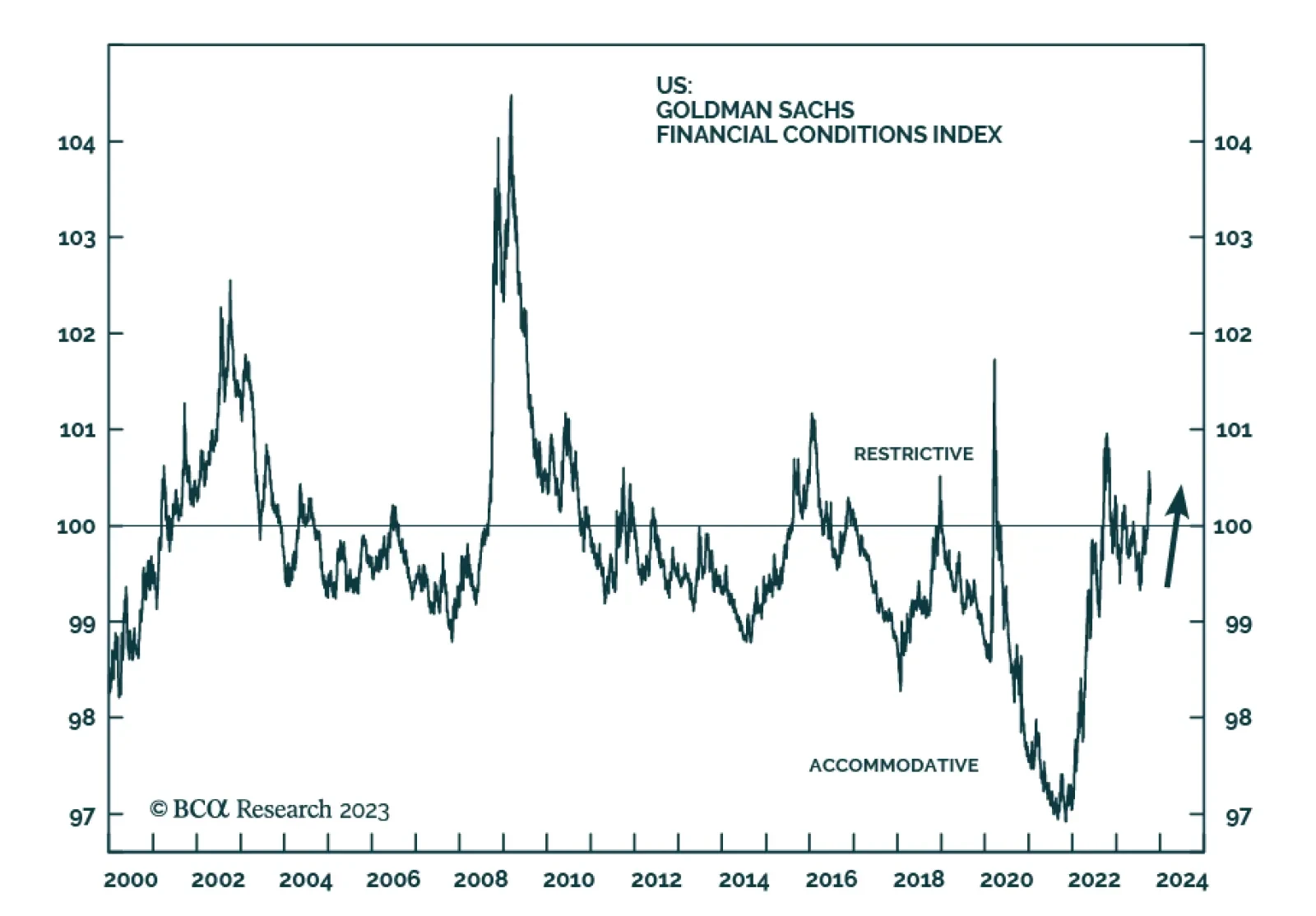
US financial conditions have tightened meaningfully in Q3. While the Goldman Sachs index remains below where it was a year ago, it crossed above the 100 line in late September into restrictive levels after spending most of the year in accommodative territory.…

More equity volatility is coming in the short run. Trump’s nomination looks to be smooth, which marginally reduces the incumbent party advantage and increases policy uncertainty.

Yields remain the force dominating the evolution of markets. A peak in yields would help European assets rebound, but the war in the Middle East could push higher energy prices, with negative consequences for Europe.

Investors underestimate the likelihood of the war in Israel spilling outside of Gaza, and engulfing wider swaths of the Middle East, endangering energy supplies. Stay overweight Energy and Aerospace & Defense.
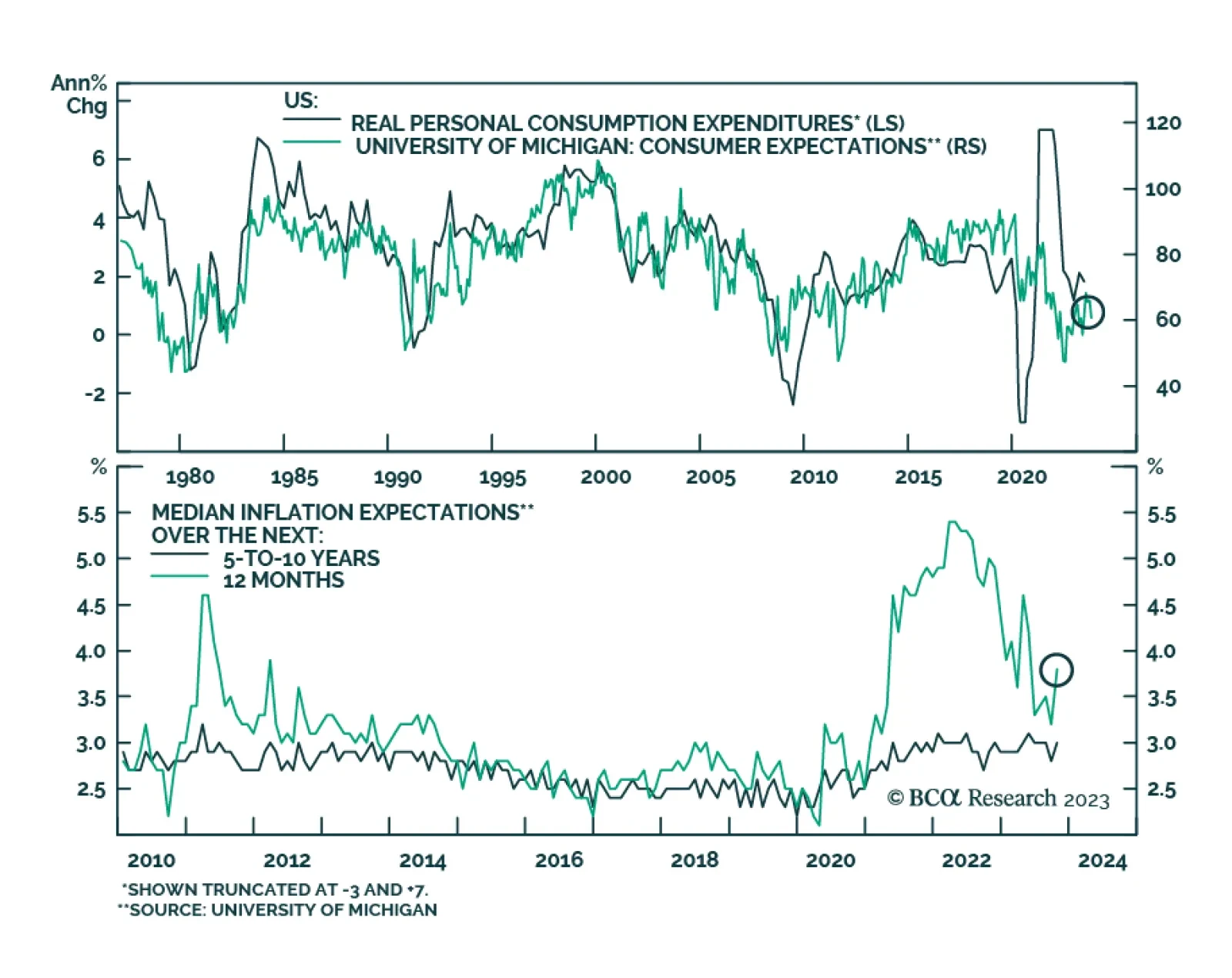

The preliminary release of the University of Michigan’s Consumer Sentiment survey delivered a negative surprise on Friday. A bigger-than-anticipated drop pushed the headline sentiment index down to a five-month low of 63. Weaker-than-expected assessments of…

This week's Insight gauges the potential of a dollar breakout or breakdown and suggests a few trade ideas.
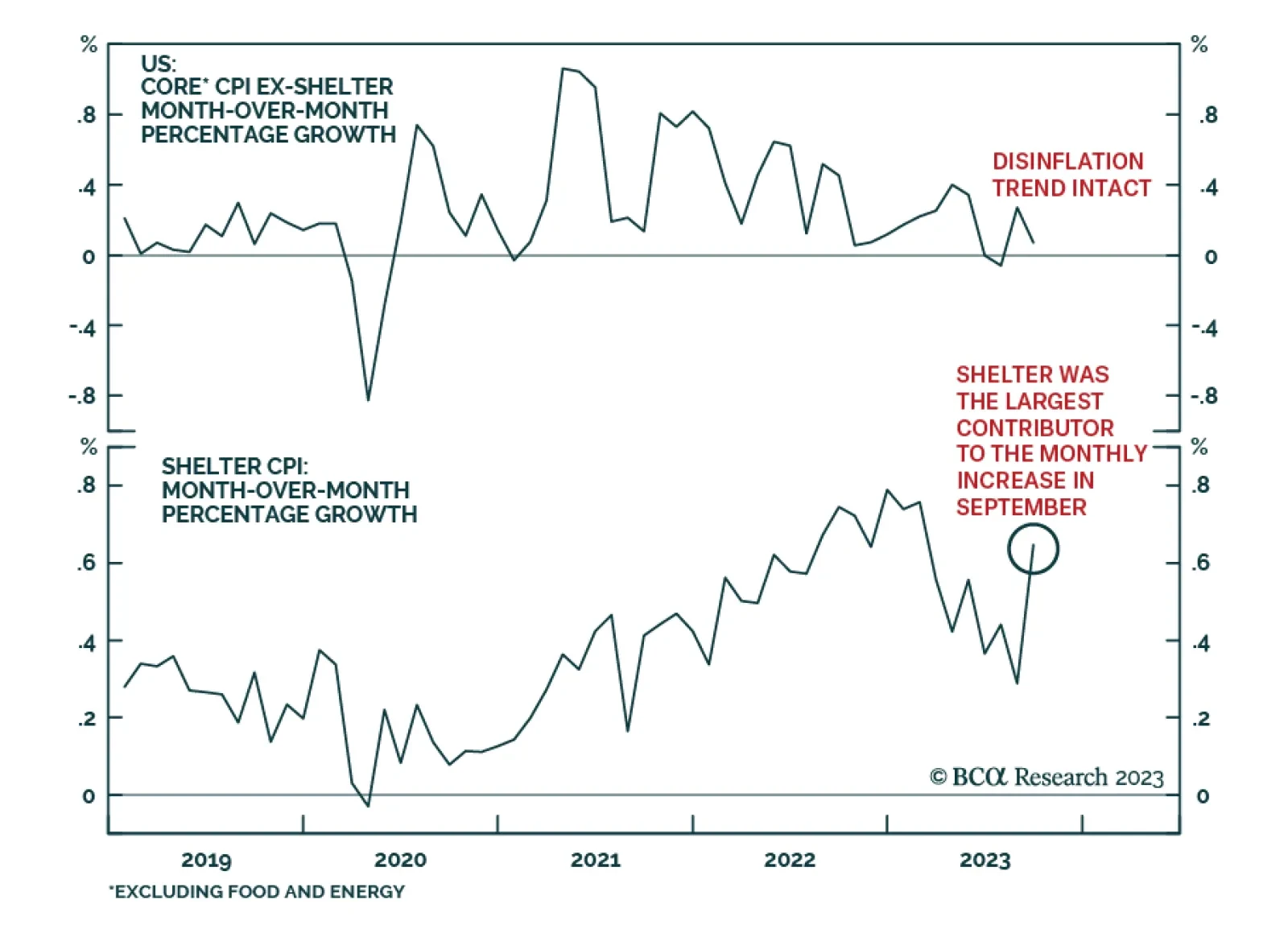
The US CPI report shows inflation was higher than anticipated in September. Although the headline index decelerated from 0.6% m/m to 0.4% m/m, it is above expectations of 0.3% m/m. The annual rate of change remains at 3.7% y/y – also above consensus estimates…
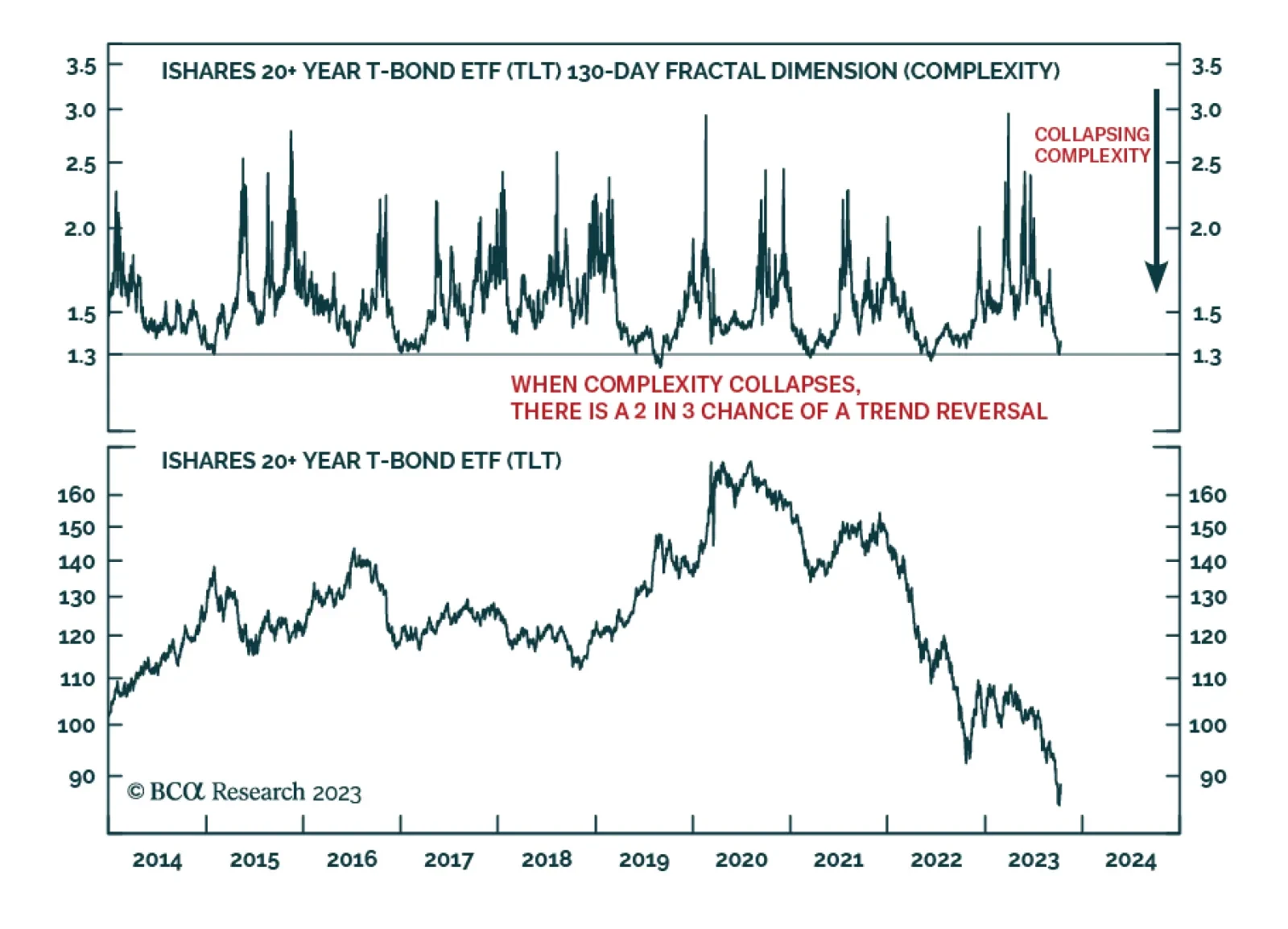
According to BCA Research’s Counterpoint service, the sharp sell-off in long duration bonds (ticker TLT) has reached the collapsed 130-day complexity that has preceded several turning-points in the last few years. This suggests a two-thirds probability of a…

US monetary policy is restrictive, as evidenced by a falling jobs-workers gap. The reason that unemployment has not risen is because labor demand still exceeds supply. That will change in the second half of 2024 when the US economy succumbs to recession. Investors should increasingly favor bonds over stocks.

Comments on recent Fedspeak, bond market moves and this morning’s CPI report.