United States

Highlights The risk of a US recession has increased sharply over the past several months. We have not yet concluded that a recession over the coming year is inevitable, but substantial (further) supply-side and pandemic-related disinflation is likely needed for the US economy to avoid a contraction in output. The increased risk of a contraction has caused investors to ponder what the next recession might look like. One very important question concerns the likely behavior of short-term interest rates during the next recession, especially if it occurs sooner rather than later. The historical experience suggests that the Fed may cut interest rates to zero during the next recession, but that the re-establishment of a long-lasting zero interest rate policy and the associated resumption of large-scale asset purchases seem quite unlikely unless the recession is severe. In the post-WWII environment, severe US recessions have been accompanied by aggravating factors that appear to be missing in the current environment. In addition, there are several arguments pointing to the next US recession being a mild one. For fixed-income investors, the implication is that investors should not overstay their welcome in a long-duration position during the next US recession, and should be looking to reduce their duration exposure earlier rather than later. For equity investors, our findings underscore that meaningful downside risk exists for stocks even in a mild recession environment, because the decline in bond yields is not likely to offset a rise in the equity risk premium. Feature Over the past several months, investors have been faced with a sharp increase in the odds of a US recession. Gauging the risk of a recession has featured prominently in our recent reports, and we have concluded, for now, that a US recession over the coming year is not yet inevitable. Still, we acknowledge that the risks are quite elevated, and that substantial (further) supply-side and pandemic-related disinflation is likely needed for the US economy to avoid a contraction in output. Economic expansions do not last forever. This means that the US economy will eventually succumb to a recession at some point over the coming few years. One very important question for investors concerns the likely behavior of short-term interest rates during the next recession, especially if a contraction occurs sooner rather than later. A key aspect of this question is whether the Fed is likely to be forced back towards a zero or negative interest rate policy, and whether it will need to employ asset purchases as part of its stabilization efforts as it has during the last two recessions. If so, long-maturity bond yields are likely to fall significantly during the next recession; if not, investors may be surprised by how modestly long-maturity yields decline. In this report, we examine the historical record of short-term interest rates during recessions and discuss whether the next US recession is likely to be severe or mild. We conclude that the next US recession is more likely to be mild than severe, and that the 10-year Treasury yield is unlikely to fall below 2% during the recession (or fall below this level for very long). In the case of a more severe recession driven by unanchored inflation expectations, the implications would be clearly bearish for bonds. Within a fixed-income portfolio, one conclusion of our analysis is that investors should not overstay their welcome in a long-duration position during the next recession and should be looking to reduce their duration exposure earlier rather than later. For equity investors, our findings underscore that meaningful downside risk exists for stocks even in a mild recession environment, because the decline in bond yields is not likely to offset a rise in the equity risk premium. The Historical Recessionary Path Of Short-Term Interest Rates When projecting how the Fed funds rate is likely to evolve during the next US recession, most investors typically look to the average decline in short-term interest rates during previous recessions as a guide. Based on that approach, Table II-1 highlights that the Fed would likely have to cut rates into negative territory if a recession occurred over the coming 12-18 months, unless it is able to hike interest rates significantly more over the coming year than the market is currently expecting and the FOMC itself is projecting. But in our view, focusing on the historical recessionary decline in interest rates from their peak is not the right approach, because it ignores the fact that recessions typically occur when monetary policy is tight. If a recession occurs within the next 18 months, it will have happened in large part because of a collapse in real wage growth, not just because of the increase in interest rates that has occurred. Chart II-1 highlights that short-term interest rates remain well below potential GDP growth, highlighting that monetary policy would still be easy today – despite the quick pace of increase in short rates – if real wages were growing rather than contracting sharply. In our view, the right approach is to examine how much short-term interest rates have typically fallen during recessions relative to potential or average historical GDP growth. This method captures the degree to which monetary policy easing has typically been required relative to neutral levels to catalyze an economic recovery. Table II-1Based Only On The Historical Decline In Short-Term Interest Rates, The Fed Would Ostensibly Have To Cut Rates Into Negative Territory During The Next Recession
September 2022
September 2022
Chart II-1Monetary Policy Would Still Be Easy Today If Real Wage Growth Was Positive
Monetary Policy Would Still Be Easy Today If Real Wage Growth Was Positive
Monetary Policy Would Still Be Easy Today If Real Wage Growth Was Positive
Based on this approach, Chart II-2 highlights that the Fed might have to cut the target range for the Fed funds rate to 0-0.25% during the next recession, but there are some examples (like the 1990-1991 recession) that point to a cut to just 0.25-0.5%. The goal of this exercise is not to be specific about the exact level to which the Fed will have to cut the Fed funds rate, but rather whether the de facto re-establishment of a long-lasting zero interest rate policy and the associated resumption of large-scale asset purchases is likely. Chart II-2The Fed May Have To Cut To Zero During The Next Recession, But Probably Not Into Negative Territory
September 2022
September 2022
Structural bond bulls might note that there are five recessions in the post-war era that could potentially point to that outcome based on Chart II-2. However, these episodes involved circumstances that we doubt would be present during the next US recession, especially if one were to emerge over the coming 12-18 months. The 1950s Recessions The recessions of 1953-54 and 1957-58 were fairly sizeable based on the total rise in the unemployment rate, but the monetary policy stance at that time was wildly stimulative in a way that is very unlikely to repeat itself today. In the 1950s, the level of interest rates was still an artifact of WWII (with the Treasury-Fed accord having only been agreed upon in March 1951). Monetary policy was both overly responsive to a period of pent-up disinflation following the initial burst of government spending associated with the Korean war and insufficiently responsive to a strongly positive output gap (Chart II-3). This was meaningfully compounded by a poor understanding of the size of the output gap at that time; the deviation of the unemployment rate from its 10-year average was significantly smaller than its deviation from today’s estimate of NAIRU (Chart II-4). In sum, the economic and monetary policy conditions that existed in the 1950s and that contributed to an interest rate level that was well below the prevailing rate of economic growth do not exist today. As such, we strongly doubt that the Fed’s response to the next US recession would resemble what occurred during that decade. Chart II-3We Strongly Doubt The Fed's Response To The Next US Recession Would Resemble What Occurred In The 1950s
We Strongly Doubt The Fed's Response To The Next US Recession Would Resemble What Occurred In The 1950s
We Strongly Doubt The Fed's Response To The Next US Recession Would Resemble What Occurred In The 1950s
Chart II-4Low Interest Rates In The 1950s Were Partly Caused By Wrong Output Gap Estimates
Low Interest Rates In The 1950s Were Partly Caused By Wrong Output Gap Estimates
Low Interest Rates In The 1950s Were Partly Caused By Wrong Output Gap Estimates
1973-1975 The recession that began in 1973 occurred because of a huge energy shock that proved to be stagflationary in the true sense of the word. Excluding the 2020 recession, this was the third largest rise in the unemployment rate of any recession since WWII, following 2008/2009 and the 1981/1982 recessions. There are some parallels between this recession and the current economic environment, but the stability of inflation expectations so far does not point to a truly stagflationary outcome. As such, we do not see the 1973-74 recession as a reasonable parallel to today’s environment. In addition, manufacturing employment – which was heavily impacted by the permanent rise in oil prices due to the sector’s energy intensity – stood at 24% of total nonfarm employment in 1973, compared with 8% today. Finally, the weight of food and energy as a share of total consumer spending today is roughly half of what it was during the 1970s (Chart II-5). 2001 Of the five recessions potentially implying that the Fed may have to cut interest rates into negative territory during the next US recession, the 2001 recession is the most relevant parallel to today. It was a modern recession in which the Fed maintained very easy monetary policy for a significant amount of time, in response to concerns about a significant tightening in financial conditions and the impact of prior corporate sector excesses on aggregate demand. The total rise in the unemployment rate during this recession was not very large, but it took some time for the unemployment rate to return to NAIRU. Still, even though this justified a later liftoff, a Taylor rule approach makes it clear that the Fed overstimulated the economy in response to the recession – a view that is reinforced by the enormous rise in household debt that fueled the housing market bubble during that period (Chart II-6). The Fed was very concerned about the negative wealth effects of the bursting of the equity market bubble, which had been caused by a massive decline in the equity risk premium in the second half of the 1990s. These conditions are simply not present today. Chart II-5Today's US Economy Is Meaningfully Less Impacted By Energy And Food Prices
Today's US Economy Is Meaningfully Less Impacted By Energy And Food Prices
Today's US Economy Is Meaningfully Less Impacted By Energy And Food Prices
Chart II-6The Fed Clearly Overstimulated In Response To The 2001 Recession
The Fed Clearly Overstimulated In Response To The 2001 Recession
The Fed Clearly Overstimulated In Response To The 2001 Recession
2008/2009 Chart II-7A Repeat Of The 2008/2009 Recession In The US Is A Totally Implausible Scenario
A Repeat Of The 2008/2009 Recession In The US Is A Totally Implausible Scenario
A Repeat Of The 2008/2009 Recession In The US Is A Totally Implausible Scenario
Chart II-2 highlighted that the Fed would have to cut interest rates to -1% were the 2008/2009 recession to repeat itself, but we judge that to be a totally implausible scenario given the improvement in US household sector balance sheets and financial sector health since the global financial crisis (Chart II-7). As we discuss below, the next US recession is likely to be meaningfully less severe than the 2008/2009 and 2020 recessions, which we believe carries important significance for the path of interest rates and the response of long-maturity bond yields. The bottom line for investors is that, based on the historical experience of rate cuts during recessions, the Fed may end up cutting interest rates back to or close to the zero lower bound in response to the next recession. But the de facto re-establishment of a long-lasting zero interest rate policy and the associated resumption of large-scale asset purchases seems quite unlikely unless the recession is severe, which we do not expect. Will The Next US Recession Be Severe Or Mild? Chart II-8The Most Severe US Recessions Have Had Aggravating Factors That Do Not Appear To Be Present Today
September 2022
September 2022
How drastically the Fed will be forced to cut interest rates during the next recession will be driven by its severity. Chart II-8 presents the total rise in the unemployment rate during post-WWII recessions (excluding 2020), in order to gauge whether the factors that have led to severe recessions in the past are likely to be present during the next contraction in output. From our perspective, the most severe US recessions in the post-WWII era have been driven by factors that are very unlikely to repeat themselves in the current environment. We noted above that a repeat of the 2008/2009 recession is a totally implausible scenario, leaving the 1981-1982, 1973-1975, and 1950s recessions as potential severe recession analogues. In three of these four cases we see clear signs of an aggravating factor that we do not (yet) believe will be present during the next US recession. Chart II-9Inflation Expectations Have Not Yet Unanchored To The Upside, In Sharp Contrast To The 1970s
Inflation Expectations Have Not Yet Unanchored To The Upside, In Sharp Contrast To The 1970s
Inflation Expectations Have Not Yet Unanchored To The Upside, In Sharp Contrast To The 1970s
In the 1981-1982 recession, the unemployment rate rose significantly as the Federal Reserve confronted the fact that inflation expectations had become severely unanchored to the upside, causing a persistent wage/price spiral. While unanchored inflation expectations is a risk today, so far the evidence suggests that both households and market participants expect that currently elevated inflation will not persist over the long run (Chart II-9). If inflation expectations do become unanchored to the upside at some point over the coming 12-18 months (or beyond), we are very likely to change our view about the severity of the next recession. However, this would be a bond bearish outcome (at least initially), as it would imply sharply higher yields at both the short and long end of the yield curve in order to tame inflation and re-anchor inflation expectations. As noted above, in the 1973-74 recession, the unexpected and permanent rise in oil prices and outright energy shortages rendered a significant amount of capital and labor uneconomic, which is different than what has been occurring during the pandemic. Were the recent rise in natural gas prices to be permanent and no alternatives available, Europe’s current energy situation would be more reminiscent of the 1973-1974 recession than the pandemic-driven price pressures and supply shortages affecting the US and other developed economies. Chart II-10The US Is Currently Experiencing Fiscal Drag, But That Will Lessen Next Year
The US Is Currently Experiencing Fiscal Drag, But That Will Lessen Next Year
The US Is Currently Experiencing Fiscal Drag, But That Will Lessen Next Year
Finally, while the 1957-58 recession appears to be somewhat of an anomaly driven by a mix of factors, the 1953-54 recession was clearly exacerbated by a sharp slowdown in government spending following the end of the Korean war. It is true that the US is currently experiencing fiscal drag (Chart II-10), but this has occurred against the backdrop of a strong labor market, and IMF forecasts imply that the drag will be significantly smaller over the coming year than what the US is currently experiencing. There are several additional points suggesting that the next US recession will be comparatively mild: Chart II-11The Milder US Recessions Were All Seemingly Triggered By Tight Monetary Policy (As Would Be The Case Today)
The Milder US Recessions Were All Seemingly Triggered By Tight Monetary Policy (As Would Be The Case Today)
The Milder US Recessions Were All Seemingly Triggered By Tight Monetary Policy (As Would Be The Case Today)
Chart II-11 highlights that the milder recessions, those which have seen the unemployment rate rise by less than 3% from their previous low, have generally been the recessions that appear to have simply been triggered by monetary policy becoming tight or nearly tight. This would likely be the case during the next US recession. In the lead up to the 1970, 1990-91, and 2001 recessions, short-term interest rates approached or exceeded either potential growth or the rolling 10-year average growth rate of nominal GDP. The 1960-61 recession stands out slightly as an exception to this rule, in that interest rates were still moderately easy, which is based on our definition of the equilibrium short-term interest rate. But interest rates had risen close to 400 basis points from 1958 to 1960 (suggesting a change in addition to a level effect of interest rates on aggregate demand), and it is notable that the 60-61 recession was the mildest in post-war history, based on the total rise in the unemployment rate. Chart II-12Labor Scarcity May Mean That Firms Will Be Somewhat More Reluctant To Shed Labor During The Next Recession
Labor Scarcity May Mean That Firms Will Be Somewhat More Reluctant To Shed Labor During The Next Recession
Labor Scarcity May Mean That Firms Will Be Somewhat More Reluctant To Shed Labor During The Next Recession
We argued in Section 1 of our report that monetary policy is not currently restrictive on its own, and that the recessionary risk currently facing the US is the result of a combination of the speed of adjustment in interest rates, the fact that real wages have fallen sharply, and the fact that the Fed is determined to see inflation quickly return to target levels. However, what this also highlights is that a recession would likely cause a rise in real wages via a significant slowdown in inflation (at least for a time); this would likely help stabilize aggregate demand and cause a comparatively mild rise in the unemployment rate. While the odds and magnitude of this effect are difficult to quantify, the fact that the labor market has been so tight over the past year and that the participation rate has yet to recover to its pre-pandemic levels suggests that some firms may be reluctant to shed labor during a recession (Chart II-12), suggesting that the total rise in unemployment in the next recession could be relatively small. Finally, Chart II-13 shows that the excess savings that have accumulated over the course of the pandemic, now primarily the result of reduced spending on services, dwarf the magnitude of precautionary savings that were generated in the prior three recessions as a % of GDP. We agree that the savings rate would likely still rise during the next recession, but the existence of excess savings implies that the rise in the savings rate may be surprisingly small – which would, in turn, imply a comparatively mild rise in the unemployment rate. We noted above that the household sector has deleveraged significantly, which is strong evidence against an outsized or long-lasting decline in consumer spending as a possible driver of an above-average rise in the unemployment rate during the next recession. One question that we often receive from clients is whether excessive corporate sector leverage could cause a more severe decline in economic activity once a recession emerges. Chart II-14 illustrates that the answer is “probably not.” The chart presents one estimate of the US nonfinancial corporate sector debt service ratio, based on national accounts data. The chart highlights that the current debt burden for the nonfinancial corporate sector is very low, underscoring that elevated corporate sector debt would not likely act as an aggravating factor driving an outsized rise in the unemployment rate were a recession to occur today. The chart also shows that even if the 10-year Treasury yield were to rise to 4% and corporate bond spreads were to widen in the lead up to a recession, the nonfinancial corporate sector debt service burden would rise to a lower peak than seen in the last three recessions. One key risk to a mild recession view is a scenario in which inflation does not return to or below the Fed’s target during the recession. In that kind of environment, the Fed would not likely cut interest rates to as low a level as they have in the past relative to potential growth. But the historical record is clear that recessions cause a deceleration in inflation, and if a recession emerges over the coming 12-18 months it will likely happen after supply-side and pandemic-related disinflation has already occurred. That means that inflation is likely to move back to or below the Fed’s target in a recessionary environment. We should note that this assessment differs somewhat from the scenario described by my former colleague Martin Barnes, who wrote a guest report on inflation published in our July Bank Credit Analyst.1 Chart II-13Today’s Pandemic-Related Excess Savings Dwarf Precautionary Savings During The Prior Three Recessions
September 2022
September 2022
Chart II-14US Corporate Sector Debt Unlikely To Lead To A More Severe Recession, Even In A Higher Yield Environment
US Corporate Sector Debt Unlikely To Lead To A More Severe Recession, Even In A Higher Yield Environment
US Corporate Sector Debt Unlikely To Lead To A More Severe Recession, Even In A Higher Yield Environment
Long-Maturity Bond Yields And The Next US Recession What does our analysis imply for long-maturity bond yields and the duration call over the coming few years? In order to judge what is likely to happen to long-maturity bond yields in a recession scenario over the coming 12-18 months, we first project the fair value of the 5-year Treasury yield based on the following hypothetical circumstances: The onset of recession in March 2023 and a peak in the Fed funds rate at a target range of 3.75-4%. A recession duration of eight months, over which time the Fed steadily cuts the policy rate to 0-0.25%. An initial Fed rate hike in September 2024, nine months following the end of the recession, consistent with a relatively short return of the unemployment rate to NAIRU as an expansion takes hold. A rate hike pace of eight quarter-point hikes per year, with the Fed again raising rates to a peak of 4% A longer-term average Fed funds rate of 3%, which we regard as a low estimate. Chart II-15The 5-Year Treasury Yield Would Not Fall Enormously In A Mild Recessionary Scenario
The 5-Year Treasury Yield Would Not Fall Enormously In A Mild Recessionary Scenario
The 5-Year Treasury Yield Would Not Fall Enormously In A Mild Recessionary Scenario
Chart II-15 highlights the fair value path for the 5-year Treasury yield in this scenario. Not surprisingly, the fair value today is lower than the current level of the 5-year yield, highlighting that a shift to a long duration stance will be warranted at some point over the coming year if the US economy enters a non-technical, typical income-statement recession. However, the chart also highlights that a long duration position is not likely to be warranted for very long, given that the lowest level of the 5-year fair value path is substantially higher than it was in 2020 and 2021 and is also higher than its 10-year average. Chart II-16 reveals the importance of forecasting the near-term path of interest rates when predicting the likely behavior of long-maturity bond yields. Even though near- and long-term interest rate expectations should be at least somewhat differentiated, the chart highlights that the real 5-year/5-year forward Treasury yield is very closely explained by the real 5-year Treasury yield and a 3-year lag of our adaptive inflation expectations model (which is highly consistent with BCA’s Golden Rule of bond investing framework). Chart II-16 shows that long-maturity bond yields should be higher than they are based on the current level of real 5-year yields and lagged inflation expectations, underscoring the point that we made in Section 1 of our report that significant upside risk exists for long-maturity bond yields in a non-recessionary outcome over the coming year. In a recessionary outcome, it is clear that bond yields will fall as the Fed cuts interest rates, as Chart II-15 demonstrated. But, Chart II-17 highlights that during recessions, there is little precedent for a negative 5-10 yield curve slope outside of the context of the persistently high inflation environment of the late 1960s and 1970s. Applying that template to the fair value path that we showed in Chart II-15 suggests that the 10-year Treasury yield will not fall below 2% during the next recession. As we noted in our August report,2 a 10-year Treasury yield decline to 2% would result in significant performance for long-maturity bonds, but it would not end the structural bear market in bonds that began two years ago – a fact that we suspect would be very surprising to bond-bullish investors. Chart II-165-Year Bond Yields Strongly Explain Yields 5-Years/5-Years Forward
5-Year Bond Yields Strongly Explain Yields 5-Years/5-Years Forward
5-Year Bond Yields Strongly Explain Yields 5-Years/5-Years Forward
Chart II-17There Is Not Much Precedent For A Negative 5/10 Yield Curve During Modern Recessions, Suggesting 10-Year Yields Will Not Fall Below 2% During The Next Recession
There Is Not Much Precedent For A Negative 5/10 Yield Curve During Modern Recessions, Suggesting 10-Year Yields Will Not Fall Below 2% During The Next Recession
There Is Not Much Precedent For A Negative 5/10 Yield Curve During Modern Recessions, Suggesting 10-Year Yields Will Not Fall Below 2% During The Next Recession
It is true that bond yields may deviate from the fair value levels shown in Chart II-15 if investors expect a different outcome for the path of the Fed funds rate than we described. However, it is worth noting that changes in our assumed post-recession peak Fed funds rate and the long-term average do not substantially change the outcome shown in Chart II-15. If investors instead assume that the Fed funds rate will peak at 3% during the next expansion, that lowers the fair value path for the 5-year yield by approximately 5 basis points. Changing the long-term average Fed funds rate to 2.4%, the Fed’s current neutral rate expectation, would reduce it by about 25 basis points. These levels would still be significantly above the lows reached in 2011-2013 and in 2020, underscoring that the length of the recession and the speed at which the Fed begins to raise interest rates will be far more important determinants of the path of US Treasury yields. We strongly suspect that investors will recognize that a comparatively mild recession will not result in the same hyper-accomodative monetary policy stance that occurred during the past two recessions, implying that long-maturity bond yields will have less downside during the next recession than may be currently recognized. Investment Conclusions As we have presented, the historical experience suggests that the Fed may cut interest rates to zero during the next recession, but that the re-establishment of a long-lasting zero interest rate policy and the associated resumption of large-scale asset purchases seem quite unlikely unless the recession is severe. In the post-WWII environment, severe US recessions have been accompanied by aggravating factors that appear to be missing in the current environment. In addition to this, there are several arguments pointing to the next US recession being a mild one. In a mild recession scenario, we doubt that the 10-year Treasury yield would fall below 2%, or fall below this level for very long. For fixed-income investors, while bond yields will fall for a time if a recession emerges, the implication is that investors should not overstay their welcome in a long-duration position during the recession and should be looking to reduce their duration exposure earlier rather than later. For equity investors, our findings underscore that meaningful downside risk exists for stocks even in a mild recession environment, because the decline in bond yields is not likely to offset a rise in the equity risk premium. We noted in our July report that if a recession occurred within the coming 6-12 months, that the S&P 500 would likely fall to 3100, even if the recession were average. A mild recession may see the S&P 500 decline less severely than this, but stocks are still likely to incur significant losses during the next recession unless investors price in a much shallower path for short-term interest rates than we believe will be warranted. As noted in Section 1 of our report, we have not yet concluded that a US recession is inevitable over the coming 6-12 months. Still, we acknowledge that the risks are quite elevated, and that substantial (further) supply-side and pandemic-related disinflation is likely needed for the US economy to avoid a contraction in output. Additional changes to our recommended cyclical allocation may thus occur over the coming few months, in response to incoming data, our assessment of the likely implications for monetary policy, and the response of long-maturity government bond yields. Jonathan LaBerge, CFA Vice President The Bank Credit Analyst Footnotes 1 Please see The Bank Credit Analyst "Inflation Whipsaw Ahead," dated June 30, 2022, available at bca.bcaresearch.com 2 Please see The Bank Credit Analyst "August 2022," dated July 28, 2022, available at bca.bcaresearch.com
Highlights The odds of a Goldilocks outcome for the US economy increased somewhat in August, but the risks of a US recession over the coming year remain quite elevated. We continue to recommend that investors stay neutrally positioned towards equities within a global multi-asset portfolio. The disinflationary impulse from the July US CPI report is less compelling than it seems, in that it appears to have been mostly driven by declining energy prices. It is far from clear that energy prices will continue to decline over the coming months and are, in fact, likely to rise even if an Iranian deal takes place. This implies that investors may have jumped the gun in pricing in substantial disinflation and sharply higher odds of a Goldilocks economic outcome. The OIS curve is implying a reasonable path for the Fed funds rate for the remainder of this year, but it is too low 12 months from now based on the Fed’s median rate expectation for year-end 2023. This suggests that a further upward adjustment in the OIS curve is likely warranted, and that a modestly short duration stance is appropriate. Investors believe that the rate hike path priced into the OIS curve would not be recessionary, because short-term inflation expectations are pricing in a very substantial slowdown in headline inflation. From the perspective of market participants, this would both raise the recessionary threshold for interest rates (via stronger real wages) and could potentially allow the Fed to reduce interest rates closer to its (very likely wrong) estimate of neutral. We agree that the odds of a recession will decline if headline inflation does fall below 4% over the coming year, but it is not yet clear that this will occur. And if it does, the resulting improvement in real wages would ultimately allow the Fed to raise interest rates to a higher level before short-circuiting the economic expansion. As such, we expect real long-maturity government bond yields to rise meaningfully in a scenario where real wages recover significantly and a recession is avoided, which will put heavy pressure on equity multiples. This underscores that stock prices face risks in both a recessionary and non-recessionary environment. There are arguments pointing to a decline in the dollar beyond the near term, even within the context of elevated recessionary odds in the US and our recommended neutral stance towards global equities. Stay neutral for now, but look for opportunities to short the dollar beyond the coming few months. Jumping The Gun On Goldilocks The odds of a Goldilocks outcome for the US economy over the coming six to nine months increased somewhat in August. The July CPI report presented some evidence of supply-side and pandemic-related disinflation (Chart I-1), and we saw more resilient manufacturing production in the US – even after excluding the automotive sector – than many manufacturing indicators have been indicating (Chart I-2). In addition, the regional Fed manufacturing index in the especially manufacturing-sensitive state of Pennsylvania surprised significantly to the upside in July, although this was at least somewhat offset by a collapse in the New York and Dallas Fed’s general business conditions indexes (Chart I-3). Chart I-1There Is Now Some Evidence Of Supply-Side & Pandemic-Related Disinflation In The US
There Is Now Some Evidence Of Supply-Side & Pandemic-Related Disinflation In The US
There Is Now Some Evidence Of Supply-Side & Pandemic-Related Disinflation In The US
Chart I-2US Manufacturing Production Has Been More Resilient Than Surveys Would Have Suggested
US Manufacturing Production Has Been More Resilient Than Surveys Would Have Suggested
US Manufacturing Production Has Been More Resilient Than Surveys Would Have Suggested
Against the backdrop of significant recessionary risks, and a debate about whether negative growth in the first half of the year already constitutes a recession in the US, these developments have been positive. The Atlanta Fed’s GDPNow model is pointing to positive (albeit below-trend) growth of 1.4% in Q3, which is consistent with consensus forecasts. The Atlanta Fed’s model is also forecasting the strongest real consumption growth since Q4 2021 (Chart I-4). Equity investors responded to incrementally lower recession odds and a slower pace of inflation by bidding up the S&P 500 from roughly 3800 at the beginning of July to over 4200 in August. Chart I-3Mixed Messages From The Regional Fed Indicators
Mixed Messages From The Regional Fed Indicators
Mixed Messages From The Regional Fed Indicators
Chart I-4The Atlanta Fed GDPNow Model Is Pointing To Positive Growth And Resilient Consumption In Q3
September 2022
September 2022
However, several other developments over the past month continue to highlight that the risks of a US recession over the coming year are quite elevated, which supports our recommendation that investors stay neutrally positioned towards equities within a global multi-asset portfolio: The August flash PMIs were fairly negative, especially for the services sector. The August flash S&P Global manufacturing PMI rose in Germany, but it fell in the US, France, and the UK. Services PMIs declined significantly in all four countries, especially in the US where survey participants noted that “hikes in interest rates and inflation dampened customer spending as disposable incomes were squeezed.” Survey respondents also noted that “new orders contracted at the steepest pace for over two years, as companies highlighted greater client hesitancy in placing new work.” Chart I-5The Conference Board's LEI Is Very Weak
The Conference Board's LEI Is Very Weak
The Conference Board's LEI Is Very Weak
The Conference Board’s leading economic indicator dropped for a fifth month in a row in July, which has always been associated with a US recession (based on the indicator’s current construction). Chart I-5 highlights that the indicator’s market-based and real economy components are both very weak, and that the Conference Board’s coincident indicator has now fallen below its 12-month moving average. While the Philly Fed manufacturing index picked up in July, the new orders component of the regional Fed manufacturing PMIs broadly sank further into contractionary territory (Chart I-6). Chart I-6The Regional Fed New Orders Components Are Very Weak
The Regional Fed New Orders Components Are Very Weak
The Regional Fed New Orders Components Are Very Weak
The Atlanta Fed model shown in Chart I-4 is pointing to a second quarter of negative growth from real residential investment, a component of GDP that reliably peaks in advance of economic contractions.1 Job openings are now pointing to a potential rise in unemployment. The relationship between job openings and unemployment is currently subject to heavy debate, as discussed in a recent report by my colleague Ryan Swift.2 However, abstracting from a theoretical discussion about movements along or shifts in the Beveridge curve, investors should note that the empirical record is fairly clear – Chart I-7 highlights that falling job vacancies occurred alongside a significant rise in the level of unemployment during the last two recessions. We acknowledge that the relationship has seen some deviations since 2018/2019, so this may highlight that a larger decline in job openings will be required for unemployment to trend higher. A 10% rise in the level of unemployment relative to its 12-month moving average has always been associated with a recession, implying that a sustained decline in job openings to 10M or lower would represent a likely recessionary signal – even if that recession proves to be a mild one (see Section 2 of this month’s report). Chart I-7Declining Job Openings Are Pointing To Potentially Higher Unemployment
Declining Job Openings Are Pointing To Potentially Higher Unemployment
Declining Job Openings Are Pointing To Potentially Higher Unemployment
Table I-1 highlights that the disinflationary impulse from the July CPI report is less compelling than it seems, in that it appears to have been mostly driven by declining energy prices (particularly gasoline and fuel oil). Outside of the clear impact that falling fuel prices had on airline fares, there is not yet compelling evidence that core inflation is decelerating due to easing supply-side and pandemic-related effects, or due to slowing demand. As we will discuss below, it is far from clear that energy prices will continue to decline over the coming months and are, in fact, likely to rise even if an Iranian deal takes place. This implies that investors may have jumped the gun in pricing in substantial disinflation and sharply higher odds of a Goldilocks economic outcome. Table I-1The Disinflationary Impulse From The July CPI Report Is Less Compelling Than It Seems
September 2022
September 2022
Inflation And The Fed As we discuss in Section 2 of our report, recessions occur because monetary policy becomes tight, a significant non-policy shock to aggregate demand or supply occurs, or some combination of both develops. We do not believe that monetary policy is currently restrictive on its own (Chart I-8), and we have not yet concluded that a US recession is inevitable. But when combined with the speed of adjustment in interest rates, the fact that real wages have fallen sharply (Chart I-9), and the fact that the Fed is determined to see inflation quickly return to target levels, it is clear that the odds of a recession over the coming 12-18 months remain elevated. Chart I-8Absent Declining Real Wages, The Current Level Of Interest Rates Would Not Be Restrictive
Absent Declining Real Wages, The Current Level Of Interest Rates Would Not Be Restrictive
Absent Declining Real Wages, The Current Level Of Interest Rates Would Not Be Restrictive
Chart I-9But Real Wages Are Declining, And The Pace Of Tightening Has Been Extraordinarily Rapid
But Real Wages Are Declining, And The Pace Of Tightening Has Been Extraordinarily Rapid
But Real Wages Are Declining, And The Pace Of Tightening Has Been Extraordinarily Rapid
Many investors do not appear to fully appreciate the fact that the Fed will continue to tighten policy until it sees clear and unequivocal signs that inflation is easing. Importantly, the minutes of the July FOMC meeting highlighted that this is likely to be true even if unambiguous signs of easing supply-side and pandemic-related inflation present themselves. During the July meeting, FOMC participants noted that “though some inflation reduction might come through improving global supply chains or drops in the prices of fuel and other commodities, some of the heavy lifting would also have to come by imposing higher borrowing costs on households and businesses”. They also emphasized that “a slowing in aggregate demand would play an important role in reducing inflation pressures”. The upshot is that the Fed was aware before the July CPI report that energy-related inflation might fall, but also understood that they would still have to tighten enough to slow aggregate demand to reduce underlying inflationary pressures. It is true that investors are pricing in additional rate hikes from the Fed, but there are two caveats for investors to consider. The first is that while the OIS curve is implying a reasonable path for the Fed funds rate for the remainder of this year, it is too low 12 months from now based on the Fed’s median rate expectation for year-end 2023 (Chart I-10). This suggests that a further upward adjustment in the OIS curve is likely warranted. Second, and more importantly, investors appear to be making the assumption that the rate hikes already built into the OIS curve will not be recessionary. Investors are making this assumption because short-term inflation expectations are pricing in a very substantial slowdown in headline inflation (Chart I-11), which would both raise the recessionary threshold for interest rates (via stronger real wages) and could potentially allow the Fed to reduce interest rates closer to its (very likely wrong) estimate of neutral. Chart I-10A Further Upward Adjustment In The OIS Curve Is Likely Warranted
A Further Upward Adjustment In The OIS Curve Is Likely Warranted
A Further Upward Adjustment In The OIS Curve Is Likely Warranted
Chart I-11Short-Term Inflation Expectations Are Pricing In A Massive Deceleration In Headline Inflation
Short-Term Inflation Expectations Are Pricing In A Massive Deceleration In Headline Inflation
Short-Term Inflation Expectations Are Pricing In A Massive Deceleration In Headline Inflation
We agree with investors that the odds of a recession will decline significantly, ceteris paribus, if headline inflation does drop below 4% over the coming year. But we noted above that it is not yet clear that this will occur. In addition, we disagree with investors that this would result in a reduction in short-term interest rates, because this belief is based on the view that monetary policy is currently in restrictive territory even without the negative impact of sharply lower real wages. Absent the negative real wage effect, our view is that monetary policy would still be stimulative at current interest rates, which is why we believe that the 2023 portion of the OIS curve is too dovish in a non-recessionary scenario. The Outlook for Stocks The equity market rally that began in early July has been based on the assumption that significant supply-side and pandemic-related disinflation is now a fait accompli. If it is, then the odds of a recession over the coming year are indeed meaningfully lower, and the risk to corporate profits is less than feared. We noted above that investors may have jumped the gun in pricing in substantial disinflation and sharply lower odds of a US recession. But even in a scenario in which the odds of recession do come in significantly, stocks still face risks from a significant rise in real bond yields. Chart I-12Long-Maturity TIPS Yields Would Likely Rise In A Non-Recessionary Scenario, Compressing Equity Multiples
Long-Maturity TIPS Yields Would Likely Rise In A Non-Recessionary Scenario, Compressing Equity Multiples
Long-Maturity TIPS Yields Would Likely Rise In A Non-Recessionary Scenario, Compressing Equity Multiples
Investors have been focused on very elevated inflation as the driver of both rising inflation expectations and rising real bond yields, and have assumed that a meaningful slowdown in inflation (as forecast by short-term measures of inflation expectations) implies that the Fed funds rate will return to the Fed’s estimate of neutral. This belief, along with a lower projected Fed funds rate in 2024 than 2023 in the FOMC’s participant forecasts, is the basis for the 2023 “pivot” currently priced into the OIS curve. Given that the Fed funds rate has already reached the Fed’s neutral rate estimate, there is a meaningful chance that this estimate will be revised upwards by the Fed or challenged by investors if economic activity improves in response to a decline in inflation and a corresponding rise in real wages. Such a scenario would highlight to investors that the Fed’s estimate of neutral is likely too low, which would imply a significant increase in real 10-year TIPS yields (which are currently 160 basis points below their pre-2008 average). Chart I-12 highlights the impact that a rise in real long-maturity bond yields could have on equities, even in a non-recessionary scenario where 12-month forward earnings per share grows 8% over the coming year. A rise in 10-year TIPS yields to 1.5% by the middle of 2023 would cause a 16% contraction in the 12-month forward P/E ratio and a 10% decline in stock prices, assuming an unchanged 12-month forward equity risk premium (ERP). It is possible that the ERP could decline in a rising bond yield scenario. Chart I-13 highlights that the ERP is indeed negatively correlated with real bond yields (in part due to the methods that we use to calculate it). The counterpoint is that there are a number of risks that equity investors should be compensated for today that did not exist in the late 1990s or early 2000s, especially the risks of populist policies in many advanced economies and major geopolitical events (as Russia’s invasion of Ukraine recently highlighted). Chart I-14 illustrates that, since 1960, a long-term version of the equity risk premium, calculated using trailing earnings and our adaptive expectations proxy to deflate long-maturity bond yields, has been fairly well explained by the Misery Index (the sum of the unemployment and headline inflation rates). However, the chart also shows that the ERP has been structurally higher over the past decade than the Misery Index would have predicted. It is unclear if this is due to a riskier environment or the negative ERP/real yield correlation that we noted. Chart I-13The Equity Risk Premium Could Come Down As Bond Yields Rise, But That Is Not Guaranteed
The Equity Risk Premium Could Come Down As Bond Yields Rise, But That Is Not Guaranteed
The Equity Risk Premium Could Come Down As Bond Yields Rise, But That Is Not Guaranteed
Chart I-14A Structurally Higher ERP Over The Past Decade Could Represent Needed Compensation For Structural Risks
A Structurally Higher ERP Over The Past Decade Could Represent Needed Compensation For Structural Risks
A Structurally Higher ERP Over The Past Decade Could Represent Needed Compensation For Structural Risks
The conclusion is that investors do not yet appear to have a basis to bet on a declining ERP in a rising bond yield environment, underscoring that even a non-recessionary scenario poses a risk to stock prices. It is worth noting that this second risk facing stocks has essentially been caused by the Fed because of its maintenance of a very low neutral rate estimate that we feel is no longer economically justified. Bond Market Prospects Chart I-15Investors Should Stay Modestly Short Duration, For Now
Investors Should Stay Modestly Short Duration, For Now
Investors Should Stay Modestly Short Duration, For Now
Over the past few months, the Bank Credit Analyst service has continued to recommend that investors maintain a modestly short duration stance even as we recommended reducing equity exposure. The recent rise in the 10-year Treasury yield back to 3% has validated that view (Chart I-15), and reinforces our view that there is significant upside risk to long-maturity bond yields in a non-recessionary scenario. Our expectation that the Fed will raise interest rates to a higher level over the next year than the OIS curve is currently discounting also argues for a modestly short stance, based on BCA’s “Golden Rule” framework. The “Golden Rule” states that investors should set their overall bond portfolio duration based on how their own 12-month fed funds rate expectations differ from the expectations that are priced into the market. As we detail in Section 2 of our report, the Fed has always cut interest rates in response to a recession in the post-WWII environment, so we would certainly recommend a long duration stance if a recession emerges. But given our view that a recession is still a risk rather than a likely event, we feel that a modestly short duration stance is currently appropriate. Chart I-16US Corporate Bond Value Has Improved, But Not Enough To Trump The Cycle
US Corporate Bond Value Has Improved, But Not Enough To Trump The Cycle
US Corporate Bond Value Has Improved, But Not Enough To Trump The Cycle
As noted above in our discussion of the risks facing stock prices in a non-recessionary scenario, falling inflation that is not associated with a recession will ironically be a bearish signal for long-maturity bonds, because it means that the Fed will have greater capacity to raise interest rates without ending the recovery. The short end of the yield curve could be flat or move modestly lower in response to a significant easing in inflation, but the long end of the curve would be at serious risk of moving higher. We are thus very likely to recommend a short duration stance in response to solid evidence of true supply-side and pandemic-related disinflation, assuming it emerges outside of the context of a recession. Within the credit space, the rise in US corporate bond spreads since the start of the year has meaningfully improved the value of investment- and speculative-grade corporate bonds (Chart I-16), but not so much that it justifies a positive stance towards these assets relative to government bonds given the risks facing the US economy. We continue to recommend an underweight stance towards investment-grade and a neutral stance towards speculative-grade within a fixed-income portfolio. The Outlook For Energy Prices Chart I-17The EU's Oil Embargo Will Cause Russian Oil Production To Tank
The EU's Oil Embargo Will Cause Russian Oil Production To Tank
The EU's Oil Embargo Will Cause Russian Oil Production To Tank
The likely path of commodity prices, particularly that of oil, is an extremely important determinant of whether the US is likely to experience a recession over the coming year. We are among those who have downplayed the significance of oil price shocks in driving contractions in economic output over the past two decades,3 but the current situation is unique given the role that very elevated inflation has played in driving real wages lower. In a recent Strategy Report from our Commodity & Energy Strategy service, my colleague Robert P. Ryan underscored the impact that the European Union’s embargo of Russian oil will likely have on the energy market. If fully implemented, ~ 2.3mm barrels/day of seaborne imports of Russian crude oil will be excluded from EU markets by year-end. EU, UK and US shipping insurance and reinsurance sanctions are also scheduled to be implemented in December, which means that “surplus” Russian oil production cannot be fully reoriented to other countries. Chart I-17 presents the likely impact on Russia’s crude oil output, namely a ~ 2mm barrels/day decline in oil output by the end of next year – nearly equal to the amount of oil set to be embargoed. Our base case view remains that supply and demand in the oil market will remain relatively balanced going into the winter, but the removal from the market of Russian oil production because of the various EU embargoes – even if it is offset by the return of 1mm b/d of Iranian exports on the back of a deal with the US – will ultimately push crude oil prices higher and inventories lower (Chart I-18). The price impact of this event could happen earlier than the immediate supply/demand balance would suggest, if investors have not fully priced in the extent of the decline in Russian oil production that our commodity team is forecasting. Our commodity team’s forecast serves as an important reminder that the economic consequences of Russia’s invasion of Ukraine may not be fully behind us. It also highlights that the recent disinflation observed in the US, which was mostly driven by lower energy prices in July, may not be sustained. Chart I-19 highlights what could happen to US gasoline prices based on the path for oil shown in Chart I-18, and how that forecast is sharply at odds with the current gasoline futures curve. Chart I-20 highlights that US gasoline stocks are currently below their 5-year average; the last time this occurred was in Q1 2021, which was an environment of rising gasoline prices to levels that were higher than what would usually be implied by crude oil prices. Chart I-18Oil Prices Are More Likely To Rise Than Fall
Oil Prices Are More Likely To Rise Than Fall
Oil Prices Are More Likely To Rise Than Fall
Chart I-19Higher Oil Prices Would Cause Gasoline Prices To Deviate Significantly From Market Expectations
Higher Oil Prices Would Cause Gasoline Prices To Deviate Significantly From Market Expectations
Higher Oil Prices Would Cause Gasoline Prices To Deviate Significantly From Market Expectations
Chart I-20Gasoline Stocks Are Low In The US, Underscoring The Upside Risk To Prices
Gasoline Stocks Are Low In The US, Underscoring The Upside Risk To Prices
Gasoline Stocks Are Low In The US, Underscoring The Upside Risk To Prices
The upshot is that our commodity team expects oil prices to move higher over the coming 6-12 months, under the assumption that the EU’s embargo against Russian oil moves forward as announced. This poses a clear threat to imminent supply-side and pandemic-related disinflation, and underscores the risks to a Goldilocks economic outcome over the coming few months. The Dollar: Value, Technical Conditions, And The Cycle Chart I-21The Dollar Is Reliably Countercyclical, But It Has Registered Outsized Gains Over The Past Year
The Dollar Is Reliably Countercyclical, But It Has Registered Outsized Gains Over The Past Year
The Dollar Is Reliably Countercyclical, But It Has Registered Outsized Gains Over The Past Year
The US dollar moved higher over the past month, after first retreating from its mid-July high for the year. We tempered our view about the likelihood of a falling dollar over the near term in last month’s report, but from a bigger picture perspective we have been surprised by the degree of dollar strength this year. The US dollar is a reliably countercyclical currency, so clearly some of the dollar’s strength has been the result of weakness in risky asset prices (Chart I-21). But the bottom panel of Chart I-21 highlights that the broad trade-weighted dollar has performed even better over the past year than returns to the S&P 500 would have implied, underscoring that the magnitude of the dollar’s strength has been atypical. The last two times that the US dollar performed substantially better than the trend in risky assets would have implied were in 2012 and 2015, years in which euro area breakup risk was a driving force in markets. Alongside the fact that EURUSD has fallen below parity and USDEUR has outperformed even more than the broad trade-weighted dollar has, “excess” dollar returns point strongly to Europe’s energy woes in the aftermath of Russia’s invasion of Ukraine as the key driver of outsized broad dollar strength. Chart I-22 highlights that European natural gas prices have exceeded the level that we had forecasted would occur in a complete cutoff scenario, meaning that Europe’s energy crunch is likely happening now, rather than in the winter. However, even considering the negative economic outlook facing the euro area, there are arguments pointing to a decline in the dollar beyond the near term – even within the context of elevated recessionary odds in the US and our recommended neutral stance towards global equities. First, Chart I-23 highlights that EURUSD has undershot what the trend in relative real interest rates would suggest, which has historically led changes in the euro. This implies that the euro has declined partly because of the introduction of a sizeable risk premium, which may dissipate after the winter. Chart I-22The Euro Has Been Heavily Impacted By Europe's Energy Crunch
The Euro Has Been Heavily Impacted By Europe's Energy Crunch
The Euro Has Been Heavily Impacted By Europe's Energy Crunch
Chart I-23EURUSD Has Undershot What The Trend In Relative Real Interest Rates Would Suggest
EURUSD Has Undershot What The Trend In Relative Real Interest Rates Would Suggest
EURUSD Has Undershot What The Trend In Relative Real Interest Rates Would Suggest
Second, Chart I-24 highlights that the US dollar is extremely overbought and is technically extended to a point that has historically been associated with reversals in the broad dollar trend. Finally, Chart I-25 highlights that the US dollar is extraordinarily expensive based on our valuation models, underscoring that an eventual decline in the dollar may be quite severe. We agree that valuation is not usually an effective market timing tool, but investors should place a greater weight on valuation measures as they are stretched further. Based either on our models or a more traditional PPP approach, the degree of US dollar overvaluation is extreme – arguing for a bearish bias on a 6-12 month timeline barring an unambiguous move towards recession in the US. Chart I-24US Dollar And Indicator The US Dollar Is Heavily Overbought
US Dollar And Indicator The US Dollar Is Heavily Overbought
US Dollar And Indicator The US Dollar Is Heavily Overbought
Chart I-25The US Dollar Is Extremely Expensive
The US Dollar Is Extremely Expensive
The US Dollar Is Extremely Expensive
Investment Conclusions Considering the economic developments over the past month and the reaction of financial markets, the takeaway for investors seems clear. Market participants have eagerly shifted towards the Goldilocks economic and financial market outcome, based on (so far) incomplete evidence of supply-side and pandemic-related disinflation that has predominantly been driven by declining energy prices. Given significant potential upside risks to oil and US gasoline prices over the coming few months, investors should wait for more durable signs of significant disinflation before downgrading the odds of a US recession over the coming year. We would certainly recommend cutting global equity exposure to underweight were we to determine that the US is likely to experience an imminent recession, but the avoidance of a recession does not necessarily suggest that an overweight stance is warranted. Sharply lower inflation would reduce the odds of a recession, but it would also raise real wages and would ultimately allow the Fed to raise interest rates to a higher level before short-circuiting the economic expansion. As such, we expect real long-maturity government bond yields to rise meaningfully in a scenario where real wages recover significantly and a recession is avoided, which will put meaningful pressure on equity multiples. Barring a decline in the equity risk premium, US stocks could face a loss on the order of 10% over the coming year in such a scenario (even under the assumption of positive earnings growth), reinforcing our view that a neutral stance towards global equities is currently appropriate. In addition to a neutral global asset allocation stance, we recommend that investors maintain a neutral regional equity position and a neutral stance towards cyclicals versus defensives, although we do recommend a modest overweight towards value stocks given our view that a modestly short duration stance is appropriate. Although we recommend a neutral stance towards USD over the next few months, we also see ample scope for a decline in the dollar beyond the near term – even within the context of elevated recessionary odds in the US and our recommended neutral stance towards global equities. We believe that there are upside risks to energy prices, which our Commodity & Energy Strategy service recommends playing via the iShares GSCI Commodity Dynamic Roll Strategy (COMT) ETF. As a final point, we remain cognizant of the fact that financial markets rarely trend sideways over 6-to-12 month periods. We continue to regard a neutral global asset allocation stance as a temporary stepping stone either to a further downgrade of risky assets to underweight, or to an increase in risky asset exposure back to a high-conviction overweight. The latter is still possible, especially if we see unequivocal signs of a substantial and broad-based slowdown in the US headline inflation rate, and if long-maturity real bond yields are well-behaved in response or if we see clear signs of a declining equity risk premium. Thus, investors should note that additional changes to our recommended cyclical allocation may occur over the coming few months, in response to incoming data, our assessment of the likely implications for monetary policy, and the response of long-maturity government bond yields. Jonathan LaBerge, CFA Vice President The Bank Credit Analyst August 25, 2022 Next Report: September 29, 2022 II. The Fed Funds Rate, Bond Yields, And The Next US Recession The risk of a US recession has increased sharply over the past several months. We have not yet concluded that a recession over the coming year is inevitable, but substantial (further) supply-side and pandemic-related disinflation is likely needed for the US economy to avoid a contraction in output. The increased risk of a contraction has caused investors to ponder what the next recession might look like. One very important question concerns the likely behavior of short-term interest rates during the next recession, especially if it occurs sooner rather than later. The historical experience suggests that the Fed may cut interest rates to zero during the next recession, but that the re-establishment of a long-lasting zero interest rate policy and the associated resumption of large-scale asset purchases seem quite unlikely unless the recession is severe. In the post-WWII environment, severe US recessions have been accompanied by aggravating factors that appear to be missing in the current environment. In addition, there are several arguments pointing to the next US recession being a mild one. For fixed-income investors, the implication is that investors should not overstay their welcome in a long-duration position during the next US recession, and should be looking to reduce their duration exposure earlier rather than later. For equity investors, our findings underscore that meaningful downside risk exists for stocks even in a mild recession environment, because the decline in bond yields is not likely to offset a rise in the equity risk premium. Over the past several months, investors have been faced with a sharp increase in the odds of a US recession. Gauging the risk of a recession has featured prominently in our recent reports, and we have concluded, for now, that a US recession over the coming year is not yet inevitable. Still, we acknowledge that the risks are quite elevated, and that substantial (further) supply-side and pandemic-related disinflation is likely needed for the US economy to avoid a contraction in output. Economic expansions do not last forever. This means that the US economy will eventually succumb to a recession at some point over the coming few years. One very important question for investors concerns the likely behavior of short-term interest rates during the next recession, especially if a contraction occurs sooner rather than later. A key aspect of this question is whether the Fed is likely to be forced back towards a zero or negative interest rate policy, and whether it will need to employ asset purchases as part of its stabilization efforts as it has during the last two recessions. If so, long-maturity bond yields are likely to fall significantly during the next recession; if not, investors may be surprised by how modestly long-maturity yields decline. In this report, we examine the historical record of short-term interest rates during recessions and discuss whether the next US recession is likely to be severe or mild. We conclude that the next US recession is more likely to be mild than severe, and that the 10-year Treasury yield is unlikely to fall below 2% during the recession (or fall below this level for very long). In the case of a more severe recession driven by unanchored inflation expectations, the implications would be clearly bearish for bonds. Within a fixed-income portfolio, one conclusion of our analysis is that investors should not overstay their welcome in a long-duration position during the next recession and should be looking to reduce their duration exposure earlier rather than later. For equity investors, our findings underscore that meaningful downside risk exists for stocks even in a mild recession environment, because the decline in bond yields is not likely to offset a rise in the equity risk premium. The Historical Recessionary Path Of Short-Term Interest Rates When projecting how the Fed funds rate is likely to evolve during the next US recession, most investors typically look to the average decline in short-term interest rates during previous recessions as a guide. Based on that approach, Table II-1 highlights that the Fed would likely have to cut rates into negative territory if a recession occurred over the coming 12-18 months, unless it is able to hike interest rates significantly more over the coming year than the market is currently expecting and the FOMC itself is projecting. But in our view, focusing on the historical recessionary decline in interest rates from their peak is not the right approach, because it ignores the fact that recessions typically occur when monetary policy is tight. If a recession occurs within the next 18 months, it will have happened in large part because of a collapse in real wage growth, not just because of the increase in interest rates that has occurred. Chart II-1 highlights that short-term interest rates remain well below potential GDP growth, highlighting that monetary policy would still be easy today – despite the quick pace of increase in short rates – if real wages were growing rather than contracting sharply. In our view, the right approach is to examine how much short-term interest rates have typically fallen during recessions relative to potential or average historical GDP growth. This method captures the degree to which monetary policy easing has typically been required relative to neutral levels to catalyze an economic recovery. Table II-1Based Only On The Historical Decline In Short-Term Interest Rates, The Fed Would Ostensibly Have To Cut Rates Into Negative Territory During The Next Recession
September 2022
September 2022
Chart II-1Monetary Policy Would Still Be Easy Today If Real Wage Growth Was Positive
Monetary Policy Would Still Be Easy Today If Real Wage Growth Was Positive
Monetary Policy Would Still Be Easy Today If Real Wage Growth Was Positive
Based on this approach, Chart II-2 highlights that the Fed might have to cut the target range for the Fed funds rate to 0-0.25% during the next recession, but there are some examples (like the 1990-1991 recession) that point to a cut to just 0.25-0.5%. The goal of this exercise is not to be specific about the exact level to which the Fed will have to cut the Fed funds rate, but rather whether the de facto re-establishment of a long-lasting zero interest rate policy and the associated resumption of large-scale asset purchases is likely. Chart II-2The Fed May Have To Cut To Zero During The Next Recession, But Probably Not Into Negative Territory
September 2022
September 2022
Structural bond bulls might note that there are five recessions in the post-war era that could potentially point to that outcome based on Chart II-2. However, these episodes involved circumstances that we doubt would be present during the next US recession, especially if one were to emerge over the coming 12-18 months. The 1950s Recessions The recessions of 1953-54 and 1957-58 were fairly sizeable based on the total rise in the unemployment rate, but the monetary policy stance at that time was wildly stimulative in a way that is very unlikely to repeat itself today. In the 1950s, the level of interest rates was still an artifact of WWII (with the Treasury-Fed accord having only been agreed upon in March 1951). Monetary policy was both overly responsive to a period of pent-up disinflation following the initial burst of government spending associated with the Korean war and insufficiently responsive to a strongly positive output gap (Chart II-3). This was meaningfully compounded by a poor understanding of the size of the output gap at that time; the deviation of the unemployment rate from its 10-year average was significantly smaller than its deviation from today’s estimate of NAIRU (Chart II-4). In sum, the economic and monetary policy conditions that existed in the 1950s and that contributed to an interest rate level that was well below the prevailing rate of economic growth do not exist today. As such, we strongly doubt that the Fed’s response to the next US recession would resemble what occurred during that decade. Chart II-3We Strongly Doubt The Fed's Response To The Next US Recession Would Resemble What Occurred In The 1950s
We Strongly Doubt The Fed's Response To The Next US Recession Would Resemble What Occurred In The 1950s
We Strongly Doubt The Fed's Response To The Next US Recession Would Resemble What Occurred In The 1950s
Chart II-4Low Interest Rates In The 1950s Were Partly Caused By Wrong Output Gap Estimates
Low Interest Rates In The 1950s Were Partly Caused By Wrong Output Gap Estimates
Low Interest Rates In The 1950s Were Partly Caused By Wrong Output Gap Estimates
1973-1975 The recession that began in 1973 occurred because of a huge energy shock that proved to be stagflationary in the true sense of the word. Excluding the 2020 recession, this was the third largest rise in the unemployment rate of any recession since WWII, following 2008/2009 and the 1981/1982 recessions. There are some parallels between this recession and the current economic environment, but the stability of inflation expectations so far does not point to a truly stagflationary outcome. As such, we do not see the 1973-74 recession as a reasonable parallel to today’s environment. In addition, manufacturing employment – which was heavily impacted by the permanent rise in oil prices due to the sector’s energy intensity – stood at 24% of total nonfarm employment in 1973, compared with 8% today. Finally, the weight of food and energy as a share of total consumer spending today is roughly half of what it was during the 1970s (Chart II-5). 2001 Of the five recessions potentially implying that the Fed may have to cut interest rates into negative territory during the next US recession, the 2001 recession is the most relevant parallel to today. It was a modern recession in which the Fed maintained very easy monetary policy for a significant amount of time, in response to concerns about a significant tightening in financial conditions and the impact of prior corporate sector excesses on aggregate demand. The total rise in the unemployment rate during this recession was not very large, but it took some time for the unemployment rate to return to NAIRU. Still, even though this justified a later liftoff, a Taylor rule approach makes it clear that the Fed overstimulated the economy in response to the recession – a view that is reinforced by the enormous rise in household debt that fueled the housing market bubble during that period (Chart II-6). The Fed was very concerned about the negative wealth effects of the bursting of the equity market bubble, which had been caused by a massive decline in the equity risk premium in the second half of the 1990s. These conditions are simply not present today. Chart II-5Today's US Economy Is Meaningfully Less Impacted By Energy And Food Prices
Today's US Economy Is Meaningfully Less Impacted By Energy And Food Prices
Today's US Economy Is Meaningfully Less Impacted By Energy And Food Prices
Chart II-6The Fed Clearly Overstimulated In Response To The 2001 Recession
The Fed Clearly Overstimulated In Response To The 2001 Recession
The Fed Clearly Overstimulated In Response To The 2001 Recession
2008/2009 Chart II-7A Repeat Of The 2008/2009 Recession In The US Is A Totally Implausible Scenario
A Repeat Of The 2008/2009 Recession In The US Is A Totally Implausible Scenario
A Repeat Of The 2008/2009 Recession In The US Is A Totally Implausible Scenario
Chart II-2 highlighted that the Fed would have to cut interest rates to -1% were the 2008/2009 recession to repeat itself, but we judge that to be a totally implausible scenario given the improvement in US household sector balance sheets and financial sector health since the global financial crisis (Chart II-7). As we discuss below, the next US recession is likely to be meaningfully less severe than the 2008/2009 and 2020 recessions, which we believe carries important significance for the path of interest rates and the response of long-maturity bond yields. The bottom line for investors is that, based on the historical experience of rate cuts during recessions, the Fed may end up cutting interest rates back to or close to the zero lower bound in response to the next recession. But the de facto re-establishment of a long-lasting zero interest rate policy and the associated resumption of large-scale asset purchases seems quite unlikely unless the recession is severe, which we do not expect. Will The Next US Recession Be Severe Or Mild? Chart II-8The Most Severe US Recessions Have Had Aggravating Factors That Do Not Appear To Be Present Today
September 2022
September 2022
How drastically the Fed will be forced to cut interest rates during the next recession will be driven by its severity. Chart II-8 presents the total rise in the unemployment rate during post-WWII recessions (excluding 2020), in order to gauge whether the factors that have led to severe recessions in the past are likely to be present during the next contraction in output. From our perspective, the most severe US recessions in the post-WWII era have been driven by factors that are very unlikely to repeat themselves in the current environment. We noted above that a repeat of the 2008/2009 recession is a totally implausible scenario, leaving the 1981-1982, 1973-1975, and 1950s recessions as potential severe recession analogues. In three of these four cases we see clear signs of an aggravating factor that we do not (yet) believe will be present during the next US recession. Chart II-9Inflation Expectations Have Not Yet Unanchored To The Upside, In Sharp Contrast To The 1970s
Inflation Expectations Have Not Yet Unanchored To The Upside, In Sharp Contrast To The 1970s
Inflation Expectations Have Not Yet Unanchored To The Upside, In Sharp Contrast To The 1970s
In the 1981-1982 recession, the unemployment rate rose significantly as the Federal Reserve confronted the fact that inflation expectations had become severely unanchored to the upside, causing a persistent wage/price spiral. While unanchored inflation expectations is a risk today, so far the evidence suggests that both households and market participants expect that currently elevated inflation will not persist over the long run (Chart II-9). If inflation expectations do become unanchored to the upside at some point over the coming 12-18 months (or beyond), we are very likely to change our view about the severity of the next recession. However, this would be a bond bearish outcome (at least initially), as it would imply sharply higher yields at both the short and long end of the yield curve in order to tame inflation and re-anchor inflation expectations. As noted above, in the 1973-74 recession, the unexpected and permanent rise in oil prices and outright energy shortages rendered a significant amount of capital and labor uneconomic, which is different than what has been occurring during the pandemic. Were the recent rise in natural gas prices to be permanent and no alternatives available, Europe’s current energy situation would be more reminiscent of the 1973-1974 recession than the pandemic-driven price pressures and supply shortages affecting the US and other developed economies. Chart II-10The US Is Currently Experiencing Fiscal Drag, But That Will Lessen Next Year
The US Is Currently Experiencing Fiscal Drag, But That Will Lessen Next Year
The US Is Currently Experiencing Fiscal Drag, But That Will Lessen Next Year
Finally, while the 1957-58 recession appears to be somewhat of an anomaly driven by a mix of factors, the 1953-54 recession was clearly exacerbated by a sharp slowdown in government spending following the end of the Korean war. It is true that the US is currently experiencing fiscal drag (Chart II-10), but this has occurred against the backdrop of a strong labor market, and IMF forecasts imply that the drag will be significantly smaller over the coming year than what the US is currently experiencing. There are several additional points suggesting that the next US recession will be comparatively mild: Chart II-11The Milder US Recessions Were All Seemingly Triggered By Tight Monetary Policy (As Would Be The Case Today)
The Milder US Recessions Were All Seemingly Triggered By Tight Monetary Policy (As Would Be The Case Today)
The Milder US Recessions Were All Seemingly Triggered By Tight Monetary Policy (As Would Be The Case Today)
Chart II-11 highlights that the milder recessions, those which have seen the unemployment rate rise by less than 3% from their previous low, have generally been the recessions that appear to have simply been triggered by monetary policy becoming tight or nearly tight. This would likely be the case during the next US recession. In the lead up to the 1970, 1990-91, and 2001 recessions, short-term interest rates approached or exceeded either potential growth or the rolling 10-year average growth rate of nominal GDP. The 1960-61 recession stands out slightly as an exception to this rule, in that interest rates were still moderately easy, which is based on our definition of the equilibrium short-term interest rate. But interest rates had risen close to 400 basis points from 1958 to 1960 (suggesting a change in addition to a level effect of interest rates on aggregate demand), and it is notable that the 60-61 recession was the mildest in post-war history, based on the total rise in the unemployment rate. Chart II-12Labor Scarcity May Mean That Firms Will Be Somewhat More Reluctant To Shed Labor During The Next Recession
Labor Scarcity May Mean That Firms Will Be Somewhat More Reluctant To Shed Labor During The Next Recession
Labor Scarcity May Mean That Firms Will Be Somewhat More Reluctant To Shed Labor During The Next Recession
We argued in Section 1 of our report that monetary policy is not currently restrictive on its own, and that the recessionary risk currently facing the US is the result of a combination of the speed of adjustment in interest rates, the fact that real wages have fallen sharply, and the fact that the Fed is determined to see inflation quickly return to target levels. However, what this also highlights is that a recession would likely cause a rise in real wages via a significant slowdown in inflation (at least for a time); this would likely help stabilize aggregate demand and cause a comparatively mild rise in the unemployment rate. While the odds and magnitude of this effect are difficult to quantify, the fact that the labor market has been so tight over the past year and that the participation rate has yet to recover to its pre-pandemic levels suggests that some firms may be reluctant to shed labor during a recession (Chart II-12), suggesting that the total rise in unemployment in the next recession could be relatively small. Finally, Chart II-13 shows that the excess savings that have accumulated over the course of the pandemic, now primarily the result of reduced spending on services, dwarf the magnitude of precautionary savings that were generated in the prior three recessions as a % of GDP. We agree that the savings rate would likely still rise during the next recession, but the existence of excess savings implies that the rise in the savings rate may be surprisingly small – which would, in turn, imply a comparatively mild rise in the unemployment rate. We noted above that the household sector has deleveraged significantly, which is strong evidence against an outsized or long-lasting decline in consumer spending as a possible driver of an above-average rise in the unemployment rate during the next recession. One question that we often receive from clients is whether excessive corporate sector leverage could cause a more severe decline in economic activity once a recession emerges. Chart II-14 illustrates that the answer is “probably not.” The chart presents one estimate of the US nonfinancial corporate sector debt service ratio, based on national accounts data. The chart highlights that the current debt burden for the nonfinancial corporate sector is very low, underscoring that elevated corporate sector debt would not likely act as an aggravating factor driving an outsized rise in the unemployment rate were a recession to occur today. The chart also shows that even if the 10-year Treasury yield were to rise to 4% and corporate bond spreads were to widen in the lead up to a recession, the nonfinancial corporate sector debt service burden would rise to a lower peak than seen in the last three recessions. One key risk to a mild recession view is a scenario in which inflation does not return to or below the Fed’s target during the recession. In that kind of environment, the Fed would not likely cut interest rates to as low a level as they have in the past relative to potential growth. But the historical record is clear that recessions cause a deceleration in inflation, and if a recession emerges over the coming 12-18 months it will likely happen after supply-side and pandemic-related disinflation has already occurred. That means that inflation is likely to move back to or below the Fed’s target in a recessionary environment. We should note that this assessment differs somewhat from the scenario described by my former colleague Martin Barnes, who wrote a guest report on inflation published in our July Bank Credit Analyst.4 Chart II-13Today’s Pandemic-Related Excess Savings Dwarf Precautionary Savings During The Prior Three Recessions
September 2022
September 2022
Chart II-14US Corporate Sector Debt Unlikely To Lead To A More Severe Recession, Even In A Higher Yield Environment
US Corporate Sector Debt Unlikely To Lead To A More Severe Recession, Even In A Higher Yield Environment
US Corporate Sector Debt Unlikely To Lead To A More Severe Recession, Even In A Higher Yield Environment
Long-Maturity Bond Yields And The Next US Recession What does our analysis imply for long-maturity bond yields and the duration call over the coming few years? In order to judge what is likely to happen to long-maturity bond yields in a recession scenario over the coming 12-18 months, we first project the fair value of the 5-year Treasury yield based on the following hypothetical circumstances: The onset of recession in March 2023 and a peak in the Fed funds rate at a target range of 3.75-4%. A recession duration of eight months, over which time the Fed steadily cuts the policy rate to 0-0.25%. An initial Fed rate hike in September 2024, nine months following the end of the recession, consistent with a relatively short return of the unemployment rate to NAIRU as an expansion takes hold. A rate hike pace of eight quarter-point hikes per year, with the Fed again raising rates to a peak of 4% A longer-term average Fed funds rate of 3%, which we regard as a low estimate. Chart II-15The 5-Year Treasury Yield Would Not Fall Enormously In A Mild Recessionary Scenario
The 5-Year Treasury Yield Would Not Fall Enormously In A Mild Recessionary Scenario
The 5-Year Treasury Yield Would Not Fall Enormously In A Mild Recessionary Scenario
Chart II-15 highlights the fair value path for the 5-year Treasury yield in this scenario. Not surprisingly, the fair value today is lower than the current level of the 5-year yield, highlighting that a shift to a long duration stance will be warranted at some point over the coming year if the US economy enters a non-technical, typical income-statement recession. However, the chart also highlights that a long duration position is not likely to be warranted for very long, given that the lowest level of the 5-year fair value path is substantially higher than it was in 2020 and 2021 and is also higher than its 10-year average. Chart II-16 reveals the importance of forecasting the near-term path of interest rates when predicting the likely behavior of long-maturity bond yields. Even though near- and long-term interest rate expectations should be at least somewhat differentiated, the chart highlights that the real 5-year/5-year forward Treasury yield is very closely explained by the real 5-year Treasury yield and a 3-year lag of our adaptive inflation expectations model (which is highly consistent with BCA’s Golden Rule of bond investing framework). Chart II-16 shows that long-maturity bond yields should be higher than they are based on the current level of real 5-year yields and lagged inflation expectations, underscoring the point that we made in Section 1 of our report that significant upside risk exists for long-maturity bond yields in a non-recessionary outcome over the coming year. In a recessionary outcome, it is clear that bond yields will fall as the Fed cuts interest rates, as Chart II-15 demonstrated. But, Chart II-17 highlights that during recessions, there is little precedent for a negative 5-10 yield curve slope outside of the context of the persistently high inflation environment of the late 1960s and 1970s. Applying that template to the fair value path that we showed in Chart II-15 suggests that the 10-year Treasury yield will not fall below 2% during the next recession. As we noted in our August report,5 a 10-year Treasury yield decline to 2% would result in significant performance for long-maturity bonds, but it would not end the structural bear market in bonds that began two years ago – a fact that we suspect would be very surprising to bond-bullish investors. Chart II-165-Year Bond Yields Strongly Explain Yields 5-Years/5-Years Forward
5-Year Bond Yields Strongly Explain Yields 5-Years/5-Years Forward
5-Year Bond Yields Strongly Explain Yields 5-Years/5-Years Forward
Chart II-17There Is Not Much Precedent For A Negative 5/10 Yield Curve During Modern Recessions, Suggesting 10-Year Yields Will Not Fall Below 2% During The Next Recession
There Is Not Much Precedent For A Negative 5/10 Yield Curve During Modern Recessions, Suggesting 10-Year Yields Will Not Fall Below 2% During The Next Recession
There Is Not Much Precedent For A Negative 5/10 Yield Curve During Modern Recessions, Suggesting 10-Year Yields Will Not Fall Below 2% During The Next Recession
It is true that bond yields may deviate from the fair value levels shown in Chart II-15 if investors expect a different outcome for the path of the Fed funds rate than we described. However, it is worth noting that changes in our assumed post-recession peak Fed funds rate and the long-term average do not substantially change the outcome shown in Chart II-15. If investors instead assume that the Fed funds rate will peak at 3% during the next expansion, that lowers the fair value path for the 5-year yield by approximately 5 basis points. Changing the long-term average Fed funds rate to 2.4%, the Fed’s current neutral rate expectation, would reduce it by about 25 basis points. These levels would still be significantly above the lows reached in 2011-2013 and in 2020, underscoring that the length of the recession and the speed at which the Fed begins to raise interest rates will be far more important determinants of the path of US Treasury yields. We strongly suspect that investors will recognize that a comparatively mild recession will not result in the same hyper-accomodative monetary policy stance that occurred during the past two recessions, implying that long-maturity bond yields will have less downside during the next recession than may be currently recognized. Investment Conclusions As we have presented, the historical experience suggests that the Fed may cut interest rates to zero during the next recession, but that the re-establishment of a long-lasting zero interest rate policy and the associated resumption of large-scale asset purchases seem quite unlikely unless the recession is severe. In the post-WWII environment, severe US recessions have been accompanied by aggravating factors that appear to be missing in the current environment. In addition to this, there are several arguments pointing to the next US recession being a mild one. In a mild recession scenario, we doubt that the 10-year Treasury yield would fall below 2%, or fall below this level for very long. For fixed-income investors, while bond yields will fall for a time if a recession emerges, the implication is that investors should not overstay their welcome in a long-duration position during the recession and should be looking to reduce their duration exposure earlier rather than later. For equity investors, our findings underscore that meaningful downside risk exists for stocks even in a mild recession environment, because the decline in bond yields is not likely to offset a rise in the equity risk premium. We noted in our July report that if a recession occurred within the coming 6-12 months, that the S&P 500 would likely fall to 3100, even if the recession were average. A mild recession may see the S&P 500 decline less severely than this, but stocks are still likely to incur significant losses during the next recession unless investors price in a much shallower path for short-term interest rates than we believe will be warranted. As noted in Section 1 of our report, we have not yet concluded that a US recession is inevitable over the coming 6-12 months. Still, we acknowledge that the risks are quite elevated, and that substantial (further) supply-side and pandemic-related disinflation is likely needed for the US economy to avoid a contraction in output. Additional changes to our recommended cyclical allocation may thus occur over the coming few months, in response to incoming data, our assessment of the likely implications for monetary policy, and the response of long-maturity government bond yields. Jonathan LaBerge, CFA Vice President The Bank Credit Analyst III. Indicators And Reference Charts In contrast to the recent rally in equities, BCA’s equity indicators continue to paint a bearish outlook for stock prices. Our Monetary, Technical, and Speculative indicators have stopped falling, but they remain very weak. Meanwhile, the recent rally has pushed our valuation indicator back towards a level indicating stocks are considerably overvalued. While it is still a risk and not yet a likely event, the odds of a US recession over the next 12 months remain elevated. We maintain a neutral stance for stocks versus bonds over the coming year. Forward earnings are no longer being revised up, but bottom-up analysts’ expectations for earnings are likely still too optimistic. Although earnings growth will be positive over the coming year if a US recession is avoided, it will be in the mid-to-low single-digits given ongoing pressure on profit margins. Within a global equity portfolio, we maintain a neutral stance on cyclicals versus defensives, small caps versus large, and a neutral stance on regional equity allocation. We recommend a modest overweight towards value versus growth stocks, given our recommendation of a modestly short duration stance within a global fixed-income portfolio. Commodity prices have stopped falling, and our composite technical indicator now highlights that commodities are oversold. Our base-case view is that oil prices are likely to rise over the coming 12-months, barring a US recession. Global food prices have come down in the wake of deal between Russia and Ukraine to allow the latter to resume its agricultural exports. But the recent surge in European natural gas prices suggests that global food inflation may remain elevated, given that natural gas is used in the production of fertilizer. Ongoing weakness in the Chinese property market argues for a neutral stance towards industrial metals, until compelling signs of a more aggressive policy response emerge. US and global LEIs have now fallen into negative territory, underscoring that the risk of a global recession is elevated. Some indicators are easing back towards positive territory, such as our global LEI Diffusion Index and our US Financial Conditions Index, but it is not yet clear if they are heralding a reacceleration in economic activity or merely a less intense pace of decline. Jonathan LaBerge, CFA Vice President The Bank Credit Analyst Gabriel Di Lullo Research Associate EQUITIES: Chart III-1US Equity Indicators
US Equity Indicators
US Equity Indicators
Chart III-2Willingness To Pay For Risk
Willingness To Pay For Risk
Willingness To Pay For Risk
Chart III-3US Equity Sentiment Indicators
US Equity Sentiment Indicators
US Equity Sentiment Indicators
Chart III-4US Stock Market Breadth
US Stock Market Breadth
US Stock Market Breadth
Chart III-5US Stock Market Valuation
US Stock Market Valuation
US Stock Market Valuation
Chart III-6US Earnings
US Earnings
US Earnings
Chart III-7Global Stock Market And Earnings: Relative Performance
Global Stock Market And Earnings: Relative Performance
Global Stock Market And Earnings: Relative Performance
Chart III-8Global Stock Market And Earnings: Relative Performance
Global Stock Market And Earnings: Relative Performance
Global Stock Market And Earnings: Relative Performance
FIXED INCOME: Chart III-9US Treasurys And Valuations
US Treasurys And Valuations
US Treasurys And Valuations
Chart III-10Yield Curve Slopes
Yield Curve Slopes
Yield Curve Slopes
Chart III-11Selected US Bond Yields
Selected US Bond Yields
Selected US Bond Yields
Chart III-1210-Year Treasury Yield Components
10-Year Treasury Yield Components
10-Year Treasury Yield Components
Chart III-13US Corporate Bonds And Health Monitor
US Corporate Bonds And Health Monitor
US Corporate Bonds And Health Monitor
Chart III-14Global Bonds: Developed Markets
Global Bonds: Developed Markets
Global Bonds: Developed Markets
Chart III-15Global Bonds: Emerging Markets
Global Bonds: Emerging Markets
Global Bonds: Emerging Markets
CURRENCIES: Chart III-16US Dollar And PPP
US Dollar And PPP
US Dollar And PPP
Chart III-17US Dollar And Indicator
US Dollar And Indicator
US Dollar And Indicator
Chart III-18US Dollar Fundamentals
US Dollar Fundamentals
US Dollar Fundamentals
Chart III-19Japanese Yen Technicals
Japanese Yen Technicals
Japanese Yen Technicals
Chart III-20Euro Technicals
Euro Technicals
Euro Technicals
Chart III-21Euro/Yen Technicals
Euro/Yen Technicals
Euro/Yen Technicals
Chart III-22Euro/Pound Technicals
Euro/Pound Technicals
Euro/Pound Technicals
COMMODITIES: Chart III-23Broad Commodity Indicators
Broad Commodity Indicators
Broad Commodity Indicators
Chart III-24Commodity Prices
Commodity Prices
Commodity Prices
Chart III-25Commodity Prices
Commodity Prices
Commodity Prices
Chart III-26Commodity Sentiment
Commodity Sentiment
Commodity Sentiment
Chart III-27Speculative Positioning
Speculative Positioning
Speculative Positioning
ECONOMY: Chart III-28US And Global Macro Backdrop
US And Global Macro Backdrop
US And Global Macro Backdrop
Chart III-29US Macro Snapshot
US Macro Snapshot
US Macro Snapshot
Chart III-30US Growth Outlook
US Growth Outlook
US Growth Outlook
Chart III-31US Cyclical Spending
US Cyclical Spending
US Cyclical Spending
Chart III-32US Labor Market
US Labor Market
US Labor Market
Chart III-33US Consumption
US Consumption
US Consumption
Chart III-34US Housing
US Housing
US Housing
Chart III-35US Debt And Deleveraging
US Debt And Deleveraging
US Debt And Deleveraging
Chart III-36US Financial Conditions
US Financial Conditions
US Financial Conditions
Chart III-37Global Economic Snapshot: Europe
Global Economic Snapshot: Europe
Global Economic Snapshot: Europe
Chart III-38Global Economic Snapshot: China
Global Economic Snapshot: China
Global Economic Snapshot: China
Footnotes 1 Please see The Bank Credit Analyst "Is The US Housing Market Signaling An Imminent Recession?" dated May 26, 2022, available at bca.bcaresearch.com 2 Please see US Bond Strategy "The Great Soft Landing Debate," dated August 2, 2022, available at usbs.bcaresearch.com 3 Please see The Bank Credit Analyst "April 2022," dated March 31, 2022, available at bca.bcaresearch.com 4 Please see The Bank Credit Analyst "Inflation Whipsaw Ahead," dated June 30, 2022, available at bca.bcaresearch.com 5 Please see The Bank Credit Analyst "August 2022," dated July 28, 2022, available at bca.bcaresearch.com
Executive Summary US Companies Will Attempt To Raise Selling Prices To Protect Their Profit Margins
US Companies Will Attempt To Raise Selling Prices To Protect Their Profit Margins
US Companies Will Attempt To Raise Selling Prices To Protect Their Profit Margins
China needs lower interest rates and a weaker currency to battle deflationary pressures. In the US, the main problem is elevated inflation. This heralds higher interest rates and a stronger currency. Hence, the Chinese yuan will depreciate against the greenback. When the RMB weakens versus the US dollar, commodity prices usually fall, and EM currencies and asset prices struggle. Faced with surging unit labor costs, US companies will continue to raise their prices to protect their profit margins and profitability. This will lead to one of the following two possible scenarios in the months ahead. Scenario 1: If customers are willing to pay considerably higher prices, nominal sales will remain robust, profits will not collapse, and a recession is unlikely. However, this also implies that the Fed will have to tighten policy by more than what is currently priced in by markets. Scenario 2: If customers push back against higher prices and curtail their purchases, then the economy will enter a recession. In this scenario, inflation will plummet, corporate margins will shrink, and their profits will plunge. In both scenarios, the outlook for stocks is poor. However, one key difference is that scenario 1 is bearish for US Treasurys while scenario 2 is bond bullish. Bottom Line: On the one hand, the US has a genuine inflation problem. The upshot is that the Fed cannot pivot too early. The Fed’s hawkish rhetoric will support the US dollar. A strong greenback is bad for EM financial markets. On the other hand, the Chinese economy and global trade are experiencing deflation/recession dynamics. Cyclical assets underperform and the US dollar generally appreciates in this environment. This is also a toxic backdrop for EM financial markets. Financial markets have been caught in contradictions. The reason is that investors cannot decide if the global economy is heading into a recession with deflationary forces prevailing, or whether a goldilocks economy or a period of inflation or stagflation will emerge in the foreseeable future. There are also plenty of contradictory data to support all the above scenarios. As such, financial markets are volatile, swinging wildly as market participants absorb new economic data points. The S&P 500 index has rebounded from its 3-year moving average, which had previously served as a major support (Chart 1). Yet, the rebound has faltered at its 200-day moving average. Its failure to break decisively above this 200-day moving average entails that a new cyclical rally is not yet in the cards. Chart 1The S&P 500 Is Stuck Between Technical Resistance And Support Lines
The S&P 500 Is Stuck Between Technical Resistance And Support Lines
The S&P 500 Is Stuck Between Technical Resistance And Support Lines
The S&P 500 index will remain between these resistance and support lines until investors make up their minds about the economic outlook. The EM equity index has been unable to rebound strongly alongside US stocks. A major technical support that held up in the 1998, 2001, 2002, 2008, 2015 and 2020 bear markets is about 15% below the current level (Chart 2). Hence, we recommend that investors remain on the sidelines of EM stocks. Chart 2EM Share Prices Are Still 15% Above Their Long-Term Technical Support Level
EM Share Prices Are Still 15% Above Their Long-Term Technical Support Level
EM Share Prices Are Still 15% Above Their Long-Term Technical Support Level
BCA’s Emerging Markets Strategy team’s macro themes and views remain as follows: Related Report Emerging Markets StrategyCharts That Matter In China, the main economic risk is deflation and the continuation of underwhelming economic growth. Core and service consumer price inflation are both below 1% and property prices are deflating. Falling prices amid high debt levels is a recipe for debt deflation. We discussed the government’s stimulus – including measures enacted for the property market – in the August 11 report. The latest announcement about the RMB 1 trillion stimulus does not change our analysis. In fact, we expected an additional RMB 1.5 trillion in local government bond issuance for the remainder of the current year. Yet, the government authorized only an additional RMB 0.5 trillion. This is substantially below what had been expected by analysts and commentators in recent months. In Chinese and China-related financial markets, a recession/deflation framework remains appropriate. Onshore interest rates will drop further, the yuan will depreciate more, and Chinese stocks and China related plays will continue experiencing growth/profit headwinds. Meanwhile, the US economy has been experiencing stagflation this year. Chart 3 shows that even though the nominal value of final sales has expanded by 8-10%, sales and output have stagnated in real terms (close to zero growth). Hence, nominal sales and corporate profits have so far held up because companies have been able to raise prices by 8-9.5% (Chart 4). Is this bullish for the stock market? Not really. Chart 3US Stagflation: Strong Nominal Growth, But Small In Real Terms
US Stagflation: Strong Nominal Growth, But Small In Real Terms
US Stagflation: Strong Nominal Growth, But Small In Real Terms
Chart 4US Corporate Profits Have Held Up Because Of Pricing Power/Inflation
US Corporate Profits Have Held Up Because Of Pricing Power/Inflation
US Corporate Profits Have Held Up Because Of Pricing Power/Inflation
The fact that companies have been able to raise their selling prices at this rapid pace implies that the Fed cannot stop hiking rates. Besides, US wages and unit labor costs are surging (Chart 9 below). The implication is that inflation will be entrenched and core inflation will not drop quickly and significantly enough to allow the Fed to pivot anytime soon. Overall, US economic data releases have been consistent with our view that although real growth is slowing, the US economy is experiencing elevated inflations, i.e., a stagflationary environment. Critically, wages and inflation lag the business cycle and are also very slow moving variables. Hence, US core inflation will not drop below 4% quickly enough to provide relief for the Fed and markets. Is a US recession imminent? It depends. One thing we are certain of is that faced with surging unit labor costs, US companies will attempt to raise their prices to protect their profit margins and profitability. Our proxy for US corporate profit margins signals that they are already rolling over (Chart 5). Hence, business owners and CEOs will attempt to raise selling prices further. Chart 5US Companies Will Attempt To Raise Selling Prices To Protect Their Profit Margins
US Companies Will Attempt To Raise Selling Prices To Protect Their Profit Margins
US Companies Will Attempt To Raise Selling Prices To Protect Their Profit Margins
This will lead to one of two possible scenarios for the US economy in the months ahead. Scenario 1: If customers (households and businesses) are willing to pay considerably higher prices, nominal sales will remain very robust, and profits will not collapse, reducing the likelihood of a recession. Yet, this means that inflation will become even more entrenched, and employees will continue to demand higher wages. A wage-price spiral will persist. The Fed will have to raise rates much more than what is currently priced in financial markets. This is negative for US share prices. Scenario 2: If customers push back against higher prices and curtail their purchases, output volume will relapse, i.e., the economy will enter a recession. In this scenario, inflation will plummet, corporate margins will shrink (prices received will rise much less than unit labor costs) and profits will plunge. Suffering a profit squeeze, companies will lay off employees, wage growth will decelerate, and high inflation will be extinguished. In this scenario, bond yields will drop significantly but plunging corporate profits will weigh on share prices. We are not certain which of these two scenarios will prevail: it is hard to determine the point at which US consumers will push back against rising prices. Nevertheless, it is notable that in both scenarios, the outlook for stocks is poor. Finally, as we have repeatedly written, global trade is about to contract. Charts 10-18 below elaborate on this theme. This is disinflationary/recessionary. Investment Conclusions On the one hand, the Chinese economy and global trade are experiencing deflation/recession dynamics. Cyclical assets struggle and the US dollar does well in this environment. This constitutes a toxic backdrop for EM financial markets. On the other hand, the US has a genuine inflation problem. The upshot is that the Fed cannot pivot too early. The Fed’s hawkish rhetoric will support the US dollar. A strong greenback is also bad for EM financial markets. Thus, we do not see any reason to alter our negative view on EM equities, credit and currencies. Investors should continue underweighting EM in global equity and credit portfolios. Local currency bonds offer value, but further currency depreciation and more rate hikes remain a risk to domestic bonds. We continue to short the following currencies versus the USD: ZAR, COP, PEN, PLN and IDR. In addition, we recommend shorting HUF vs. CZK, KRW vs. JPY, and BRL vs. MXN. Arthur Budaghyan Chief Emerging Markets Strategist arthurb@bcaresearch.com Messages From Various US High-Beta / Cyclical Stock Prices US high-beta consumer discretionary, industrials, tech and early cyclical stocks have not yet broken out. The rebounds in high-beta tech and industrials have been rather muted. We are watching these and many other market signs and technical indicators to gauge if the recent rebounds can turn into a cyclical bull market. Chart 6
Messages From Various US High-Beta / Cyclical Stock Prices
Messages From Various US High-Beta / Cyclical Stock Prices
Chart 7
Messages From Various US High-Beta / Cyclical Stock Prices
Messages From Various US High-Beta / Cyclical Stock Prices
Falling Global Trade + Sticky US Inflation = US Dollar Overshot On the one hand, US household spending on goods ex-autos is already contracting and will drop further. The same is true for EU demand. The reasons are excessive consumption of goods over the past two years and shrinking household real disposable income. As a result, global trade is set to shrink, which is positive for the US dollar. On the other hand, surging US unit labor costs entail that core CPI will be very sticky at levels well above the Fed’s target. Hence, the Fed will likely maintain its hawkish bias for now, which is also bullish for the greenback. In short, the US dollar will continue overshooting. Chart 8
Falling Global Trade + Sticky US Inflation = US Dollar Overshot
Falling Global Trade + Sticky US Inflation = US Dollar Overshot
Chart 9
Falling Global Trade + Sticky US Inflation = US Dollar Overshot
Falling Global Trade + Sticky US Inflation = US Dollar Overshot
Chinese Exports Will Contract, And Imports Will Fail To Recover Chinese export volume growth has come to a halt. Shrinking imports of inputs used for re-export (imports for processing trade) are pointing to an imminent contraction in the mainland’s exports. Further, Chinese import volumes have been contracting for the past 12 months. The value of imports has not plunged only because of high commodity prices. As commodity prices drop, import values will converge to the downside with import volumes. This is negative for economies/industries selling to China. Chart 10
Chinese Exports Will Contract, And Imports Will Fail to Recover
Chinese Exports Will Contract, And Imports Will Fail to Recover
Chart 11
Chinese Exports Will Contract, And Imports Will Fail to Recover
Chinese Exports Will Contract, And Imports Will Fail to Recover
Global Manufacturing / Trade Downtrend Is Intact China buys a lot of inputs from Taiwan that are used in its exports. That is why the mainland’s imports from Taiwan lead the global trade cycle. This is presently heralding a considerable deterioration in global trade. In addition, falling freight rates and depreciating Emerging Asian (ex-China) currencies are all currently pointing to a further underperformance of global cyclicals versus defensive sectors. Chart 12
Global Manufacturing / Trade Downtrend Is Intact
Global Manufacturing / Trade Downtrend Is Intact
Chart 13
Global Manufacturing / Trade Downtrend Is Intact
Global Manufacturing / Trade Downtrend Is Intact
Chart 14
Global Manufacturing / Trade Downtrend Is Intact
Global Manufacturing / Trade Downtrend Is Intact
Taiwan Is A Canary In A Coal Mine Taiwanese manufacturing companies have seen their export orders plunge and their customer inventories surge. This has occurred in its overall manufacturing and semiconductor companies. This corroborates our thesis that global export volumes will contract in the coming months. Chart 15
Taiwan Is A Canary In A Coal Mine
Taiwan Is A Canary In A Coal Mine
Chart 16
Taiwan Is A Canary In A Coal Mine
Taiwan Is A Canary In A Coal Mine
Korean Exporters Are Struggling Korean export companies are experience the same dynamics as their Taiwanese peers. Semiconductor prices and sales are falling hard in Korea. Export volume growth has come to a halt and will soon shrink. Chart 17
Korean Exporters Are Struggling
Korean Exporters Are Struggling
Chart 18
Korean Exporters Are Struggling
Korean Exporters Are Struggling
EM Equities: Cheap And Unloved? The EM cyclically adjusted P/E (CAPE) ratio has fallen to one standard deviation below its mean. Based on this measure, EM stocks are currently as cheap as they were at their bottoms in 2020, 2015 and 2008. EM share prices in USD deflated by US CPI are now at two standard deviations below their long-term time-trend. This is as bad as it got when EM stocks bottomed in the previous bear markets. The reason for EM stocks poor performance and such “cheapness” is corporate profits. EM EPS in USD has been flat, i.e., posting zero growth in the past 15 years. Besides, EM narrow money (M1) growth points to further EM EPS contraction in the months ahead. Chart 19
EM Equities: Cheap And Unloved?
EM Equities: Cheap And Unloved?
Chart 20
EM Equities: Cheap And Unloved?
EM Equities: Cheap And Unloved?
Chart 21
EM Equities: Cheap And Unloved?
EM Equities: Cheap And Unloved?
Chart 22
EM Equities: Cheap And Unloved?
EM Equities: Cheap And Unloved?
Commodity Prices Remain At Risk China needs lower interest rates and a weaker currency to battle deflationary pressures. In the US, the problem is inflation, which heralds higher interest rates and a stronger currency to fight rising prices. Hence, the yuan will depreciate versus the greenback. When the RMB depreciates versus the US dollar, commodity prices usually fall. Further, commodity currencies (an average of AUD, NZD and CAD) continue drafting lower. This indicator correlates with commodity prices and also presages further relapse in resource prices. Chart 23
Commodity Prices Remain At Risk
Commodity Prices Remain At Risk
Chart 24
Commodity Prices Remain At Risk
Commodity Prices Remain At Risk
Oil Prices: A Major Top In Place, But Geopolitics Will Drive Near-Term Fluctuations Chinese crude oil imports have been contracting for almost a year. Global (including US) demand for gasoline has relapsed. Meantime, Russia’s oil and oil product exports have fallen only by a mere 5% from their January level. This explains why oil prices have recently fallen. Oil lags business cycles: its consumption will shrink as global growth downshifts. However, geopolitics remain a wild card. Hence, we are uncertain about the near-term outlook for oil prices. That said, oil has made a major top and any rebound will fail to last much longer or push prices above recent highs. Chart 25
Oil Prices: A Major Top In Place, But Geopolitics Will Drive Near-Term Fluctuations
Oil Prices: A Major Top In Place, But Geopolitics Will Drive Near-Term Fluctuations
Chart 26
Oil Prices: A Major Top In Place, But Geopolitics Will Drive Near-Term Fluctuations
Oil Prices: A Major Top In Place, But Geopolitics Will Drive Near-Term Fluctuations
Chart 27
Oil Prices: A Major Top In Place, But Geopolitics Will Drive Near-Term Fluctuations
Oil Prices: A Major Top In Place, But Geopolitics Will Drive Near-Term Fluctuations
Chart 28
Oil Prices: A Major Top In Place, But Geopolitics Will Drive Near-Term Fluctuations
Oil Prices: A Major Top In Place, But Geopolitics Will Drive Near-Term Fluctuations
What Is Next For The Chinese RMB? The Chinese yuan will continue depreciating versus the US dollar. China needs lower interest rates and a weaker currency to battle deflationary pressures. While currency is moderately cheap, exchange rates tend to overshoot/undershoot and can remain cheap/expensive for a while. The CNY/USD has technically broken down. Interestingly, the periods of RMB depreciation coincide with deteriorating global US dollar liquidity and, in turn, poor performance by EM assets and commodities. Chart 29
What Is Next For The Chinese RMB?
What Is Next For The Chinese RMB?
Chart 30
What Is Next For The Chinese RMB?
What Is Next For The Chinese RMB?
Chart 31
What Is Next For The Chinese RMB?
What Is Next For The Chinese RMB?
Stay Put On Chinese Equities Odds are rising that Chinese platform companies will likely be delisted from the US as we have argued for some time. Hence, international investors will continue dampening US-listed Chinese stocks. The outlook for China’s economic recovery and profits is downbeat. This will weigh on non-TMT stocks and A shares. Within the Chinese equity universe, we continue to recommend the long A-shares / short Investable stocks strategy, a position we initiated on March 4, 2021. Chart 32
Stay Put On Chinese Equities
Stay Put On Chinese Equities
Chart 33
Stay Put On Chinese Equities
Stay Put On Chinese Equities
Chart 34
Stay Put On Chinese Equities
Stay Put On Chinese Equities
Chart 35
Stay Put On Chinese Equities
Stay Put On Chinese Equities
Messages For Stocks From Corporate Bonds Historically, rising US and EM corporate bond yields led to a selloff in US and EM share prices, respectively. Corporate bond yields are the cost of capital that matters for equities. Unless US and EM corporate bond yields start falling on a sustainable basis, their share prices will struggle. Corporate bond yields could increase because of either rising US Treasury yields or widening credit spreads. Chart 36
Messages For Stocks From Corporate Bonds
Messages For Stocks From Corporate Bonds
Chart 37
Messages For Stocks From Corporate Bonds
Messages For Stocks From Corporate Bonds
EM Currencies And Fixed-Income: An Unfinished Adjustment The profiles of EM FX and credit spreads suggest that their adjustment might not be complete. We expect further EM currency depreciation and renewed EM credit spread widening. EM domestic bond yields have risen significantly and offer value. However, if and as US TIPS yields rise and/or EM currencies continue to depreciate, local bond yields are unlikely to fall. To recommend buying EM local bonds aggressively, we need to change our view on the US dollar. Chart 38
EM Currencies And Fixed-Income: An Unfinished Adjustment
EM Currencies And Fixed-Income: An Unfinished Adjustment
Chart 39
EM Currencies And Fixed-Income: An Unfinished Adjustment
EM Currencies And Fixed-Income: An Unfinished Adjustment
Chart 40
EM Currencies And Fixed-Income: An Unfinished Adjustment
EM Currencies And Fixed-Income: An Unfinished Adjustment
Chart 41
EM Currencies And Fixed-Income: An Unfinished Adjustment
EM Currencies And Fixed-Income: An Unfinished Adjustment
Footnotes Strategic Themes (18 Months And Beyond) Equities Cyclical Recommendations (6-18 Months) Cyclical Recommendations (6-18 Months)
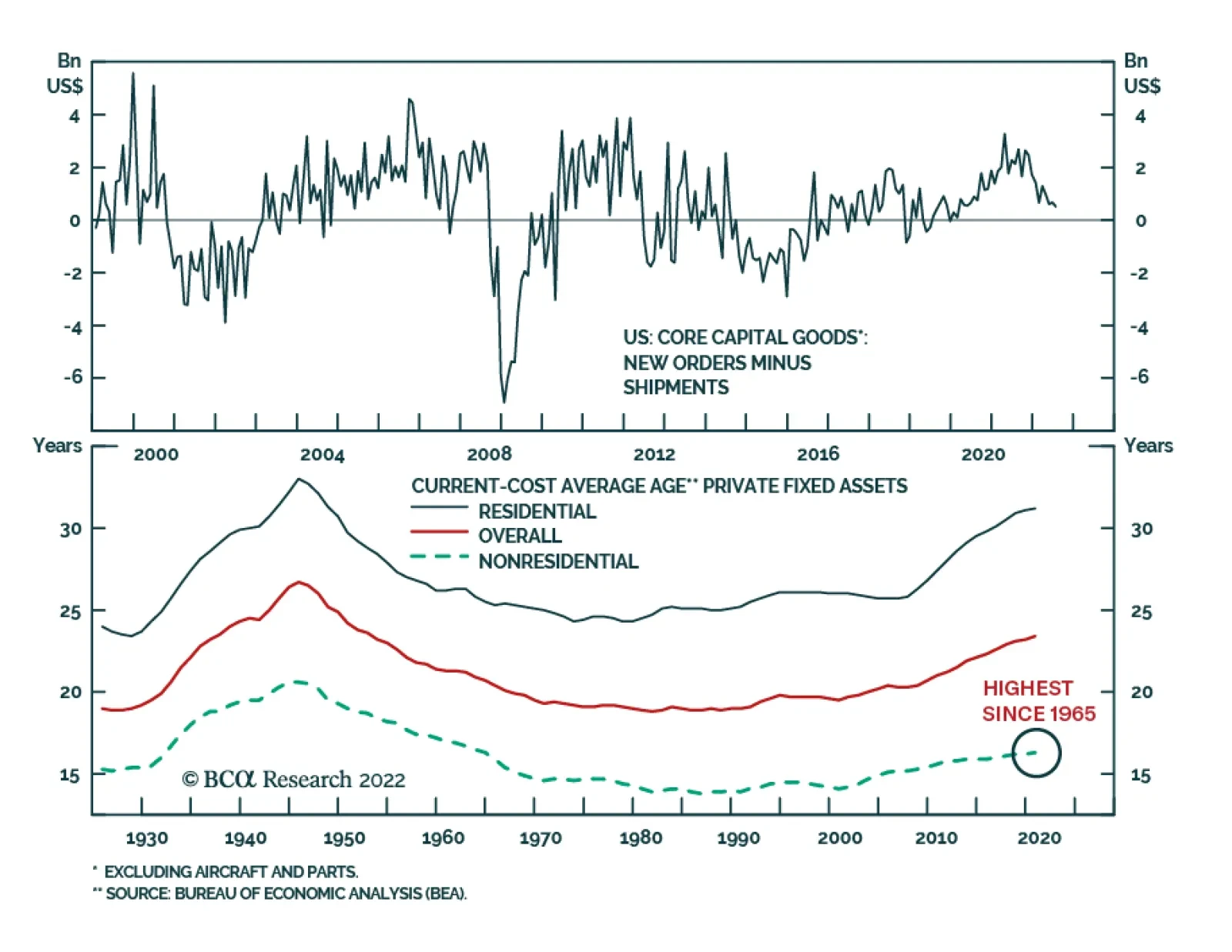
On the surface, the preliminary headline figure for US durable goods orders in July sent a negative signal about the outlook for business spending. US durable goods orders were unchanged, disappointing expectations of a 0.8% m/m increase. However, the…
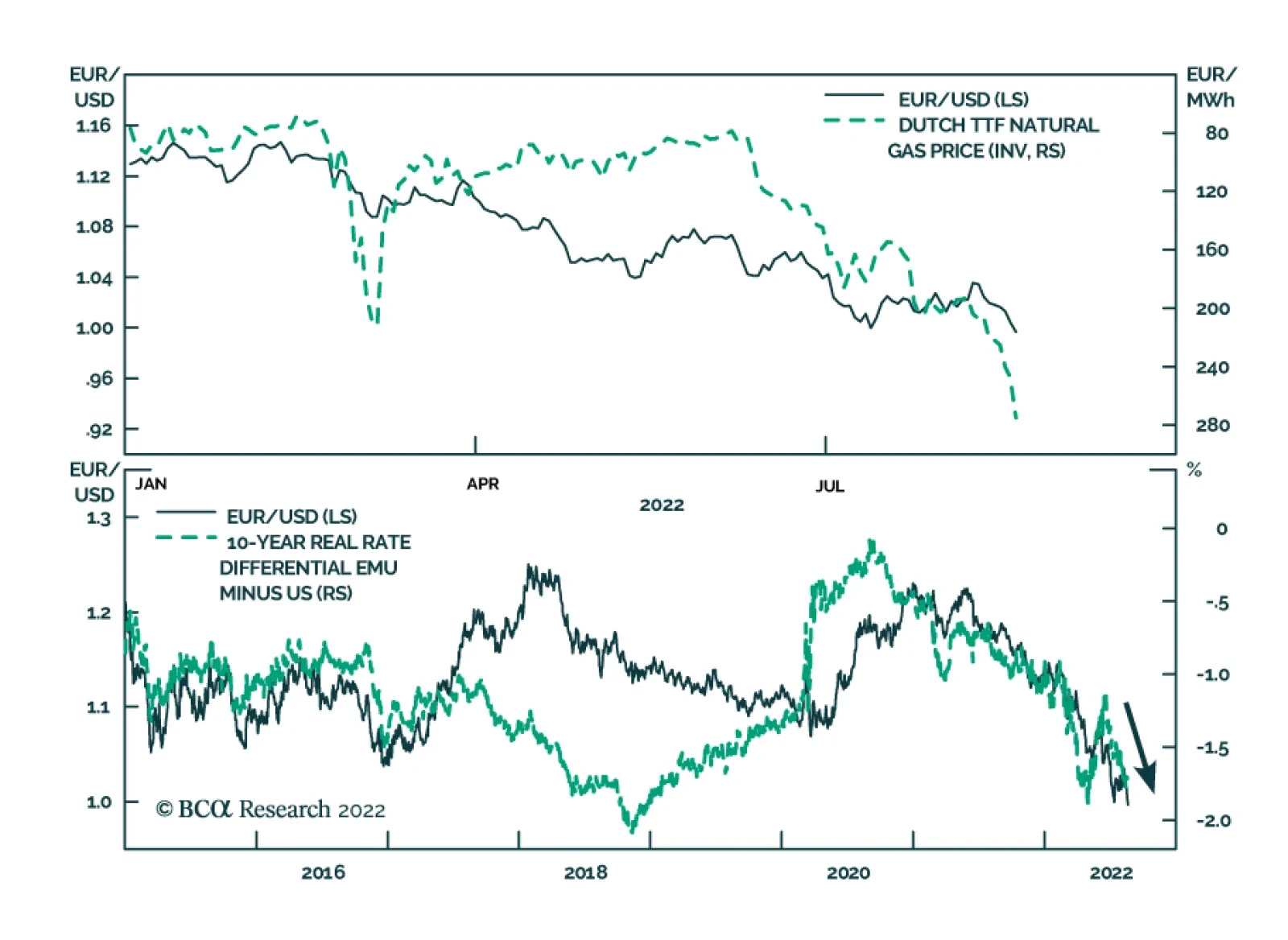
After a brief reprieve since mid-July, EUR/USD has once again broken down over the past week, falling below parity on Monday. The euro’s unrelenting decline over the past year has made it an attractive buy on a valuation basis. Our FX strategists’…
Please note that there will no US Bond Strategy publication next week. Our regular publishing schedule will resume on September 6th with our Portfolio Allocation Summary for September. Executive Summary This report describes a framework for implementing long/short positions in the TIPS market relative to duration-matched nominal Treasuries. The framework is modeled after the Golden Rule of Bond Investing that we use to implement portfolio duration trades. The TIPS Golden Rule states that investors should buy TIPS versus nominal Treasuries when their 12-month headline inflation expectations are above those priced into the market, and vice-versa. We demonstrate a method for forecasting headline CPI inflation and conclude that it will fall into a range of 2.4% to 4.8% during the next 12 months, with risks to the upside. This suggests a high likelihood that headline inflation will exceed current market expectations. The TIPS Golden Rule’s Track Record
The TIPS Golden Rule's Track Record
The TIPS Golden Rule's Track Record
Bottom Line: We see value in TIPS on a 12-month investment horizon but anticipate that an even better entry point to get long TIPS versus nominal Treasuries will emerge during the next couple of months as headline CPI weakens. We recommend a neutral allocation to TIPS for now, though we are looking for a good opportunity to increase exposure. Feature Regular readers will no doubt be familiar with our Golden Rule Of Bond Investing, the framework we use to think about our portfolio duration recommendations. In brief, the Golden Rule states that investors should set their overall bond portfolio duration based on how their own 12-month fed funds rate expectations differ from the expectations that are priced into the market. Our research shows that this investment strategy has a strong historical track record.1 The thing we like most about the Golden Rule framework is that it provides us with a good method for filtering incoming information. Does this new piece of news or economic data change our 12-month rate expectations? If not, then we probably don’t want to assign much weight to it when setting our portfolio duration. In this Special Report we demonstrate that the same Golden Rule logic that we apply to duration trading can also be applied to the TIPS market. Specifically, it can be applied to long/short positions in TIPS versus duration-matched nominal Treasuries. Developing The TIPS Golden Rule Before diving into the TIPS Golden Rule, it’s worth running through the logic that underpins this investment strategy. The logic starts with the Fisher Equation – the well-known formula that relates nominal bond yields to real bond yields. Simply, the Fisher Equation can be stated as follows: Nominal Yield = Real Yield + The Cost Of Inflation Protection In financial market terms, we can re-write the equation as: Nominal Treasury Yield = TIPS Yield + TIPS Breakeven Inflation Rate Two of the three variables in this equation have what we call valuation anchors. The nominal Treasury yield’s valuation is anchored by expectations about the future path for the federal funds rate. Put differently, if you buy a 5-year Treasury note and hold it until maturity, your excess returns versus a position in cash are purely determined by the path of the federal funds rate over that 5-year investment horizon. Similarly, the TIPS breakeven inflation rate’s valuation is anchored by expectations about CPI inflation. If held to maturity, the profits from an inflation protection position (long TIPS/short nominals or short TIPS/long nominals) are purely determined by the path of CPI inflation during the investment horizon. It’s worth noting that, unlike the nominal Treasury yield and the TIPS breakeven inflation rate, the TIPS yield has no independent valuation anchor. Within our framework, the best way to forecast the TIPS yield is to follow a 3-step process: Forecast the nominal yield based on a view about the fed funds rate. Forecast the TIPS breakeven inflation rate based on a view about inflation. Use the Fisher Equation to combine the results from steps 1 and 2 into a forecast for the TIPS yield. As an aside, while our framework relies on viewing the nominal Treasury yield and the TIPS breakeven inflation rate as reflective of expectations for the fed funds rate and CPI inflation respectively, we do not argue that those bond yields can be used to accurately forecast the fed funds rate or CPI inflation. In fact, history tells us that bond markets are usually poor predictors of future outcomes for the fed funds rate and for CPI inflation. Chart 1 shows that there is only a loose correlation (R2 = 22%) between 12-month bond-market implied expectations for the change in the fed funds rate and the actual change in the fed funds rate. Similarly, Chart 2 shows that there is hardly any correlation (R2 = 3%) between market-implied inflation expectations and the 12-month rate of change in headline CPI. Chart 1Market Prices Are A Poor Predictor Of The Fed Funds Rate
The Golden Rule Of TIPS Investing
The Golden Rule Of TIPS Investing
Chart 2Market Prices Are A Poor Predictor Of Inflation
The Golden Rule Of TIPS Investing
The Golden Rule Of TIPS Investing
In other words, it’s more advisable to view the expectations priced into bond markets as a breakeven threshold for trading, not as a tool for forecasting. Stating The TIPS Golden Rule To apply the TIPS Golden Rule, investors should follow these three steps: Calculate market-implied expectations for what headline CPI inflation will be over the next 12 months. This can be done by looking at the 1-year CPI swap rate or the 1-year TIPS breakeven inflation rate.2 Develop an independent forecast for 12-month headline CPI inflation. We demonstrate one method for doing this later in the report.3 Compare your own headline CPI forecast with the forecast that is priced in the market. If your own forecast is higher, then you should go long TIPS/short nominal Treasuries. If your own forecast is lower, then you should go short TIPS/long nominal Treasuries. Testing The TIPS Golden Rule Chart 3 shows the historical track record of the TIPS Golden Rule going back to 2005.4 The top panel shows 12-month excess returns from the Bloomberg Barclays TIPS index relative to a duration-matched position in nominal Treasuries. The bottom panel shows whether inflation surprised market expectations to the upside or to the downside during the investment horizon. We can see that, visually, it looks as though TIPS tend to outperform nominal Treasuries when there is an inflationary surprise and underperform when there is a deflationary surprise. Chart 3The TIPS Golden Rule's Track Record
The TIPS Golden Rule's Track Record
The TIPS Golden Rule's Track Record
Chart 4 shows the same relationship in a little more detail. The 12-month inflation surprise is placed on the x-axis and 12-month TIPS excess returns are on the y-axis. For the TIPS Golden Rule to be useful, we would need to see most of the datapoints in the top-right and bottom-left quadrants of the chart, and indeed this is the case. Chart 412-Month TIPS Excess Returns Vs. Inflation Surprises
The Golden Rule Of TIPS Investing
The Golden Rule Of TIPS Investing
Finally, Table 1 shows the relationship in even more detail. It shows that inflationary surprises coincide with positive TIPS excess returns 73% of the time for an average excess return of 2.6%. It also shows that deflationary surprises coincide with negative TIPS excess returns 80% of the time, for an average excess return of -3.2%. Table 112-Month TIPS Excess Returns* And Inflation Surprises (2005 – Present)
The Golden Rule Of TIPS Investing
The Golden Rule Of TIPS Investing
Please note that all the above return calculations are performed on the overall Bloomberg Barclays TIPS Index relative to a duration-matched position in nominal Treasuries. However, the TIPS Golden Rule also performs well when applied to TIPS of any maturity. The Appendix of this report replicates the above analysis for every point along the TIPS curve and shows that the results are consistently excellent. Applying The TIPS Golden Rule Now that we have stated the TIPS Golden Rule and demonstrated its effectiveness as an investment strategy, it is time to apply it to the current market. To do that, we first determine 1-year market-implied inflation expectations by looking at the 1-year CPI swap rate. As of last Friday’s close, the 1-year CPI swap rate is 3.16%. This means that if we think headline CPI inflation will be above 3.16% during the next 12 months, then we should go long TIPS versus duration-matched nominal Treasuries. If we think headline CPI inflation will come in below 3.16% during the next 12 months, then we should go short TIPS versus duration-matched nominal Treasuries. Next, we must build up our own forecast of headline CPI inflation for the next 12 months. To do this, we follow a bottom-up approach where we split the CPI basket into five components (energy, food, shelter, core goods, and core services ex. shelter) and model each one individually. Energy Inflation (9% Of Headline CPI) Chart 5Modeling Energy Inflation
Modeling Energy Inflation
Modeling Energy Inflation
Energy accounts for roughly 9% of headline CPI, though its often violent price swings mean that this component usually accounts for a much larger percentage of the volatility in headline CPI. In practice, we can accurately model Energy CPI using the prices of retail gasoline, natural gas, and heating oil (Chart 5). To get a 12-month forecast for Energy CPI we therefore need forecasts for the prices of retail gasoline, natural gas, and heating oil. In this analysis, we will consider two possible scenarios for energy prices. First, a benign ‘low oil price’ scenario where we assume that the prices of retail gasoline, natural gas and heating oil follow the paths discounted in their respective futures curves. Second, we consider a ‘high oil price’ scenario that incorporates the view of our Commodity & Energy Strategy service that a drop in Russian oil supply, among other factors, will cause the Brent crude oil price to reach $119 per barrel by the end of this year and average $117 per barrel in 2023.5 To incorporate this outlook into our model, we regress the prices of retail gasoline, natural gas and heating oil on the Brent crude oil price and extrapolate forward using our commodity strategists’ forecasts. The ‘low oil price’ scenario has Energy CPI inflation falling from its current 32.9% level all the way down to -9.9% during the next 12 months. In contrast, our ‘high oil price’ scenario has it falling to just 15.8%. Food Inflation (13% Of Headline CPI) Chart 6Modeling Food Inflation
Modeling Food Inflation
Modeling Food Inflation
Our Food CPI model is based on the cost of fertilizer, agricultural commodity prices and diesel prices. This model has done a reasonably good job explaining trends in Food CPI inflation over time, but the last few months have seen food inflation jump well above the levels suggested by our model (Chart 6). Given that the inputs to our Food CPI model are highly correlated with the oil price, we also apply the ‘low oil price’ and ‘high oil price’ scenarios discussed above to our Food CPI forecast. Using this method, the ‘low oil price’ scenario has Food CPI inflation falling to 3.8% during the next 12 months and the ‘high oil price’ scenario has it coming down to 4.2%. One key risk to these forecasts is that they both assume that the current gap between food inflation and our model’s fair value will close. It’s possible that other factors not included in our model could prevent the gap from closing. We therefore consider our Food CPI forecast to be quite optimistic. Core Goods Inflation (21% Of Headline CPI) Chart 7Modeling Goods Inflation
Modeling Goods Inflation
Modeling Goods Inflation
Core goods inflation, currently running at 6.9%, appears to have already peaked following its post-pandemic surge. We model Core Goods CPI using the New York Fed’s Global Supply Chain Pressure Index, as it is the supply chain constraints that arose during the pandemic that explain the bulk of the movement in core goods prices since that time (Chart 7).6 To forecast Core Goods CPI, we assume that global supply chain constraints continue to ease and that the New York Fed’s index reverts to its pre-pandemic level during the next 12 months. This gives us a forecast for 12-month Core Goods CPI inflation of 0%. Shelter Inflation (32% Of Headline CPI) Chart 8Modeling Shelter Inflation
Modeling Shelter Inflation
Modeling Shelter Inflation
We model shelter inflation, currently running at 5.6%, using the unemployment rate, rental vacancy rate and home prices (Chart 8). Except for the unemployment rate, all our model’s independent variables enter with a lag of at least 12 months. In other words, we wouldn’t expect any near-term change in home prices to impact Shelter CPI for at least a year. To forecast Shelter CPI, we assume that the unemployment rate rises to 4% during the next 12 months. This results in a shelter inflation forecast of 4.7% for the next 12 months. Much like with food inflation, we tend to view this forecast as relatively optimistic as it assumes a large reversion from the current rate of shelter inflation back to our model’s fair value. It’s conceivable that other factors not included in our model, such as rapid wage growth, could prevent this reversion from occurring. Services ex. Shelter Inflation (24% Of Headline CPI) Chart 9Modeling Services Inflation
Modeling Services Inflation
Modeling Services Inflation
This final component of CPI is a bit of a hodgepodge of different service industries that may not have much in common. However, we find that wage growth does a good job of tracking its trends (Chart 9). We therefore model Services ex. Shelter CPI using the Employment Cost Index, which enters our model with a 10 month lag. To forecast Services ex. Shelter CPI, we assume that the Employment Cost Index holds steady at its current growth rate. This gives us a Services ex. Shelter CPI inflation forecast of 5.5% for the next 12 months. Combining Our Bottom-Up Inflation Forecasts & Investment Conclusions Combining our bottom-up forecasts, we calculate a 12-month headline CPI inflation rate of 2.4% for the ‘low oil price’ scenario and a rate of 4.8% for the ‘high oil price’ scenario. For core CPI inflation, we calculate a 12-month forecast of 3.6%. Given the optimistic assumptions that we incorporated into our forecasts, particularly the large reversions of food and shelter inflation back to our estimated fair value levels, we view the risks to our forecasts as heavily tilted to the upside. We also acknowledge that the re-normalization of global supply chains may not proceed as smoothly as the scenario that is baked into our forecasts. Any hiccup in that process would cause our goods inflation forecast to be too low. Chart 10Inflation Forecasts
Inflation Forecasts
Inflation Forecasts
Chart 10 shows our 12-month headline and core CPI forecasts alongside the market-implied forecast from the CPI swap curve, currently 3.16%. Notice that the market-implied inflation forecast is much closer to the bottom-end of our range of headline CPI estimates, and we have already acknowledged that a lot of things will have to go right for our estimates to pan out. In other words, we see a high likelihood that 12-month headline CPI will be above 3.16% for the next 12 months which, according to our TIPS Golden Rule, tells us that we should go long TIPS versus duration-matched nominal Treasuries. While we acknowledge that there is likely some value in going long TIPS versus nominal Treasuries today, we are inclined to maintain our recommended neutral allocation to TIPS versus nominals for now. Given the recent drop in oil prices, we anticipate further weakness in headline inflation during the next couple of months. This could push TIPS breakeven inflation rates even lower in the near term, creating even more value. The bottom line is that we see attractive value in TIPS versus nominal Treasuries on a 12-month investment horizon. While we maintain a neutral allocation to TIPS for now, we anticipate turning more bullish in the near future, hopefully from a better entry point after one or two more weak CPI prints. Appendix Chart A112-Month TIPS Excess Returns Vs. Inflation Surprises (1-3 Year Maturities)
The Golden Rule Of TIPS Investing
The Golden Rule Of TIPS Investing
Table A112-Month TIPS Excess Returns* And Inflation Surprises (1-3 Year Maturities)
The Golden Rule Of TIPS Investing
The Golden Rule Of TIPS Investing
Chart A212-Month TIPS Excess Returns Vs. Inflation Surprises (3-5 Year Maturities)
The Golden Rule Of TIPS Investing
The Golden Rule Of TIPS Investing
Table A212-Month TIPS Excess Returns* And Inflation Surprises (3-5 Year Maturities)
The Golden Rule Of TIPS Investing
The Golden Rule Of TIPS Investing
Chart A312-Month TIPS Excess Returns Vs. Inflation Surprises (5-7 Year Maturities)
The Golden Rule Of TIPS Investing
The Golden Rule Of TIPS Investing
Table A312-Month TIPS Excess Returns* And Inflation Surprises (5-7 Year Maturities)
The Golden Rule Of TIPS Investing
The Golden Rule Of TIPS Investing
Chart A412-Month TIPS Excess Returns Vs. Inflation Surprises (7-10 Year Maturities)
The Golden Rule Of TIPS Investing
The Golden Rule Of TIPS Investing
Table A412-Month TIPS Excess Returns* And Inflation Surprises (7-10 Year Maturities)
The Golden Rule Of TIPS Investing
The Golden Rule Of TIPS Investing
Chart A512-Month TIPS Excess Returns Vs. Inflation Surprises (10-15 Year Maturities)
The Golden Rule Of TIPS Investing
The Golden Rule Of TIPS Investing
Table A512-Month TIPS Excess Returns* And Inflation Surprises (10-15 Year Maturities)
The Golden Rule Of TIPS Investing
The Golden Rule Of TIPS Investing
Chart A612-Month TIPS Excess Returns Vs. Inflation Surprises (15+ Year Maturities)
The Golden Rule Of TIPS Investing
The Golden Rule Of TIPS Investing
Table A612-Month TIPS Excess Returns* And Inflation Surprises (15+ Year Maturities)
The Golden Rule Of TIPS Investing
The Golden Rule Of TIPS Investing
Ryan Swift US Bond Strategist rswift@bcaresearch.com Robert Timper Research Analyst robert.timper@bcaresearch.com Footnotes 1 Please see US Bond Strategy Special Report, “The Golden Rule Of Bond Investing”, dated July 24, 2018. 2 In this report we use the 1-year CPI swap rate because it is easier to access. 3 To make the TIPS Golden Rule easy to implement, we use seasonally adjusted headline CPI for all our calculations even though TIPS are technically linked to the non-seasonally adjusted index. We also ignore the fact that TIPS coupons adjust to CPI releases with a lag. Our analysis shows that the rule works very well even without incorporating these complications. 4 CPI swap rates are only available from 2004 onwards, so this is the largest historical sample we can use. 5 Please see Commodity & Energy Strategy Weekly Report, “EU Russian Oil Embargoes, Higher Prices”, dated August 18, 2022. 6 For more details on the Global Supply Chain Pressure Index: https://www.newyorkfed.org/research/policy/gscpi#/overview Recommended Portfolio Specification Other Recommendations Treasury Index Returns Spread Product Returns
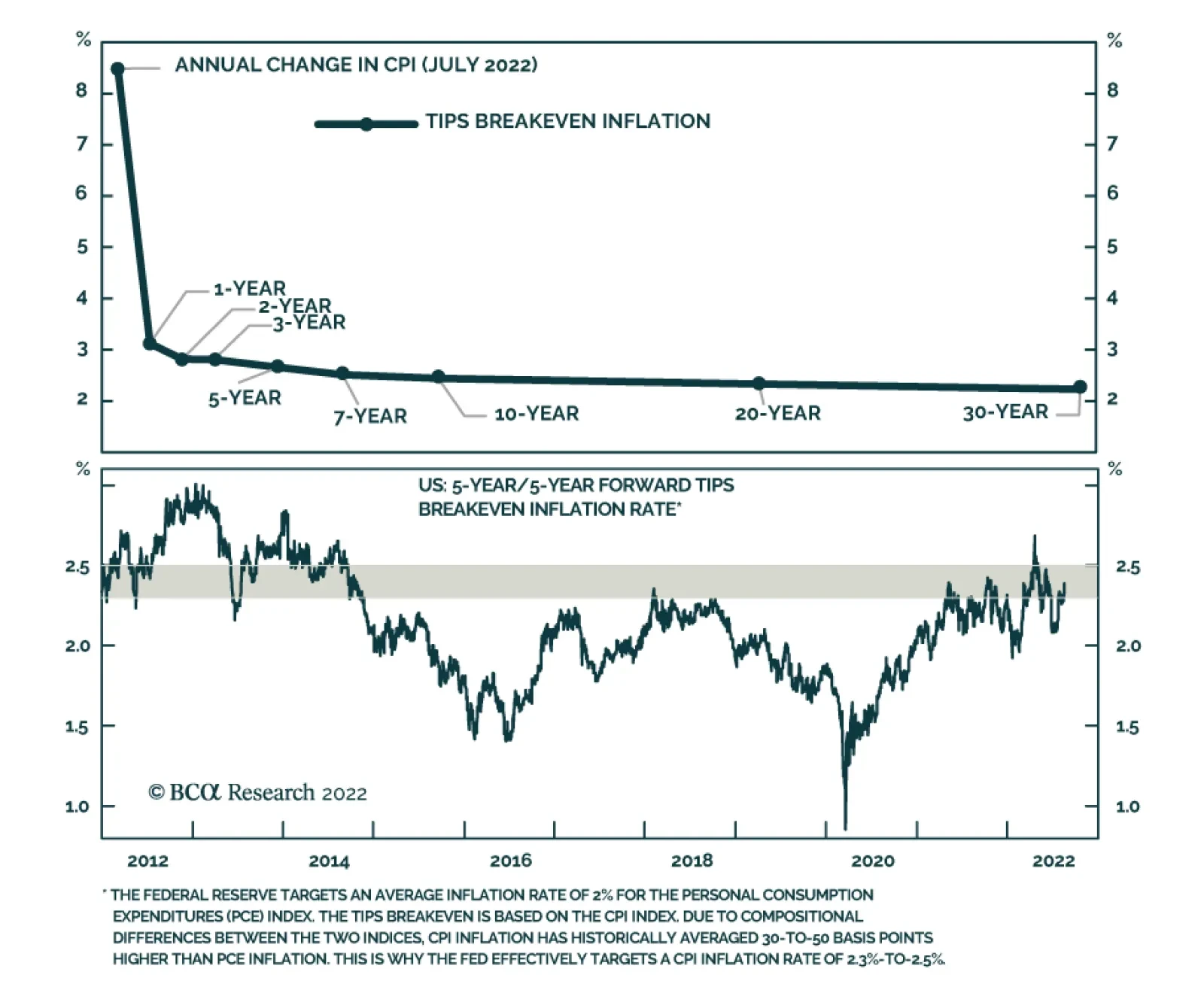
Although the BCA house view calls for a neutral equity allocation on a cyclical 12-month investment horizon, some of our more optimistic colleagues remain tactically overweight. Specifically, our Global Investment strategists have highlighted three key…
Executive Summary The Fed Versus The Market
The Fed Versus The Market
The Fed Versus The Market
In today’s report, we summarize the arguments of bulls and bears to examine the possible longevity of the rally. The Bulls’ view is centered around several key themes: Inflation has turned. The Fed is less hawkish than initially assumed, and Jay Powell is not Paul Volcker. The economy is resilient, and consumers are spending. Corporate earnings will surprise on the upside thanks to consumer strength. Meanwhile, the bears argue that: Growth is slowing and a soft landing is elusive, which will lead to earnings disappointment. Valuations and Technicals are no longer attractive – the best part of the rally is likely over, and risk-reward is skewed to the downside. Inflation is embedded and broad-based and it will take many months to reach the level that is palatable to the Fed. Bottom Line: The rally was expected, but its force and durability took us by surprise. Now, after a strong rebound, risks are skewed to the downside and the markets are fragile, but the rally may continue. We offer our take on what can bring this rally to a halt, and the “danger” signs investors need to be on the lookout for. Feature The fast and furious rally off the June 16 lows has taken many investors by surprise. Over the past two months, the S&P 500 has rebounded by 17%, the NASDAQ is up 22%, while Growth has outperformed Value by 9%. Thematic small-cap growth ETFs have fared even better (Chart 1) with Cathie Wood’s ARKG and ARKK up nearly 50%. The Technology and Consumer Discretionary sectors are up 23% and 28% respectively, while Energy and Materials are relatively flat, showcasing a rotation away from the inflation winners to losers. In this week’s report, we will “dissect” the rally and its key drivers to better understand what can bring this rally to a halt. We will also summarize the arguments of the bulls and present our “bearish” rebuttal to some of the assumptions. Sneak Preview: After the powerful rebound, the market is fragile, and risks are skewed to the downside. By summarizing the arguments of bulls and bears, we are offering our take on what can bring this rally to a halt, i.e., hawkish Fed speeches, disappointing inflation readings, rising rates, and bad earnings. However, a positive surprise along each of these dimensions may also result in the next leg up. Chart 1ETF Universe Overview
What Can Bring This Rally To A Halt?
What Can Bring This Rally To A Halt?
Anatomy Of The Rally To understand what fuels the rally, we need to understand what its key catalysts are. Oversold: First and foremost, in mid-June, US equities were severely oversold – the BCA Capitulation Indicator hit levels last seen in the spring of 2020 (Chart 2). The BoA institutional survey has also reported an extreme level of bearishness. Pull back in the price of energy: This created fertile ground for a rebound, but the catalyst came from the turn in commodities and energy prices. Extreme pessimism about global growth after the Fed’s aggressive response to a disappointing inflation print has triggered a sell-off in oil and metals. Since mid-June, the GSCI Commodities and the GSCI Energy index are in a bear market downtrend, 21% and 25% off their peaks. Inflation moderating: This disinflationary development has unleashed a positive reinforcement loop: Lower energy prices led to a turn in the CPI print. And many still believe that, after all, inflation is transitory: With supply disruptions clearing and prices of energy and commodities turning, inflation will dissipate just as fast as it arrived. We know this because inflation breakevens are currently at levels last seen a year ago (Chart 3). Chart 2Capitulated
Capitulated
Capitulated
Chart 3Cooling Off : Back To 2021
Cooling Off : Back to 2021
Cooling Off : Back to 2021
Gentler Fed: That is when the market decided that easing price pressures in concert with slowing growth would compel the Fed to pursue a shallower and shorter path of interest rate increases than initially expected – rate increases derived from OIS started to undershoot the “dot plot” (Chart 4). Effectively, the bond market started to forecast that the Fed will end the year at 3.5% and ease as soon as early 2023. In other words, the Fed is nearing the end of the hiking cycle. Naturally, the long end of the Treasury curve has pulled back to April levels, despite a much higher Fed rate. One way or another, yields have stabilized. Lower rates are a boon for equities: As a long-duration asset, equity valuations are inversely correlated with long yields (Chart 5). A better-than-expected Q2 earnings season was the icing on the cake. Chart 4The Market Expects Cuts As Soon As Early 2023
The Market Expects Cuts As Soon As Early 2023
The Market Expects Cuts As Soon As Early 2023
Chart 5Falling Yields Propelled Equities Higher
Falling Yields Propelled Equities Higher
Falling Yields Propelled Equities Higher
Was The Rally Surprising? The rally itself did not surprise us – after all, we did expect the market to turn on a dime at the earliest whiff of falling inflation (Chart 6). Admittedly, we were taken aback by its strength and longevity. With inflation turning, we also expected a change in leadership from the Energy and Materials sectors to Technology and Consumer Discretionary (Chart 7). We also predicted back in January in our “Are We There Yet?!” report that, based on the previous hiking cycles, Tech would rebound roughly three months after the first rate hike (Chart 8), which was taking us to June. Chart 6When Inflation Turns, Equities Rebound
What Can Bring This Rally To A Halt?
What Can Bring This Rally To A Halt?
Chart 7Turn in Inflation Triggers A Change In Sector Leadership
What Can Bring This Rally To A Halt?
What Can Bring This Rally To A Halt?
Chart 8A Closer Look At Technology
What Can Bring This Rally To A Halt?
What Can Bring This Rally To A Halt?
In early July, we upgraded Growth to overweight as an asset that would benefit from an anticipated turn in CPI, rate stabilization, and slowing growth (Chart 9). We have also reaffirmed our overweight in Software and Services as a way to play Growth on a sector level. We have downgraded Energy to underweight to reduce exposure to Value. Chart 9Growth And Quality Lead Markets Higher When Inflation Abates
What Can Bring This Rally To A Halt?
What Can Bring This Rally To A Halt?
What The Bulls Think Let’s summarize what the bulls think are the catalysts for the next leg up: Inflation has turned. Looking for further signs that inflation is easing. The Fed is less hawkish than initially assumed, and Jay Powell is not Paul Volcker. Looking for signs that the Fed is getting closer to the end of the hiking cycle. So far, the economy is resilient, and consumers are spending – excess savings and excess demand for labor will soften the blow. Looking for signs that the recession can be avoided. Corporate earnings will surprise on the upside thanks to consumer strength. In the next section, I will juxtapose these optimistic expectations with those of a bear, i.e., of yours truly. A full disclosure – I am not a perma-bear but even eight weeks into the best recovery rally ever, I can’t shake off my pessimism. After all, I am used to the markets going up on injections of liquidity and expect them to shudder when liquidity is mopped out of the system. What The Bears Think, Or A Litany Of Worries Inflation is embedded and broad-based Broad-based: While headline inflation is turning, mostly thanks to prices of energy and materials, it will take a long time for core inflation to revert to the desired 2% as it is broad-based. This is evident from trimmed and median CPI metrics, which continue their ascent. Inflation has also spilled into sticky service items, such as rent (Chart 10). Wage-price spiral: Then there is that pesky wage-price spiral that is manifesting itself in soaring labor costs (Chart 11), which companies pass on to their customers. In the meantime, productivity is falling, and unit labor costs are increasing at 9.5% per year, a rate of growth last seen in 1980s (Chart 12). Demand for labor still exceeds supply with 1.8 job openings for every job seeker, and much more tightening is required to bring supply and demand into balance. Chart 10Entrenched?
Entrenched?
Entrenched?
Chart 11Wage-price Spiral
Wage-price Spiral
Wage-price Spiral
Chart 12ULC Soaring
ULC Soaring
ULC Soaring
Wages and service inflation are more important to structural inflation than energy. Rent and its equivalents constitute 30% of the CPI basket, while wages are roughly 50% of corporate sales and by far the largest component of the cost structure. Inflation is embedded and broad-based and it will take many months to reach the level that is palatable to the Fed. What Does The Fed Think? Fed minutes: Fortunately, we don’t need to guess. The Fed minutes state that "participants agreed that there was little evidence to date that inflation pressures were subsiding" and that inflation “would likely stay uncomfortably high for some time.” Further, “though some inflation reduction might come through improving global supply chains or drops in the prices of fuel and other commodities … Participants emphasized that a slowing in aggregate demand would play an important role in reducing inflation pressures," the minutes said. The Fed minutes state that in moving expeditiously to neutral and then into restrictive territory, “the Committee was acting with resolve to lower inflation to 2% and anchor inflation expectations at levels consistent with that longer-run goal.” In its previous communications, the Fed emphasized that its commitment to a 2% target is unconditional. Is powell more like burns or volcker? In addition, there is an ongoing debate between bulls and bears on the character of the Fed – is Jay Powell a strong-willed hawk like Paul Volker, or more of a waverer like Arthur Burns, who presided over the relentless march of inflation in the seventies? We think that the Chairman can channel Paul Volcker. After all, the Fed has surprised investors by acting swiftly and decisively. Back in March, the Fed dot plot indicated that by the end of the year, the target rate will reach a mere 1.75%. However, we hit a 2.25%-2.50% rate range as soon as July. Jay Powell is concerned about his legacy: He would not want to be remembered as a Chair who mishandled inflation by keeping rates too low despite historically low unemployment and resilient consumers whose accounts are padded with excess post-pandemic savings. The Fed is more hawkish than what the majority of market participants, unscathed by the inflation of the seventies and eighties, believe. The Fed dot plot, to which the Chairman referred on multiple occasions, projects a Fed funds rate of 4% at year-end and of 4.5-5.0% next year (Chart 13). Meanwhile, Fed funds futures are only pricing a rate of about 3.4% for December 2022, even after the hawkish talk from both ex-dove Kashkari and a hawk Bullard (3.75%-4.0% by year-end and 4.4% by the end of 2023). Further, the Fed itself states in its minutes that rates would have to reach a "sufficiently restrictive level" and remain there for "some time" to control inflation that was proving far more persistent than anticipated. The Chicago Fed President Charles Evans has also affirmed that the Fed is definitely not cutting rates in March 2023. Chart 13The Fed Versus The Market
The Fed Versus The Market
The Fed Versus The Market
Doves latch on to comments from the meeting that the Fed will be data-driven, and that it is concerned about overtightening. To us, these are just the musings of the “responsible grown-ups.” Quantitative Tightening: Now let’s not forget another leg of the stool – Quantitative Tightening. QT has been very tame so far and, since the program commenced, the size of the Fed’s balance sheet, $8.9 trillion, has barely budged. In September, the Fed is scheduled to step up QT to a maximum pace of $95 billion from $47.5 billion— running off up to $60 billion in Treasuries, and $35 billion of mortgage securities. Shortages of securities available for run-off due to a dearth of refinancing may trigger a shift to outright selling, further tightening financial conditions. Equities are at odds with the Fed: Last, but not least, equity markets are on a collision course with the Fed. Since June, financial conditions have eased as opposed to tightened, making the Fed’s job so much harder (Chart 14). Chart 14The Rally Eased Financial Conditions
The Rally Eased Financial Conditions
The Rally Eased Financial Conditions
The Fed may prove to be more hawkish than in the past as it is on a quest to combat inflation and takes its mission very seriously. “Don’t fight the Fed” the adage holds. Economic Growth Is Slowing The BCA Business Cycle Indicator signals that economic growth is slowing (Chart 15), which is also evident from a host of economic data releases, ranging from GDP growth to business surveys to housing data. One of the few data series that has defied gravity so far is the jobs report, but the job creation rate is a coincidental indicator at best, and a lagging one at worst. Jobs are usually lost after the start of a recession (Chart 16). Chart 15Economy Is Slowing
Economy Is Slowing
Economy Is Slowing
Chart 16Unemployment Never "Just Ticks Up"
Unemployment Never "Just Ticks Up"
Unemployment Never "Just Ticks Up"
Can consumers save the day? After all, $2.2 trillion in excess savings should help to handle the pressures of negative real wage growth and income growth that is below trend. Yes and no. Gasoline savings can certainly support increases in discretionary spending, all else equal. As for excess savings – adding this money back into the economy may ignite another bout of inflation, working against the Fed, and triggering more rate increases. Many clients ask us if we anticipate a recession. Broadly speaking we do, as the Fed has an arduous task ahead of it in balancing the supply and demand of labor. However, we do not expect a recession in 2022 or even early 2023. Can the Fed succeed by only reducing excess job openings from 1.8 to 1, thus avoiding a rise in unemployment? This is possible, but the probability of such an outcome is low as unemployment never “just ticks up” (Chart 16). However, what the market is pricing is also important. At the moment, the rally shows that it considers the current growth slowdown just a growth scare to be shrugged off. Will there be more disappointments? We think so, as the US economy is facing multiple headwinds from slowing demand for exports due to geopolitical turbulence and payback of overstimulated consumer demand at home. And it is not a recession per se, but a growth disappointment, that may take equities on the next leg down. Growth is slowing and a soft landing is illusive. Earnings Growth Will Continue Its March Towards Zero We believe that earnings growth will continue to slow into year-end – flagging consumer demand at home and abroad, a strong dollar, and soaring unit labor costs that can no longer be fully passed on to stretched consumers, as corporate pricing power is decelerating. Even in Q2-2022, ex-Energy EPS growth is already negative at -1.5%, with Consumer Discretionary, Financials, Communications, and Utilities reporting an earnings contraction. As we predicted back in October, the S&P 500 margins are also compressing, currently at 50bps off their peak, with consensus expecting them to lose another two points within the next 12 months as companies are grappling with rising costs (Chart 17). Analysts are finally in a downgrading mode (Chart 18), with growth over the next 12 months now expected to be 7.7% compared to 10% earlier this summer. Analyst downgrades will continue, and an earnings recession is highly probable as early as Q4-2022. Chart 17Profitability Is Under Pressure
Profitability Is Under Pressure
Profitability Is Under Pressure
Chart 18Earnings Are Finally Being Downgraded
Earnings Are Finally Being Downgraded
Earnings Are Finally Being Downgraded
In terms of the durability of the rally – earnings growth disappointment will be enough to cause equities to pull back. Earnings growth is slowing and more disappointments may be in store. Valuations And Technicals The S&P 500 is currently trading at 18x forward earnings, which is nearly a two-point rebound off the market trough of 15.8x. This is roughly where PE NTM was in April when the 10-year yield stood at 2.80%. Therefore, the multiple reverted on the back of falling rates, and the market is fairly valued considering where rates are now. And another factor to consider: Analysts are slashing earnings expectations, and with E in a P/E likely to be downgraded further – the “true” forward multiple is likely higher than it appears. The BCA Valuation Indicator is also flashing “overvalued” (Chart 19). From the equity risk premium standpoint, 3% is low by historical standards (Chart 20). And if we consider Shiller PE, it has come down from an eye-watering 38x to a still elevated 29x. Chart 19Pricey Again?
Pricey Again?
Pricey Again?
Chart 20Equities Are No Longer Cheap By ERP Or Shiller PE Metrics
Equities Are No Longer Cheap By ERP Or Shiller PE Metrics
Equities Are No Longer Cheap By ERP Or Shiller PE Metrics
Therefore, it is hard to call equities cheap at this point. But being generous, we will call them “fairly priced.” Regardless – at these levels of valuations, the best part of the rally is likely over, and risk-reward is no longer favorable. From a technical standpoint, this rally is broad-based with nearly 90% of the S&P 500 industries trading above their 50-day moving average (Chart 21). But according to the BCA Technical Indicator, equities are no longer oversold and have just crossed into neutral territory (Chart 22). Interestingly, once the Technical indicator starts to rise, it usually ascends for a while, making us wary to boldly call an immediate end to this rally. Chart 21Thrusting
Thrusting
Thrusting
Chart 22No Longer Oversold?
No Longer Oversold?
No Longer Oversold?
Valuations and Technicals are no longer attractive – the best part of the rally is likely over and risk-reward is skewed to the downside. Investment Implications Or Can This Rally Continue? Timing the market is hard at best, impossible at worst. After a 17% rise from the bottom, the S&P 500 is no longer cheap or oversold. Buying equities for valuations or technical reasons is too late – risks are skewed to the downside. Our working assumption is that the rally will pause waiting for the new data that will trigger a new leg up or down. Further, as we pointed out in the Fat and Flat report, the current period is reminiscent of the 1980-1982 Volcker era. So far, the market is following this pattern to a T (Chart 23). The problem is that each leg of the up-and-down market may take months. As such, being (eventually) right and principled does not pay off. After all, the economy is not a market. Therefore, until one of the following happens, the music will continue and the markets can keep dancing, which may be for a while. Chart 23Volcker Era Redux
Volcker Era Redux
Volcker Era Redux
The rally will continue until: There is a communication from the Fed re-emphasizing its hawkish stance and determination to get inflation back to 2%. It may be as one of the FOMC member’s speeches broadcast at Jackson Hole. Long-term Treasury yields pick up either because of the Fed’s actions or speeches or because the economy is overheating. Negative inflation surprise – it may come as either a higher-than-expected inflation reading or evidence that inflation is entrenched, such as rising service or rent inflation, soaring wages, a pick-up in the price of oil or commodities, or a growth surprise out of China, to name but a few. Negative earnings surprise – guidance from a number of companies indicating that economic growth is slowing, and earnings will disappoint. A negative economic surprise may be perceived by the market as “bad news is good news.” We recommend the following: Maintain a well-diversified portfolio, with sufficient allocation to both cyclicals and defensives. Increase exposure to Growth sectors, such as Technology. We particularly favor Software and Services as it leverages the pervasive theme of digitization and migration to the cloud. Reduce allocation to Energy and Materials – these sectors tend to underperform when inflation turns. They are also quintessential value sectors. Maintain some allocation to cyclicals – we are overweight the Industrial sector as it leverages a long-term theme of onshoring and automation. We may be upgrading the Consumer Discretionary sector in the near future. We are also overweight Banks and Insurance for portfolio diversification – these sectors benefit from rising rates and positive growth surprise. Markets turn on a dime and it is good to be prepared. Allocate capital to long-term investment themes: Green and Clean and EV, benefiting from the funds allocated by the IRA bill, Cyber Security, and Defense. Bottom Line: The rally was expected, but its force and durability took us by surprise. Now, after a strong rebound, risks are skewed to the downside and the markets are fragile, but the rally may still continue. We offer our take on what can bring this rally to a halt, and the “danger” signs investors need to be on the lookout for. In the meantime, overweight Growth and maintain a well-diversified portfolio. Irene Tunkel Chief Strategist, US Equity Strategy irene.tunkel@bcaresearch.com Recommended Allocation Recommended Allocation: Addendum
What Our Clients Are Asking: The Bear Market 2.0 Webcast Follow Up
What Our Clients Are Asking: The Bear Market 2.0 Webcast Follow Up
Executive Summary We continue to recommend overweighting risk assets in multi-asset portfolios over the next six months because we believe financial markets have prematurely priced in too much pessimism. Against a particularly uncertain macroeconomic backdrop, we think all investors should have reduced conviction in their views. Asking how one could be getting it wrong is especially relevant today. We identify seven prominent risks to our view, with unanchored inflation expectations and consumer retrenchment posing the biggest threats to our risk-friendly recommendations. The former would imply economic overheating that would prompt the Fed to squash the expansion; the latter would herald a period of insufficient growth. Inflation Expectations Are Still Contained
Inflation Expectations Are Still Contained
Inflation Expectations Are Still Contained
Bottom Line: We are on the alert for several ways our glass-half-full view could be disappointed but none of them has yet emerged. We continue to recommend positioning a portfolio in line with it. Feature We will be taking our summer vacation this week and will not publish next Monday, August 29th. We will resume our regular publication schedule on September 5th. Chart 1Overdone
Overdone
Overdone
We held our quarterly webcast last week, in which we reiterated three main points that will be familiar to US Investment Strategy readers. One, the demise of the American consumer has been greatly exaggerated. Two, monetary policy works with a lag. Three, stubbornly high inflation will bring about the end of the expansion and the bull markets in equities and credit, but not just yet. Those points reinforce our view that equities and credit will outperform Treasuries and cash over the rest of the year and place us at the more bullish end of the continuum inside and outside of BCA for the near term, though we are much more circumspect about the prospect for risk assets over the next twelve months and beyond. We also spent some time digging into the reasons that we are more constructive than the average bear. Those reasons largely revolved around the idea that financial markets prematurely discounted the negative effects that will follow sometime after the Fed flips monetary policy settings from easy to tight. After tightening sharply over the first half of the year (Chart 1, top panel), we think financial conditions are due for a break as Treasury yields settle into a well-defined range (Chart 1, second panel), credit spreads consolidate their retracement after sharply widening (Chart 1, third panel), the S&P 500 finds a footing and retraces more of its first half losses (Chart 1, fourth panel) and the dollar, cooling off after a torrid run (Chart 1, bottom panel), prepares to weaken over the intermediate term. We did not have time to answer all the questions from the webcast Q&A before the hour was up and we spent much of the week replying to them over email. Several of the questions asked what we are most worried about, or which indicators are most likely to signal that we are getting the outlook wrong. We ask ourselves these questions continuously and they are an ideal way to conclude a gathering like last Monday’s. Although we didn’t get to address them live, examining the biggest risks to our view as a coda in this week's bulletin is the next best thing. Risk #1: Unanchored Inflation Expectations We view a breakout in inflation expectations as the biggest risk to our view. If households, businesses and investors were to expect that inflation would inflect meaningfully higher over the long term, they would adjust their behavior in ways that could make high inflation beget still higher inflation. The ensuing self-reinforcing cycle would become much more difficult for the Fed to break and would presumably involve a stark repricing of Treasury securities and risk assets. Related Report US Investment StrategyRisks To Our View We have been warily monitoring inflation expectations over the near term (0-2 years, top panel in Charts 2 and 3), the intermediate term (3-5 years, middle panel) and the long term (6-10 years, bottom panel), as has the Fed. We have become increasingly emboldened by the stability of the intermediate- and long-term series, even in the face of the highest measured inflation in 40-plus years. Now that near-term expectations have rolled over, some of the risk that elevated current inflation will begin to bleed into long-run expectations is fading. We remain relieved that businesses, investors and consumers (Chart 4) have not yet assumed high inflation will persist but if longer-run inflation expectations threaten to become unanchored, we will abandon our constructive take on the economy and risk assets. Chart 2High Reported Inflation ...
High Reported Inflation ...
High Reported Inflation ...
Chart 3... Has Yet To Translate Into ...
... Has Yet To Translate Into ...
... Has Yet To Translate Into ...
Chart 4... Meaningfully Higher Long-Run Inflation Expectations
... Meaningfully Higher Long-Run Inflation Expectations
... Meaningfully Higher Long-Run Inflation Expectations
Risk #2: A Renewed COVID Breakout The other risks are not as significant as unmoored inflation expectations but they are meaningful nonetheless. A renewed COVID breakout that imposed the de facto equivalent of rolling blackouts in production and transportation would partially undo the supply chain improvements that have helped relieve some of the upward pressure on goods inflation while hampering global growth. That could have the doubly negative impact of squeezing S&P 500 earnings while rekindling inflation pressures, nudging the US and global economies toward stagflation. Effective vaccinations and treatments have rendered COVID little more than a nuisance in the States (Chart 5) and other developed nations, but if the pandemic surges back to life elsewhere in the world, we would have to reconsider our more constructive take. Chart 5Initially A Scourge, COVID Is Now An Annoyance
Initially A Scourge, COVID Is Now An Annoyance
Initially A Scourge, COVID Is Now An Annoyance
Risk #3: Geopolitical Pressures Our in-house geopolitical experts were among the first to sound the alarm on Ukraine early in the year. A worsening of the conflict there, or anything that imperils Europe’s access to energy supplies or further restricts global supplies of grain, will also cloud the picture for risk assets. Our geopolitical team has long viewed the Taiwan Strait as a potential major geopolitical flashpoint and a sharp increase in Sino-American tensions would make us reconsider our thesis as well. Our in-house team warns that Iran could be another source of instability and we will have to remain aware of the potential for geopolitics to throw a wrench into otherwise neutral-to-bullish macro conditions. Risk #4: US Consumers Lose Their Nerve Though we haven’t tried to rank the risks beyond a breakout in inflation expectations, a big pickup in the savings rate is the second largest risk on our list. If households reverse field and start saving their disposable income at a rate above their post-crisis/pre-pandemic average (Chart 6), it would signal that their aggregate consumption decisions were beginning to match their gloomy responses to confidence surveys. That would erode our conviction that they will deploy their excess pandemic savings to keep consumption – and the US economy – expanding near its trend rate. If consumers begin to circle the wagons in paradox-of-thrift fashion, it would present a nearly insurmountable obstacle for our thesis. Chart 6A Massive Savings Cushion To Support Consumption ...
A Massive Savings Cushion To Support Consumption ...
A Massive Savings Cushion To Support Consumption ...
Risk #5: Consumer Credit Deterioration As SIFI bank executives noted in last month’s second quarter earnings calls, consumer credit has performed spectacularly well. Credit card net charge-offs are hovering at all-time lows, mortgage foreclosure rates are microscopic, and the only signs of stress have emerged, faintly, at the lowest ends of the wealth and income distributions. The very gentle softening in consumer credit that lenders have seen so far (Chart 7) could turn into something more worrisome if inflation fails to moderate and/or the jobs market goes south. If consumer credit begins palpably deteriorating, it would signal that the excess savings buffer does not offer as much protection as we thought. Chart 7... And Consumer Credit
Risks To Our View (Again)
Risks To Our View (Again)
Risk #6: A Softening Labor Market Chart 8Still A Lot Of Help Wanted
Still A Lot Of Help Wanted
Still A Lot Of Help Wanted
An extremely robust labor market has helped solidify our conviction that a sizable moat protects the US economy from unwelcome near-term surprises. Despite evident deceleration in growth over the first half of the year, net payrolls have continued to grow at a rapid clip and ongoing demand for additional hires (Chart 8) remains strong. The labor market could soften more rapidly than it has so far or than we project it will in the near term. Risk assets’ window for outperformance will shorten the faster the labor demand moat shrinks. Risk #7: Technical Support Could Prove Fleeting We have been further encouraged by the ease with which the S&P 500 sliced through resistance around 4,175 on its second try last week and has remained above that level (Chart 9). We see 4,175 providing tactical support to the index, limiting its near-term downside. If the support were to fail a test, we will be forced to re-evaluate US equities’ near-term risk-reward profile. Chart 9The S&P 500 Appears To Have Some Near-Term Technical Support
Risks To Our View (Again)
Risks To Our View (Again)
A client alerted us last week to a longer-term technical pattern that might serve to put a bottom under equities. Since 1950, no bear market has made new lows after retracing at least 50% of its decline. We explored the pattern beginning with the November 1968-May 1970 bear market and found that tests of the 50% retracement level were few and far between. The bear market action of the last 50-plus years by no means guarantees that the S&P 500 will encounter difficulty punching back through the 50% threshold (4,231.67) it crossed on Friday August 12th, but the index has gathered some positive technical omens during its two-month rally. Investment Implications There is no shortage of potential risks right now and we reiterate our heightened vigilance. Investors must contend with the combination of a once-in-a-century global pandemic, the unprecedented fiscal and monetary responses to its outbreak, the first major cross-border war in Europe since 1945 and four-decade highs in inflation across major developed economies. Our conviction levels are lower than normal and our inherent compulsion to ask where we could be getting it wrong now verges on paranoia. Though we are continuously looking over our shoulder, we are comforted by nearly unanimous glass-half-empty sentiment. We still believe that it won’t take much for corporate earnings and the economy to surprise to the upside. The latest iteration of the Bank of America Merrill Lynch portfolio manager survey revealed that sentiment is no longer “apocalyptically bearish,” but we still expect that relative performance pressures will prod many bearishly positioned managers to cover their risk asset underweights. We remain constructive on risk assets over the next six months, though we will likely take some chips off the table if the S&P 500 rallies into the 4,500-to-4,600 range as we expect. It is a core part of our process to seek out information that may invalidate our hypotheses and we don’t even have to venture beyond the confines of BCA to gather it right now. Our differences with our colleagues are not as large as they might seem in our daily BCA Live and Unfiltered live stream, however, as they boil down to timing. We are neutral-to-bearish twelve months out, as we anticipate another equity bear market will begin around the second half of next year once it becomes apparent that the FOMC will not stand down from its 2% inflation goal. We simply think there’s money to be made from the long side in the interim. Doug Peta, CFA Chief US Investment Strategist dougp@bcaresearch.com
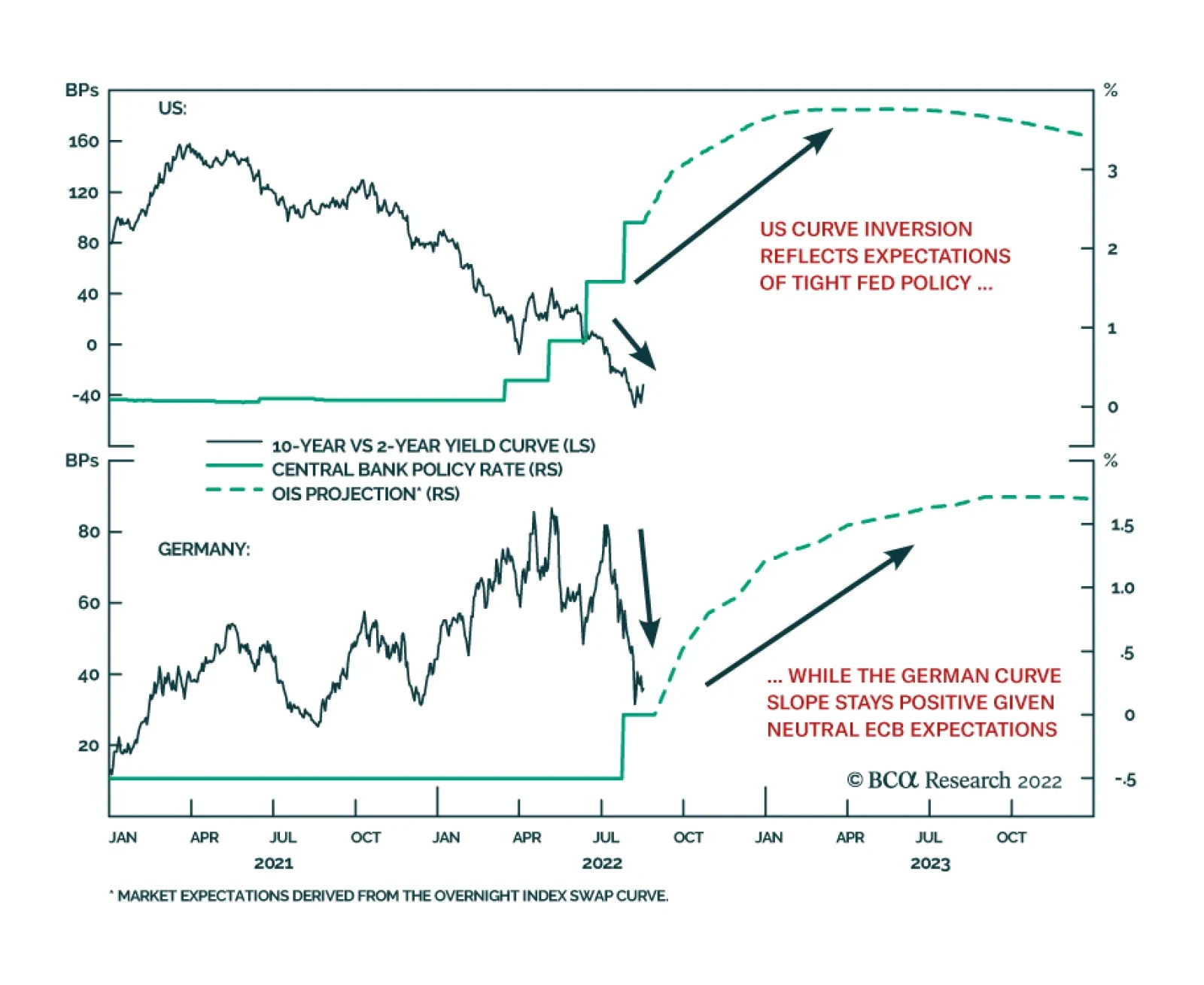
As of Thursday’s close, the 2-year/10-year US Treasury curve is inverted, with the 10-year yield trading -35bps below the 2-year yield. In Europe, there is no inversion, with the 10-year German yield trading 37bps above the 2-year yield. Why the…