Sorry, you need to enable JavaScript to visit this website.
Skip to main content

United States

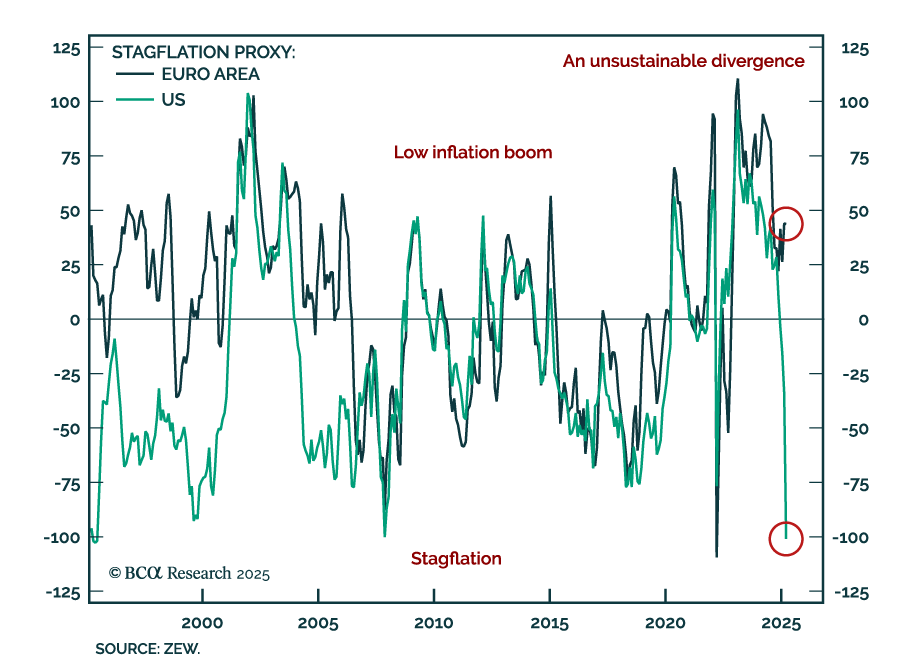
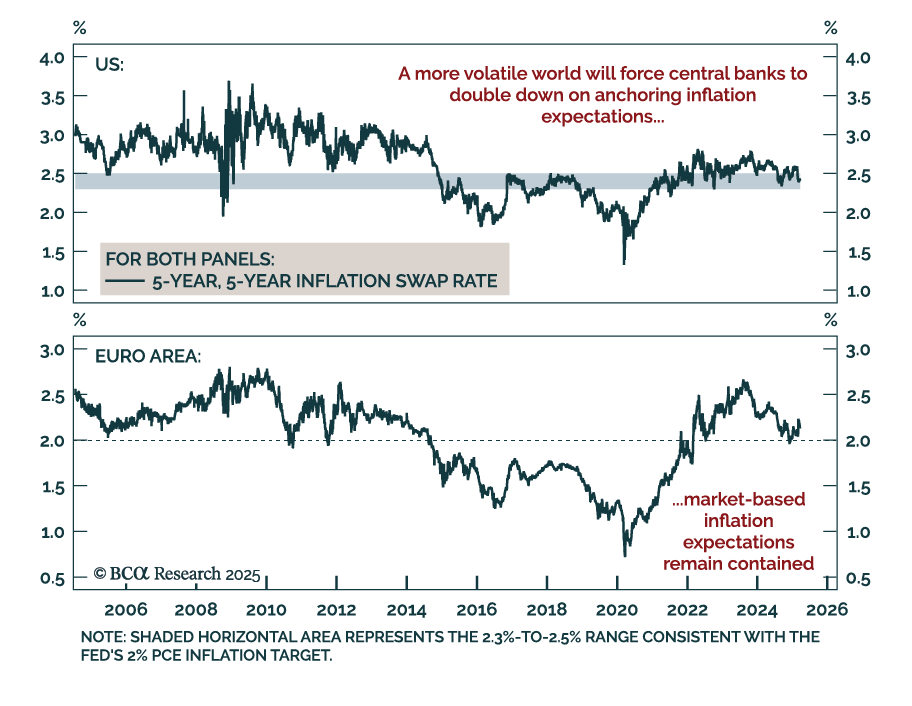
The US (and the UK) is staring down the barrel of a ‘mini-stagflation’ until a deflationary shock arrives to neutralise it. We describe a likely source for the deflationary shock and list three investment conclusions that are valid irrespective of how long it takes for the deflationary shock to arrive. Plus: RCI.B is deeply oversold and ripe for a rebound.

 Our US Equity strategists held a roundtable, which led to many client questions addressed in the team’s latest report. Long-term interest rates will decline if disinflation persists, deficits shrink, or economic growth slows, though each scenario…
The House of Representatives passed a Budget Resolution bill that adds $2.8tn to the deficit by 2034. Our Geopolitical strategists highlighted during our BCA Live & Unfiltered meeting that the Senate is likely to modify it by increasing tax cuts and…
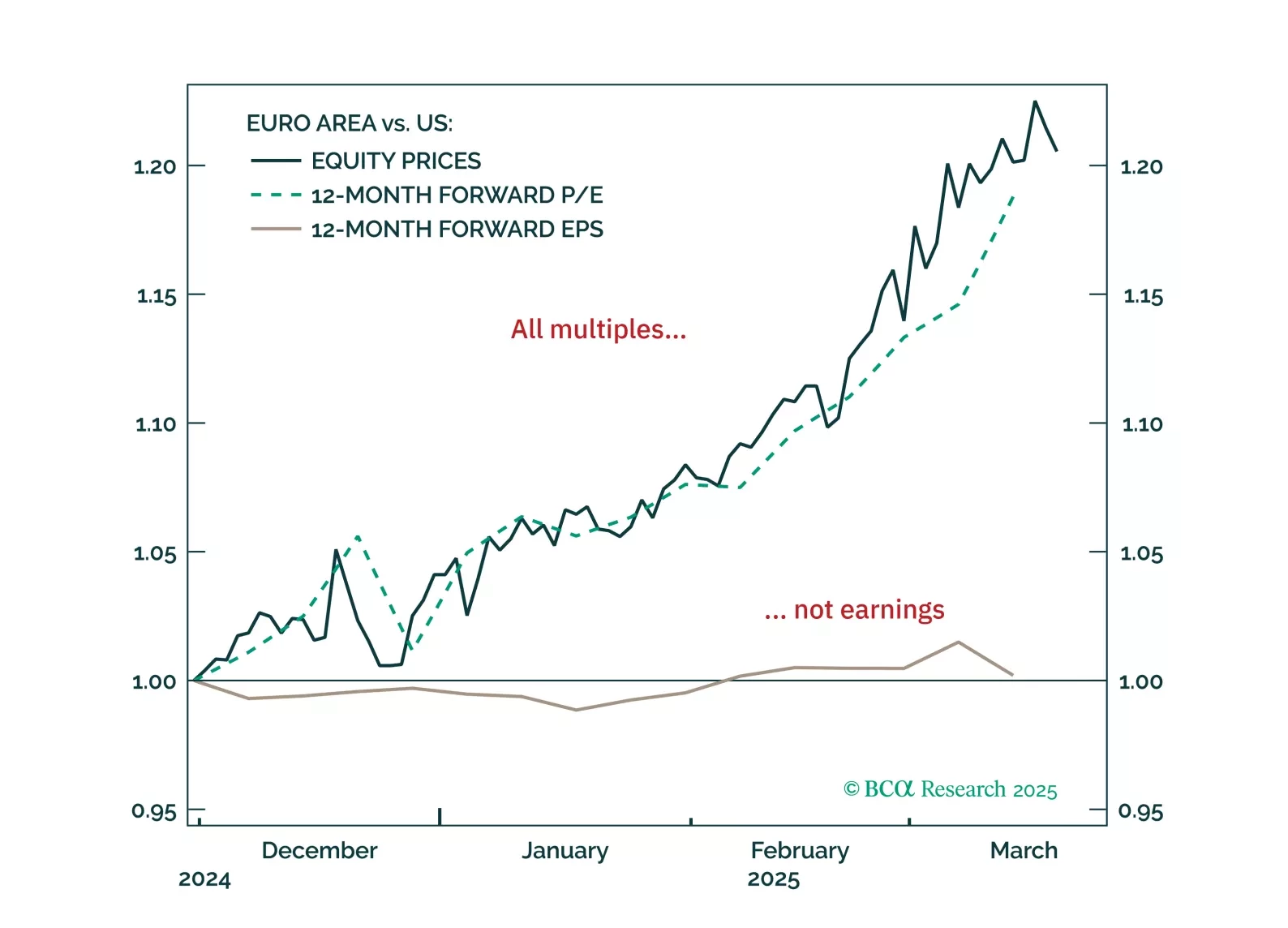
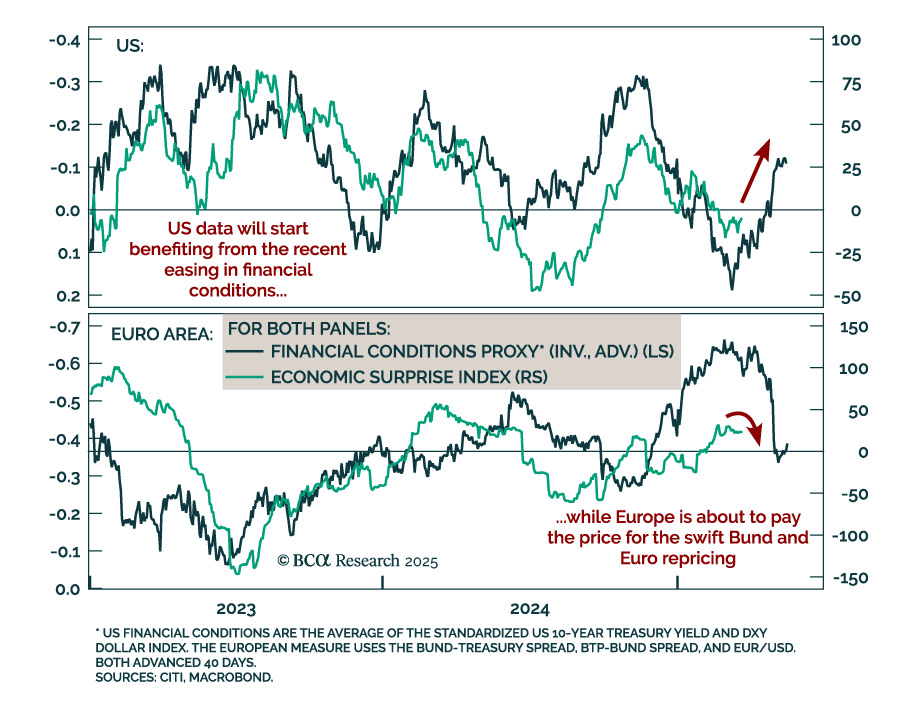
European equities have outperformed the US so far in 2025, especially after Euro Area economic surprises started outperforming as the US is starting to disappoint. The current leadership change between US and European assets reflects extremely one-sided…

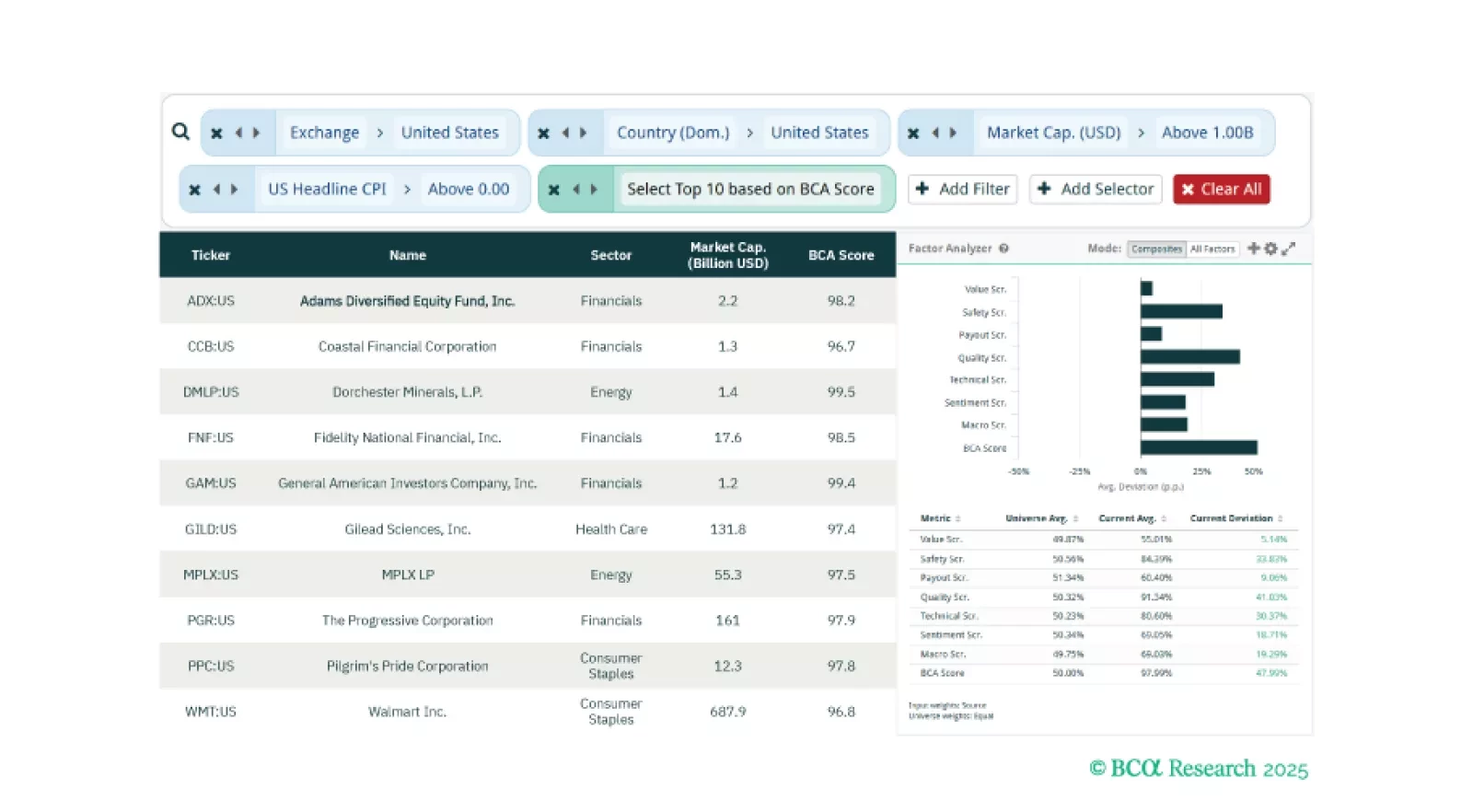
Despite the broad market being expensive and overbought, value plays across US equity sectors exist. Real Estate, Communication Services, and Consumer Staples offer cheaper valuations with higher quality attributes relative to history. 

German election results were roughly as expected, but Europe’s biggest economy suddenly just got more interesting. While the details of the governing coalition have yet to be finalized, Chancellor Merz has floated options to ease the “debt brake”, which…
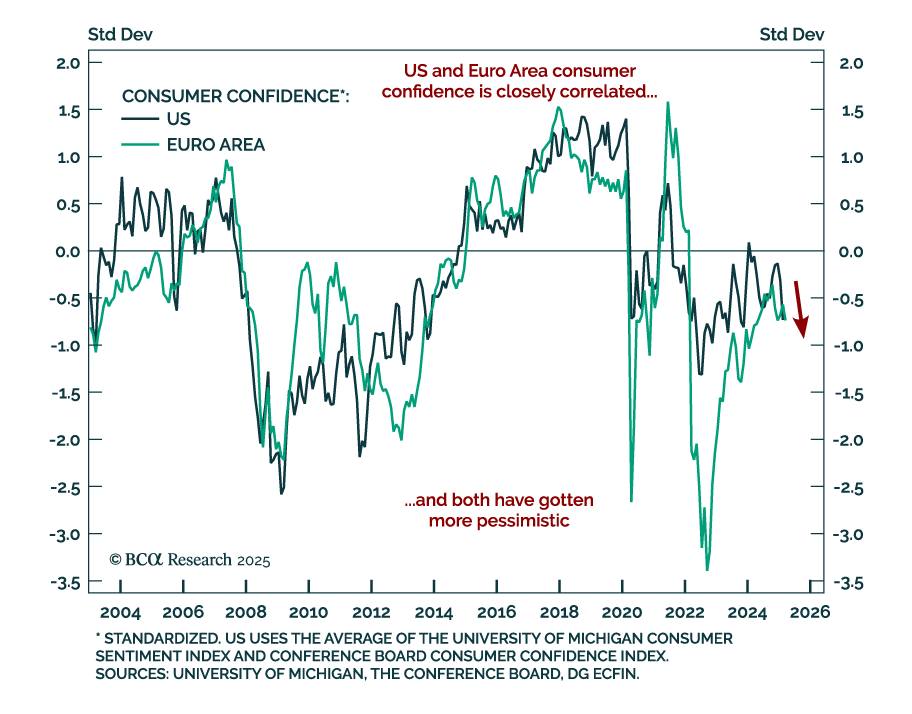
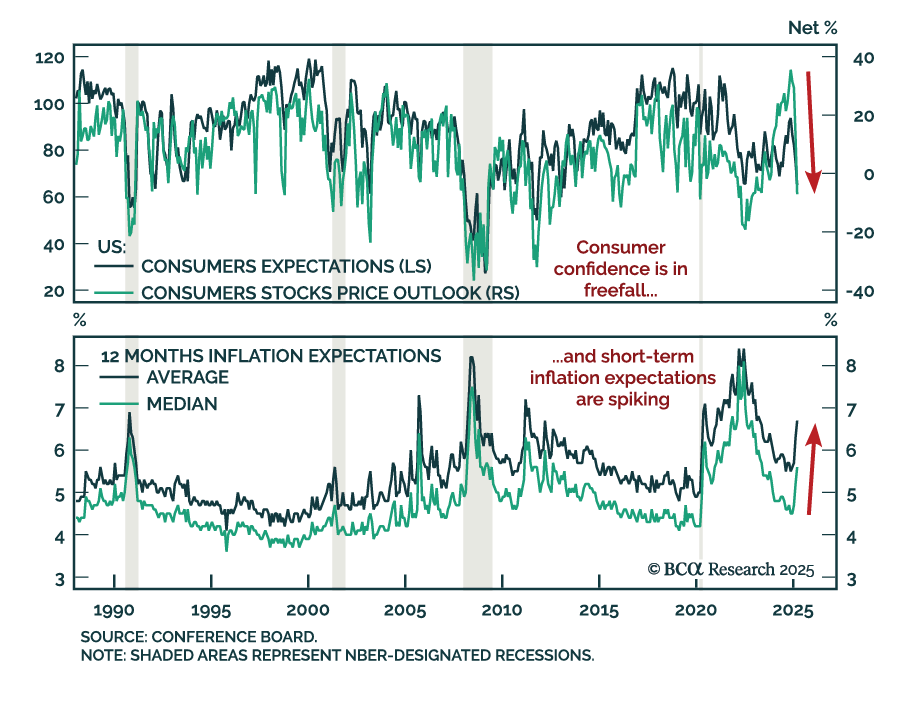
The February Conference Board Consumer Confidence index missed estimates for the third month in a row, falling to 98.3 from 105.3. Consumers’ assessment of both their current situation and their expectations worsened, with the latter falling close to 10…
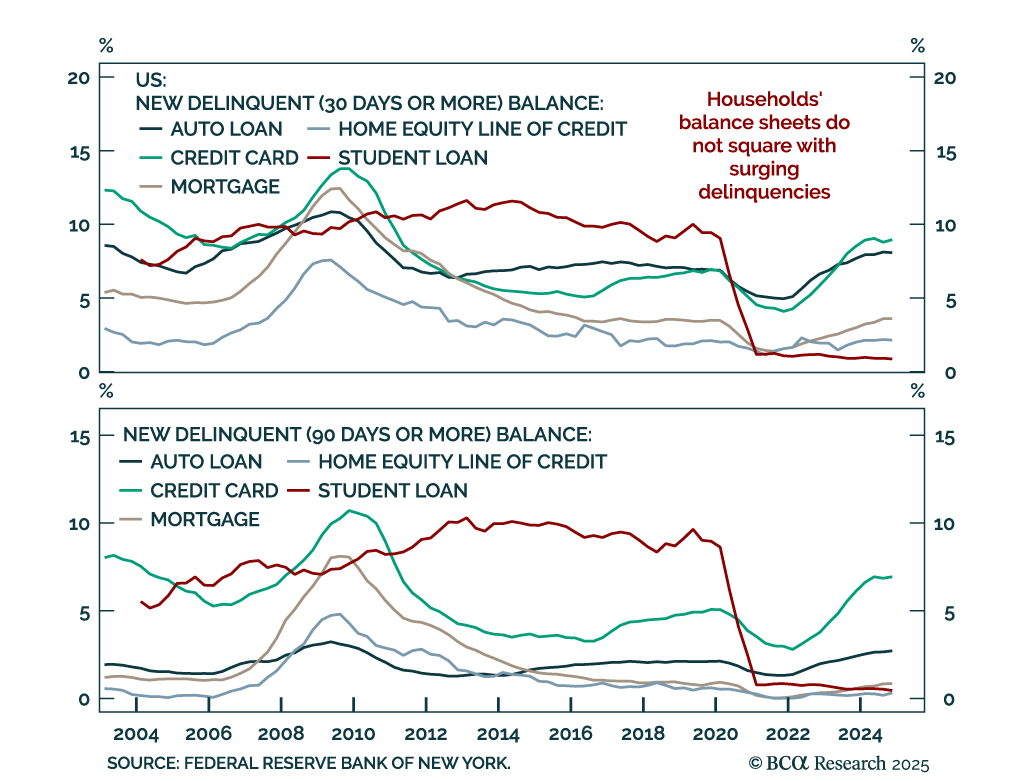
Our US Investment strategists visited Midwest clients, and provided a summary of their discussions with investors. Despite solid data, investors should focus on where the economy is headed rather than where it has been. Excess savings have been spent,…
The February Dallas Fed Manufacturing index missed estimates, contracting at -8.3 vs. expanding at 14.1 in January. The underlying details of the report were quite poor, with current and future measures of activity broadly ticking down after increasing since…

US growth has slowed in recent weeks. This can be seen in the weaker data on retail sales, consumer confidence, services PMIs, and a swath of housing releases (notably starts, existing home sales, homebuilder confidence, and stock prices). It can also be seen in the decline in GDP tracking estimates. The Atlanta Fed's GDPNow model projects growth of 2.3% in Q1, down from a peak of 3.9% on February 3. The Citi US Economic Surprise Index has also dipped into negative territory.