Iran
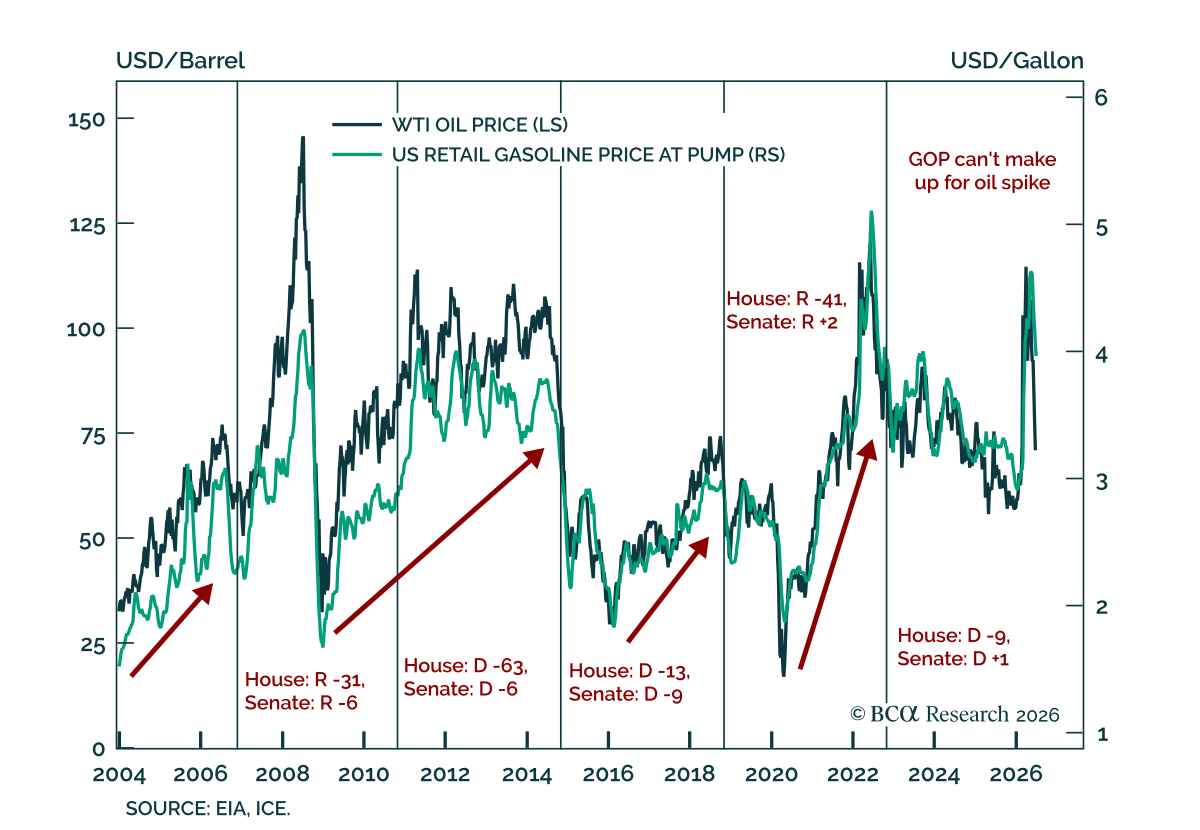
Our Geopolitical strategists expect geopolitical risk to ease modestly in Q3, with the notable exception of Russia, where tensions appear underrated. The US midterm election will force the Trump administration to delay major geopolitical and trade conflicts,…
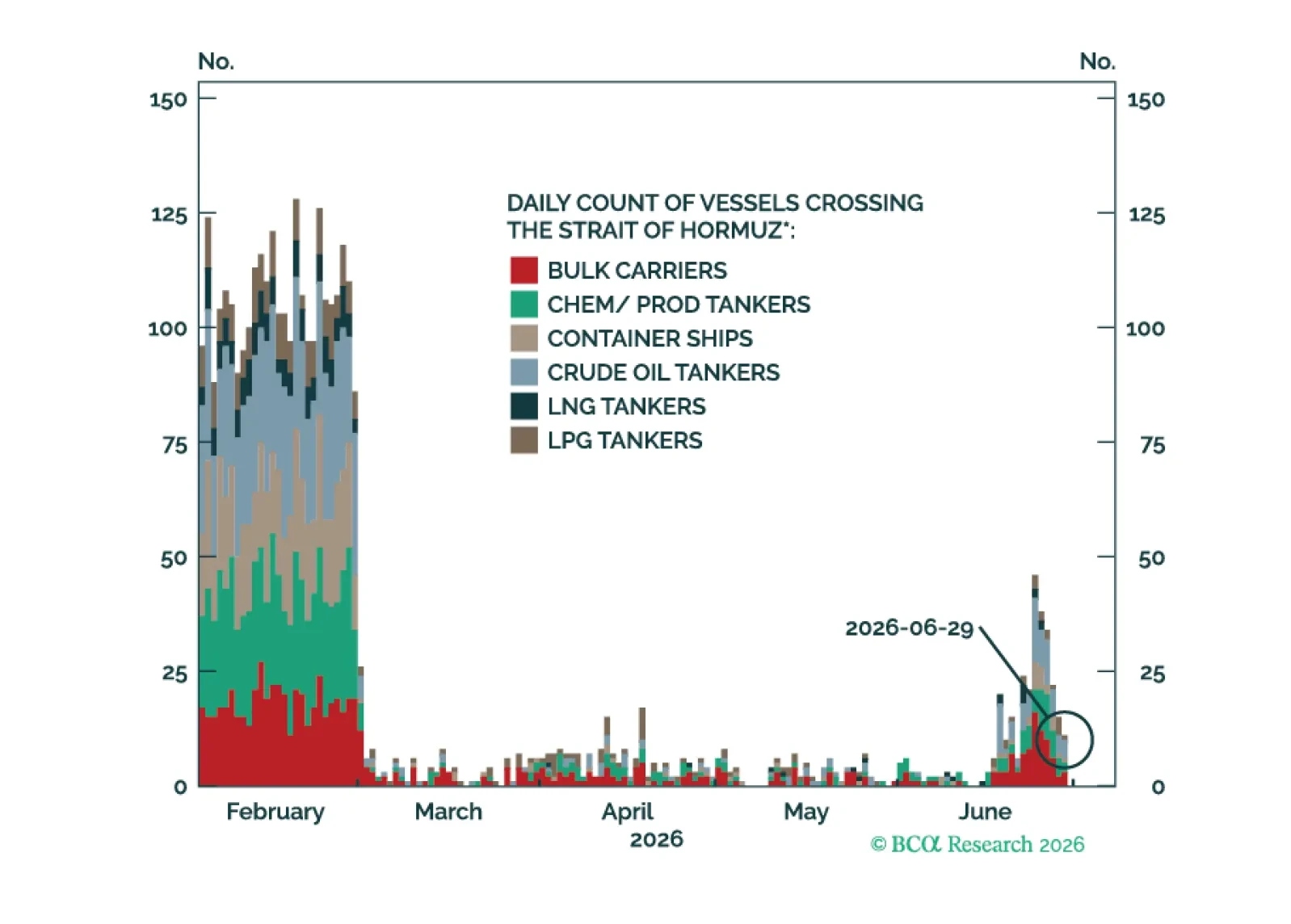
Geopolitical risk may rotate to Russia/Ukraine in Q3, while the Middle East could reignite in Q4.
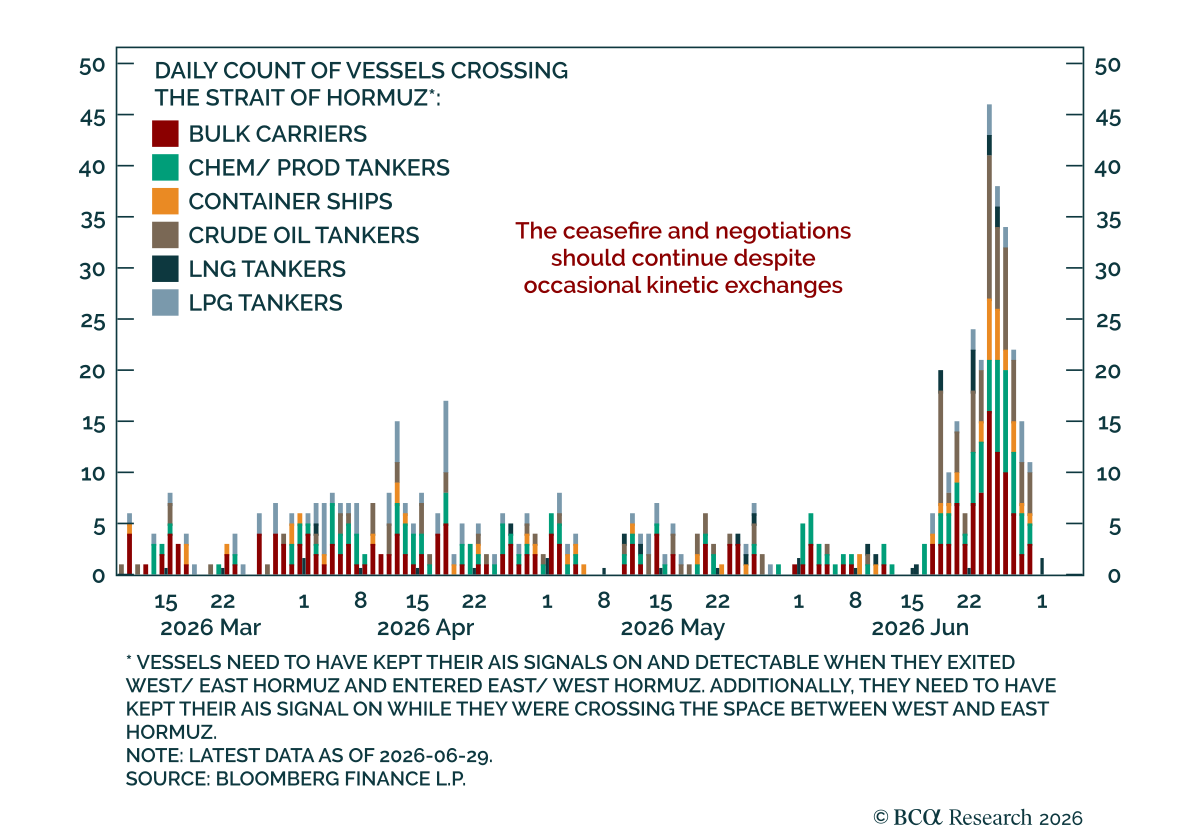
The weekend saw renewed kinetic exchanges in the Middle East, in a ceasefire that has thus far done as much firing as ceasing. The weekend exchange was a fairly controlled escalation. Iran attacked a Qatari container ship and oil tanker. The US retaliated…
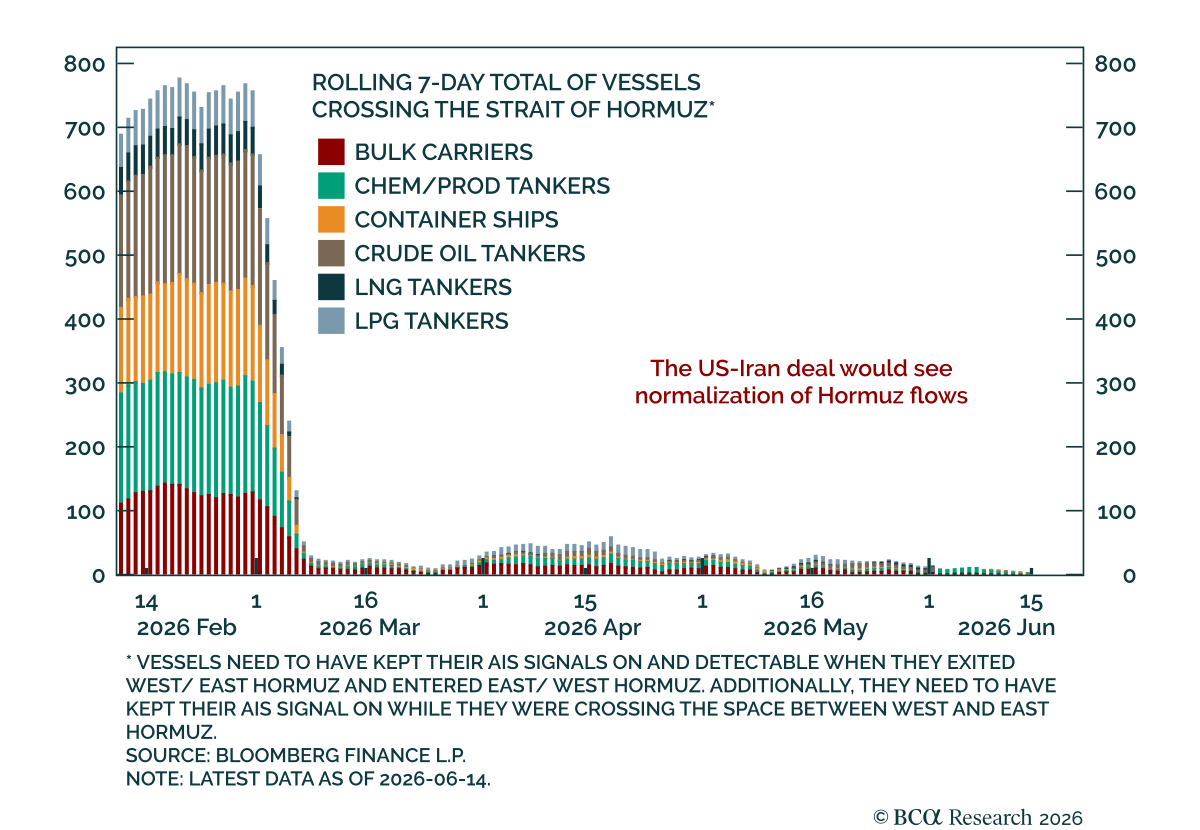
The US-Iran deal should hold in the near term, but its durability beyond the midterms looks doubtful. Our Geopolitical strategists see both sides as highly motivated to keep the deal alive for now. Even if there is another kinetic exchange or incident before…
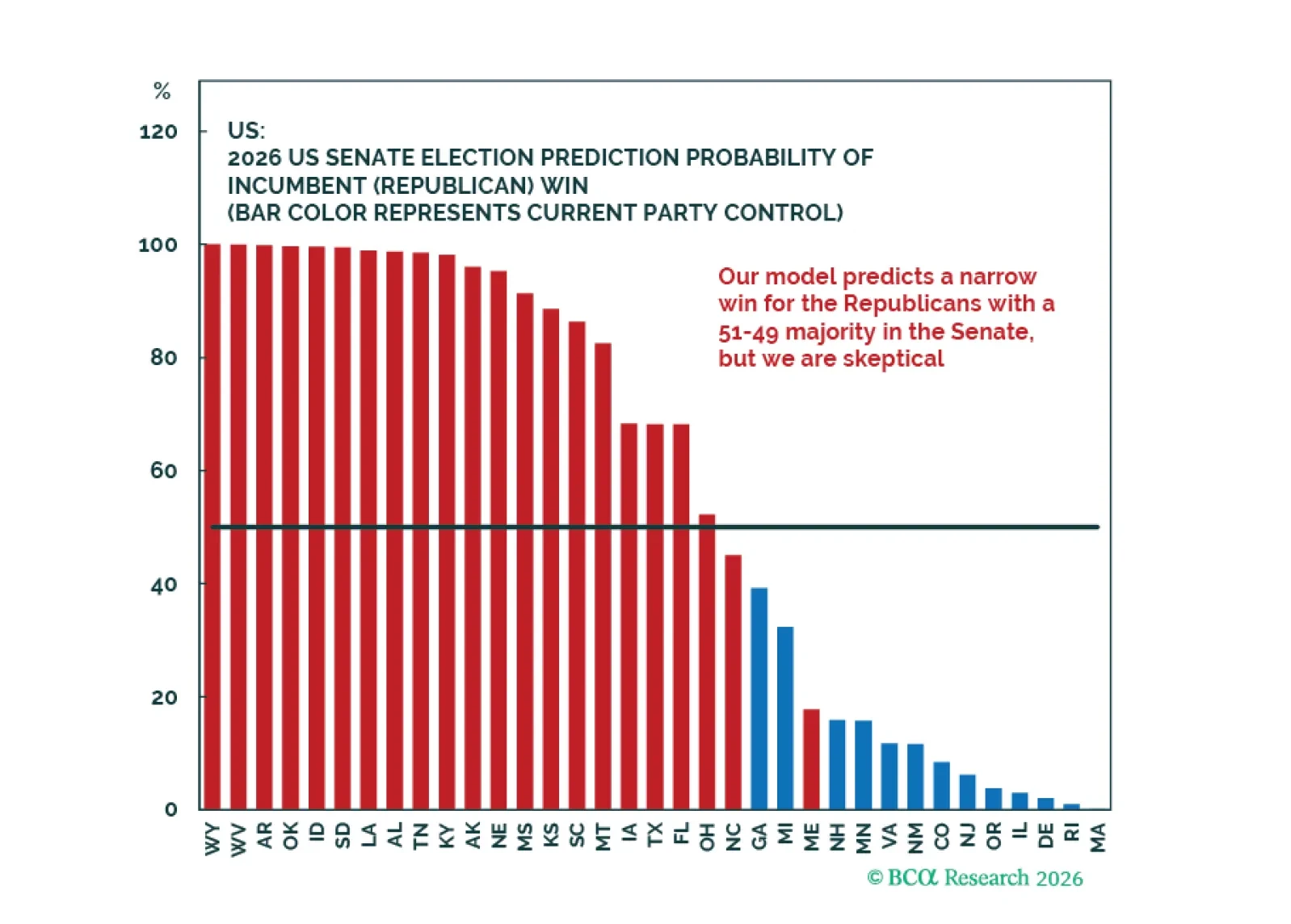
Midterms matter but geopolitics are the main risk this year. Markets will eventually refocus on geopolitical and inflation risks, raising Fed rate hike odds and supporting US dollar and stocks over global counterparts this year.
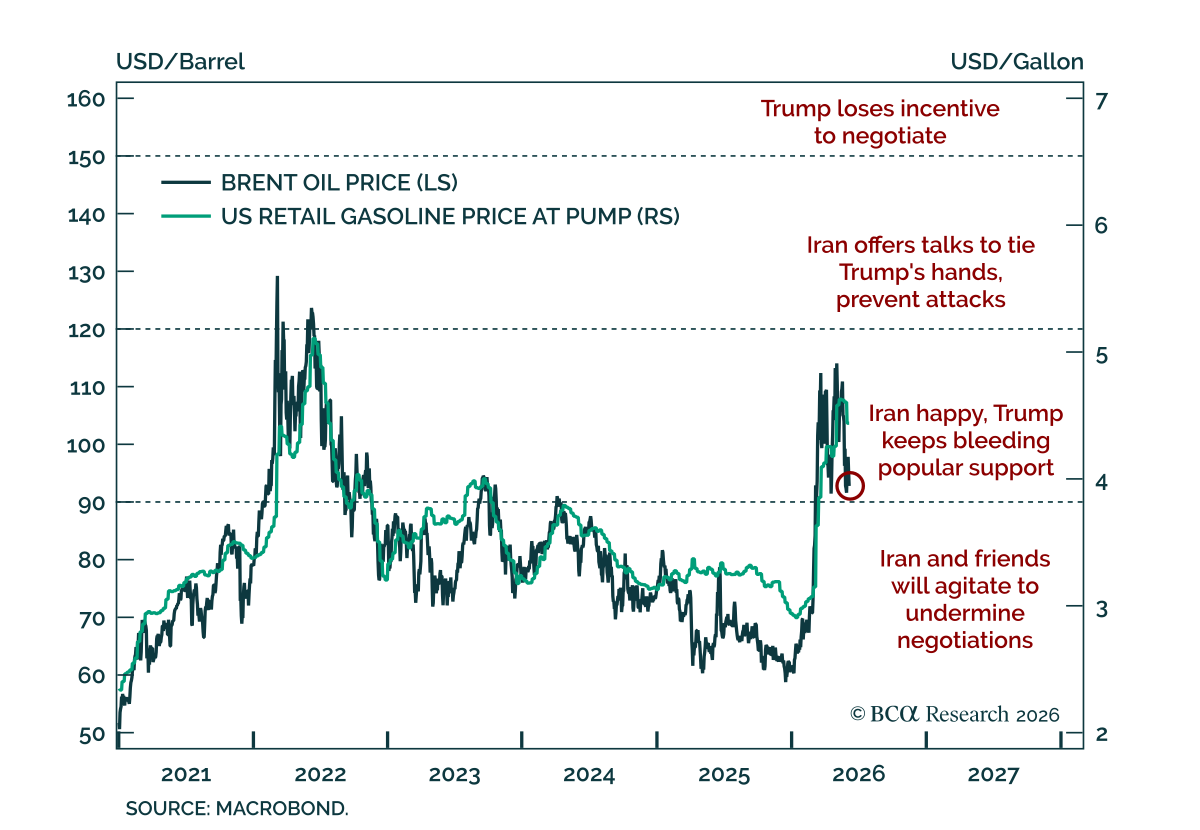
Our Geopolitical strategists believe the April 8 ceasefire remains broadly intact despite the latest Israel-Iran exchange and the absence of a formal US-Iran agreement. Both Washington and Tehran are using the current window to build negotiating leverage.…
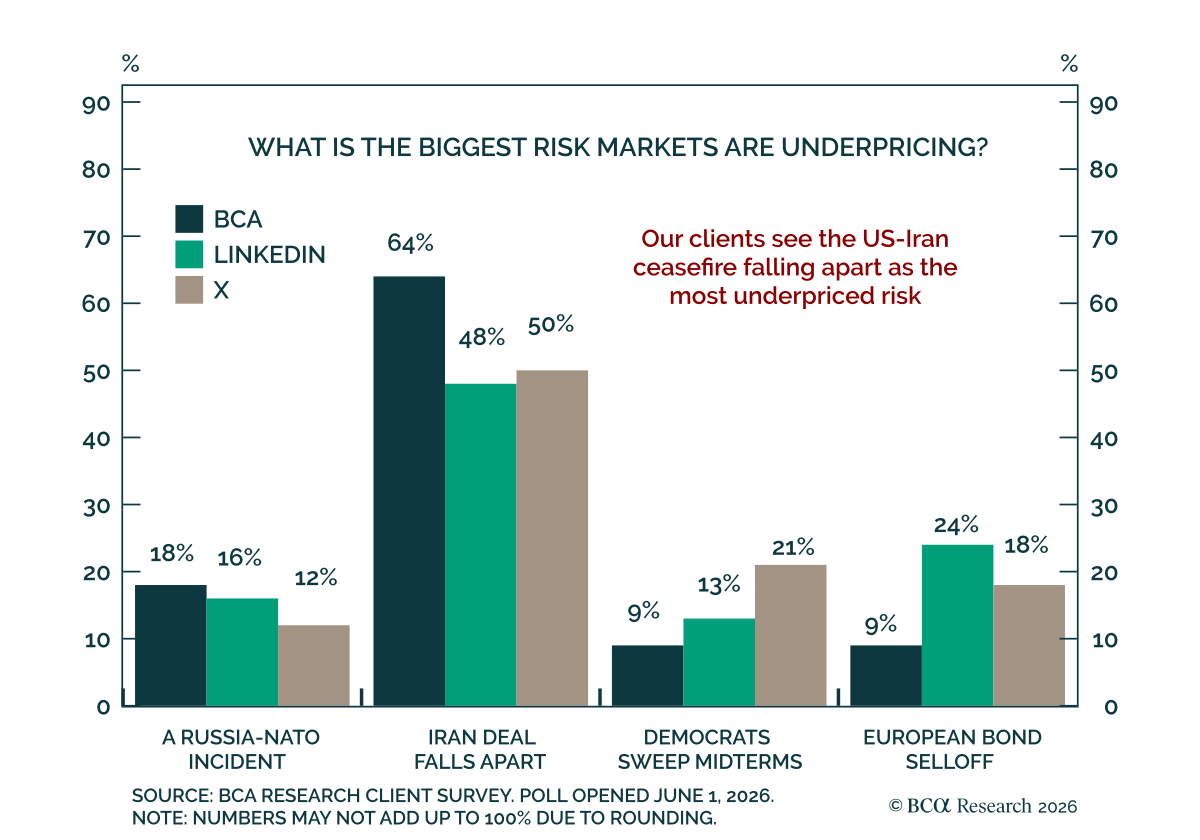
Our clients see geopolitics as the dominant underpriced risk. In this week's poll, we asked what risk markets are most underpricing. A US-Iran ceasefire collapsing drew the largest share of BCA clients at 64%, while a Russia-NATO incident ranked second at…
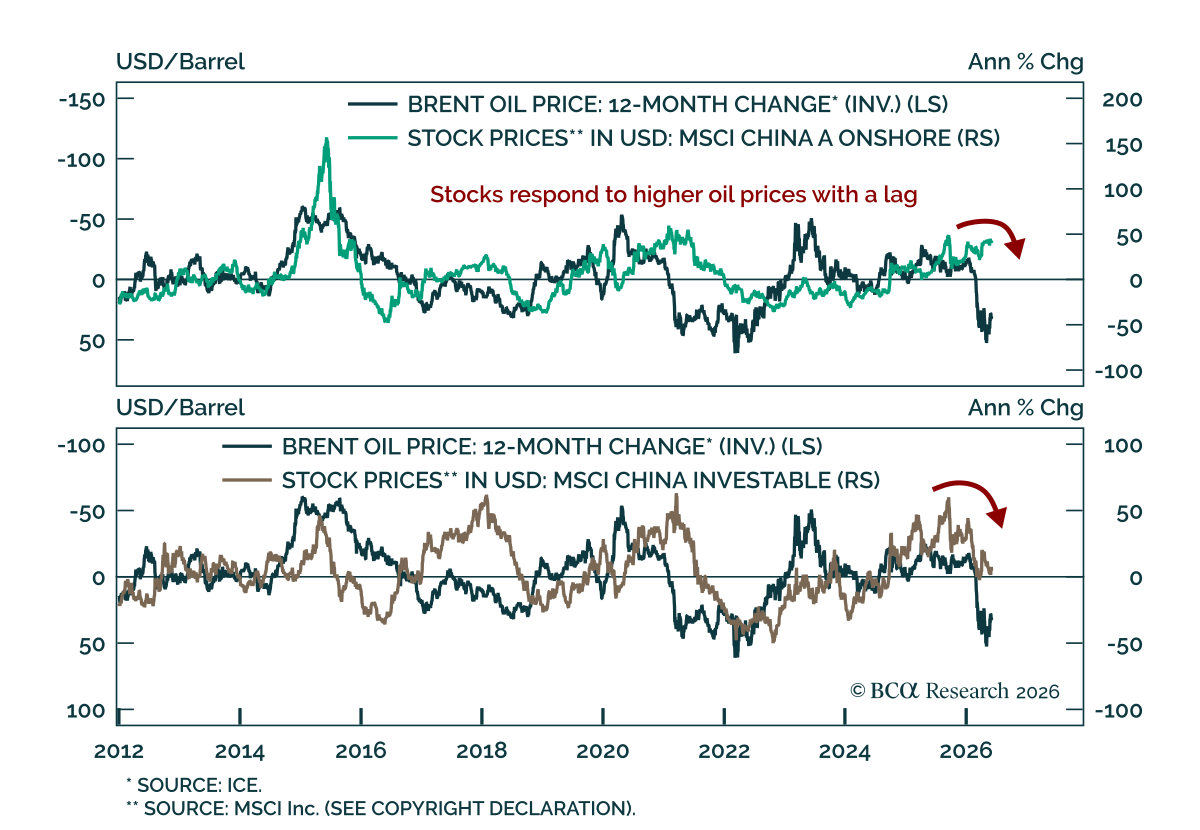
Our China strategists are staying on the sidelines in Chinese equities on an absolute basis, as downside pressure is likely to build in the months ahead. Elevated energy prices are compressing corporate profits just as global demand cools, a combination that…
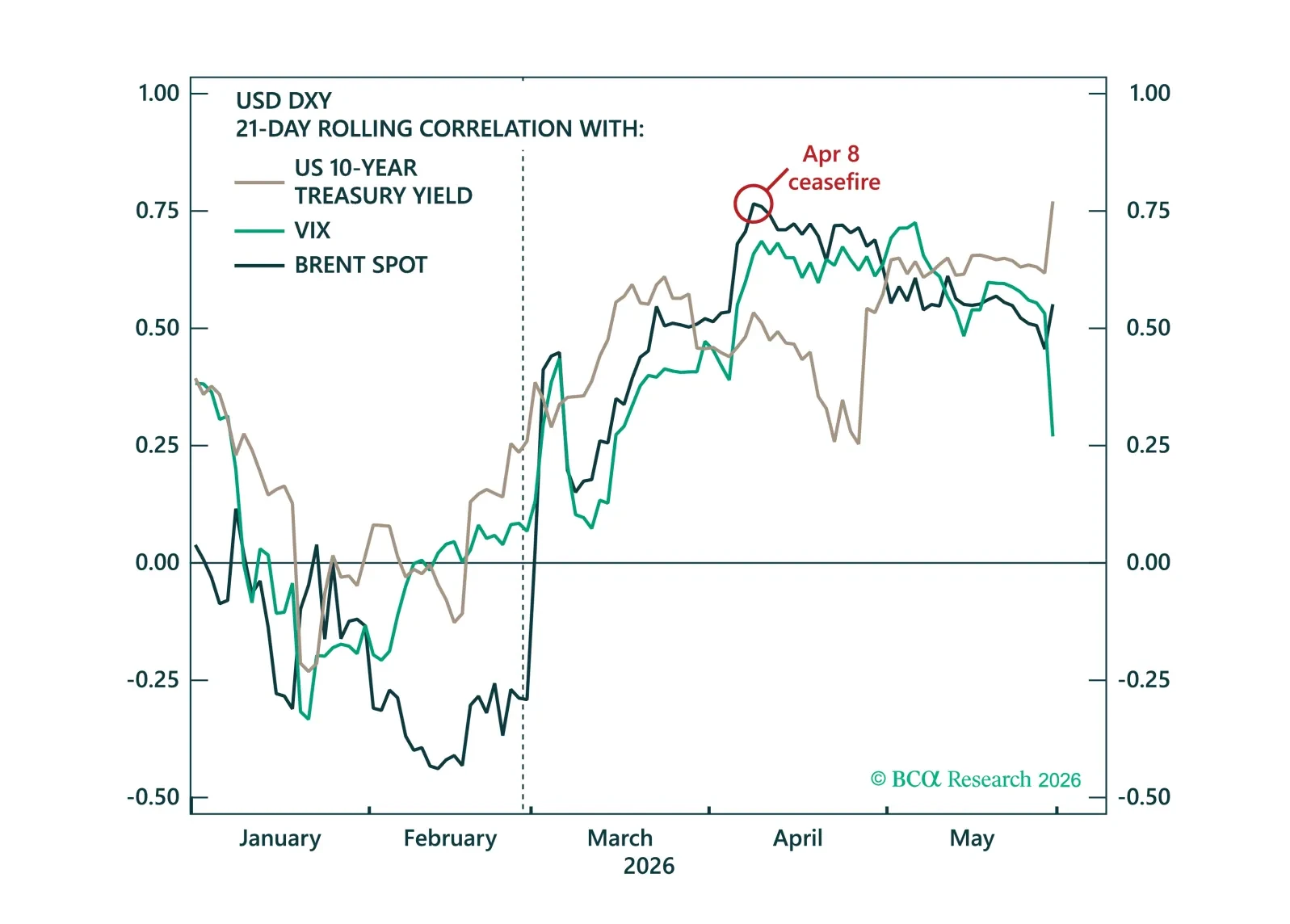
The dollar's muted response to the Iran conflict has led many to question its safe-haven appeal. We argue the opposite – the dollar's defensive properties have returned, while improving growth and rate dynamics should underpin further USD strength in the months ahead.
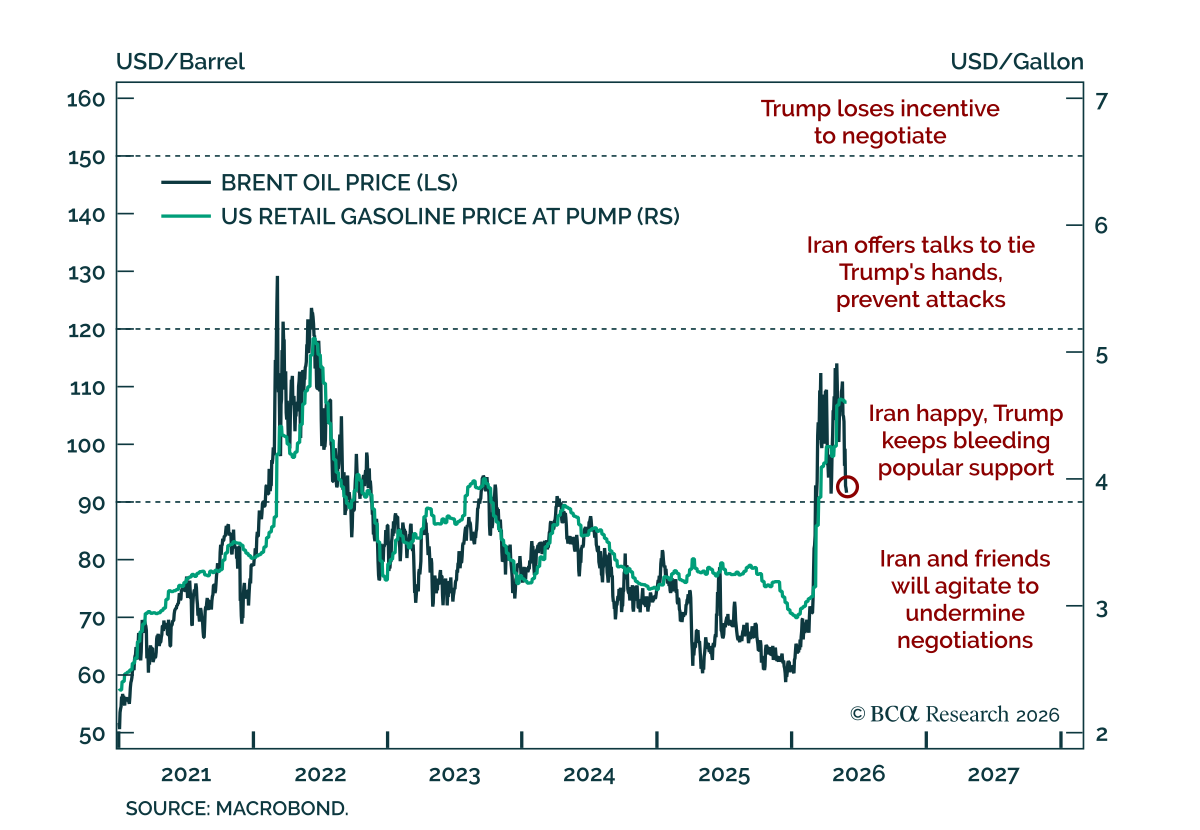
US-Iran talks are again under strain after Monday’s exchange of fire and Israel’s attacks in Lebanon, but the escalation cycle still remains negotiations-driven and at least a short-term deal that restarts shipping this summer remains likely. Oil rose more…