Europe
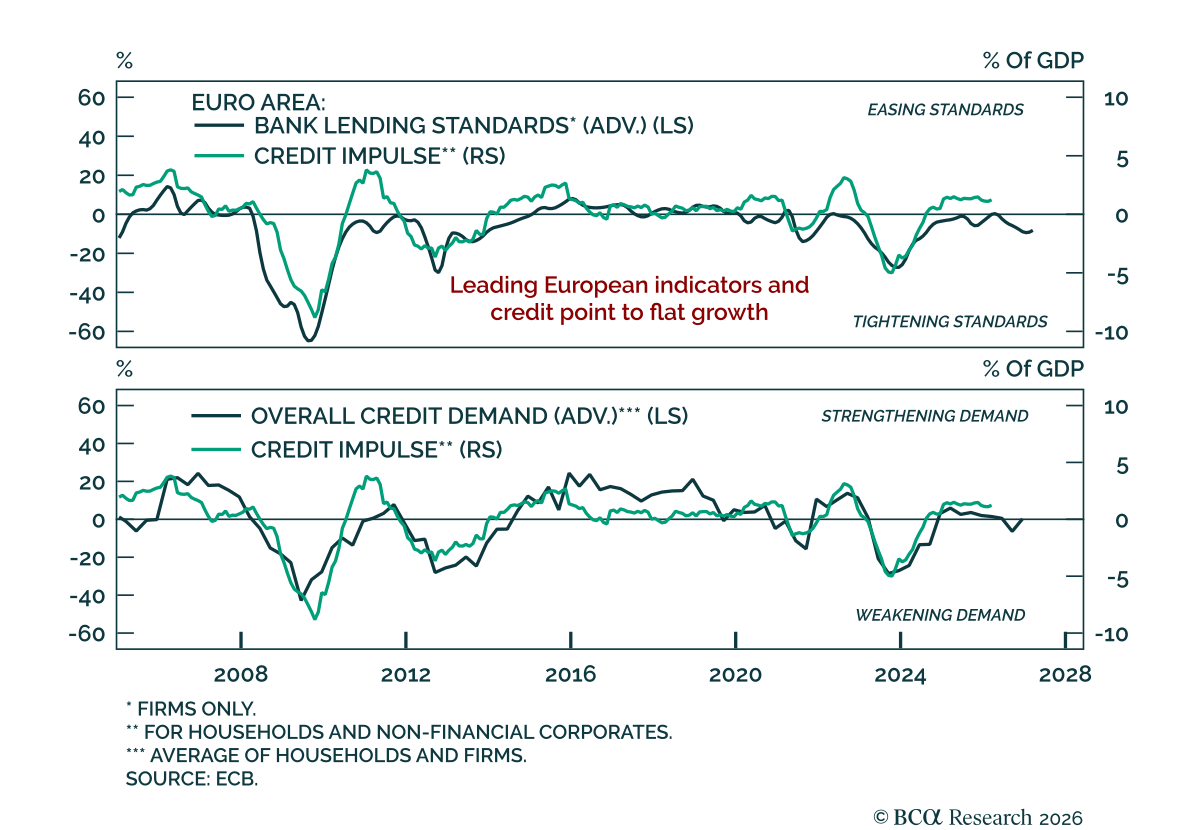
Leading European indicators continue to point to flat growth despite recent data beating expectations. Energy volatility and supply-chain uncertainty are weighing on the outlook and will continue to do so despite this week’s de-escalation in the Middle East,…
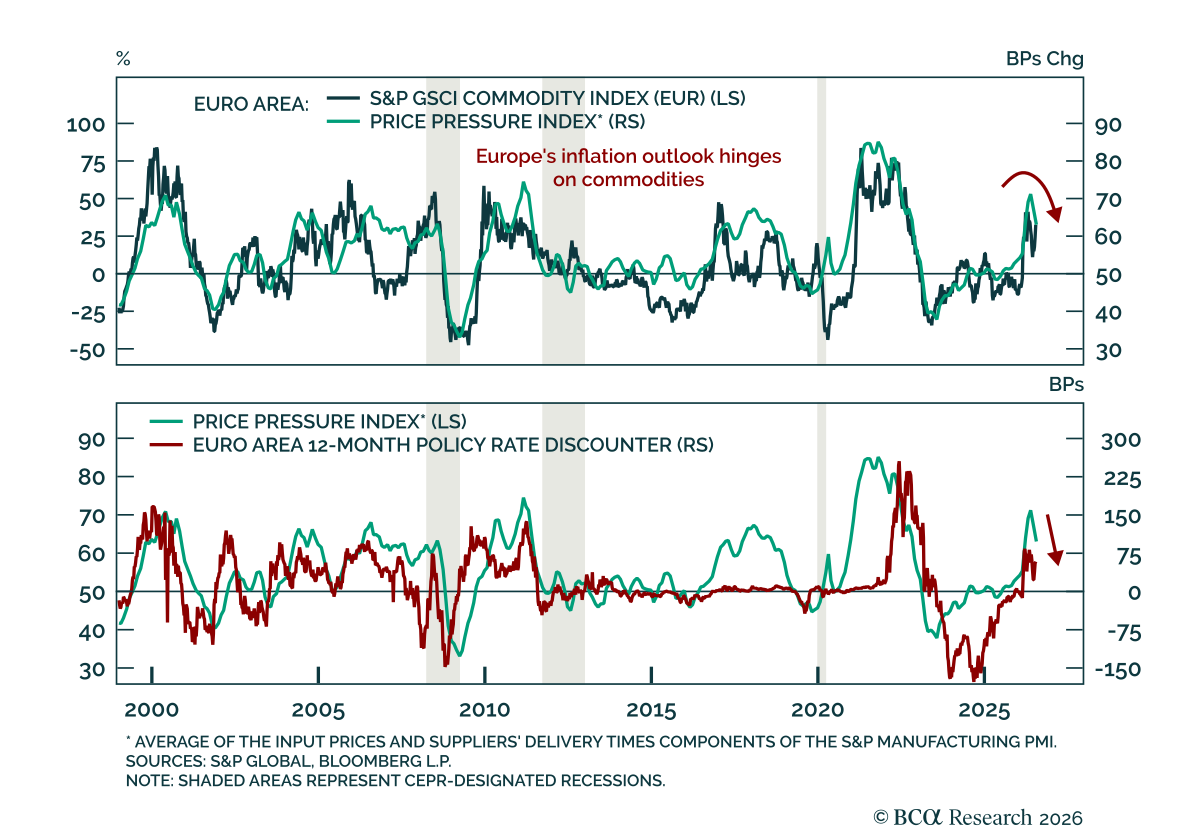
Euro area inflation accelerated in July, but it is too early to conclude that energy pressures are spreading across the broader price basket. Headline HICP rose to 2.9% y/y from 2.8% in June, while core inflation increased to 2.5% from 2.4%. Services…
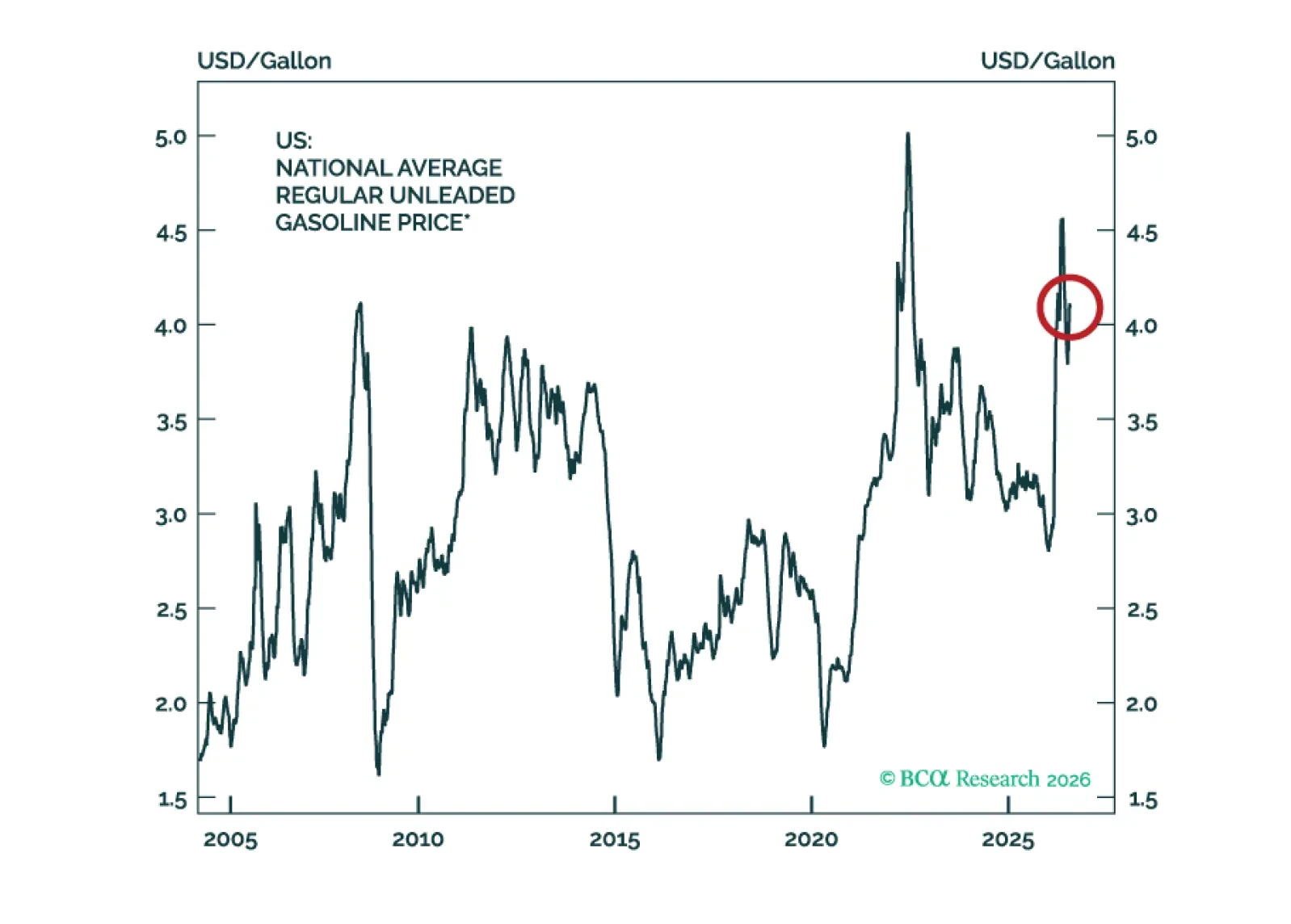
Section I outlines BCA’s views on the US-Iran conflict, Europe’s near-term outlook, the currency and bond selloffs in Japan and the early days of the Warsh Fed. In Section II, Roukaya, Matt, and Artem argue that the worst of gold's downturn is likely behind us. Real rates and the dollar — which have reasserted themselves as gold's primary drivers — are set to shift from headwinds to tailwinds for the metal.
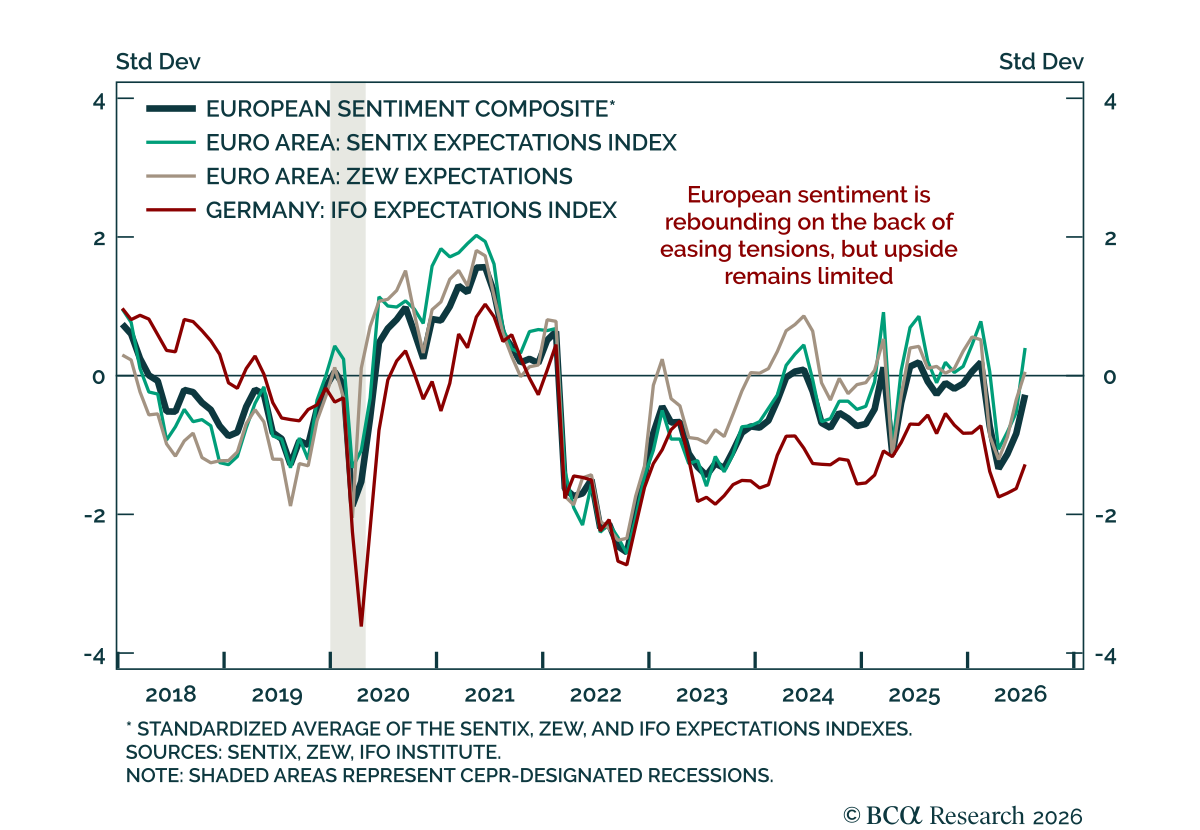
The July German IFO beat estimates, but the improvement was driven by expectations while current conditions weakened. The headline index rose on a jump in expectations, even as the current conditions index missed estimates and declined. The report is…
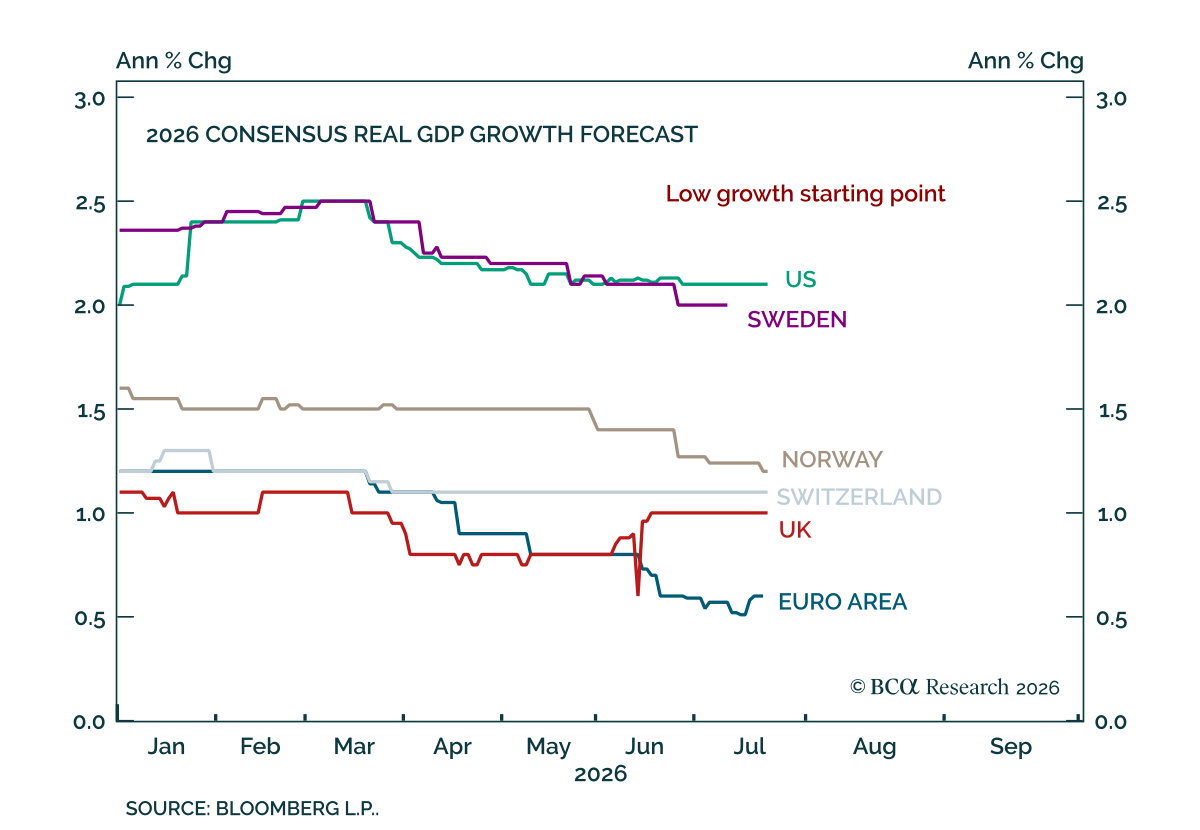
Our European and FICC strategists remain tactically constructive on Europe while urging investors to prepare portfolios for a more challenging medium-term environment. Rather than issue a single house forecast, our colleagues present two credible but…
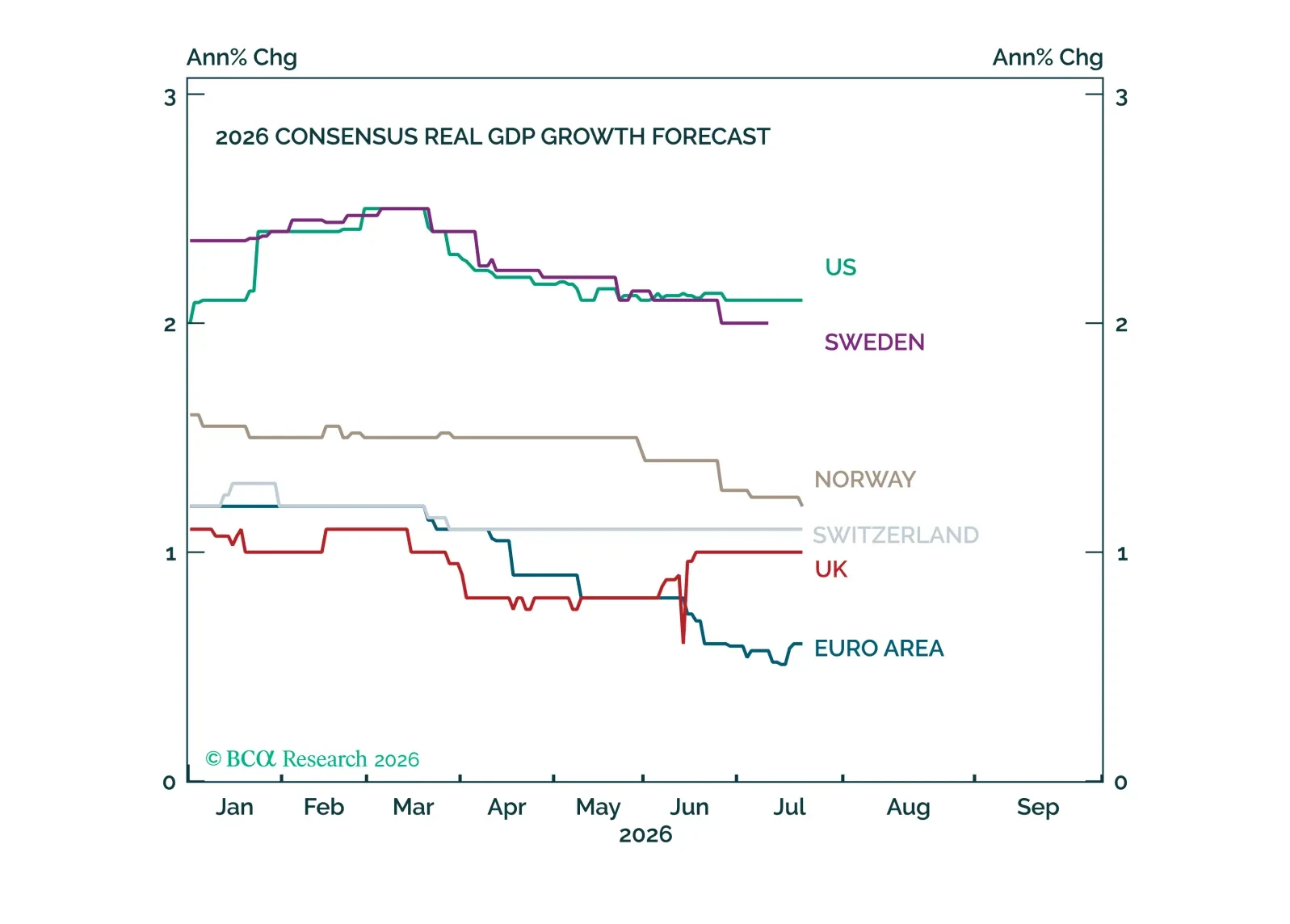
Europe faces a difficult macro backdrop, but whether it slips into recession remains finely balanced. We present two perspectives before translating them into investment implications.
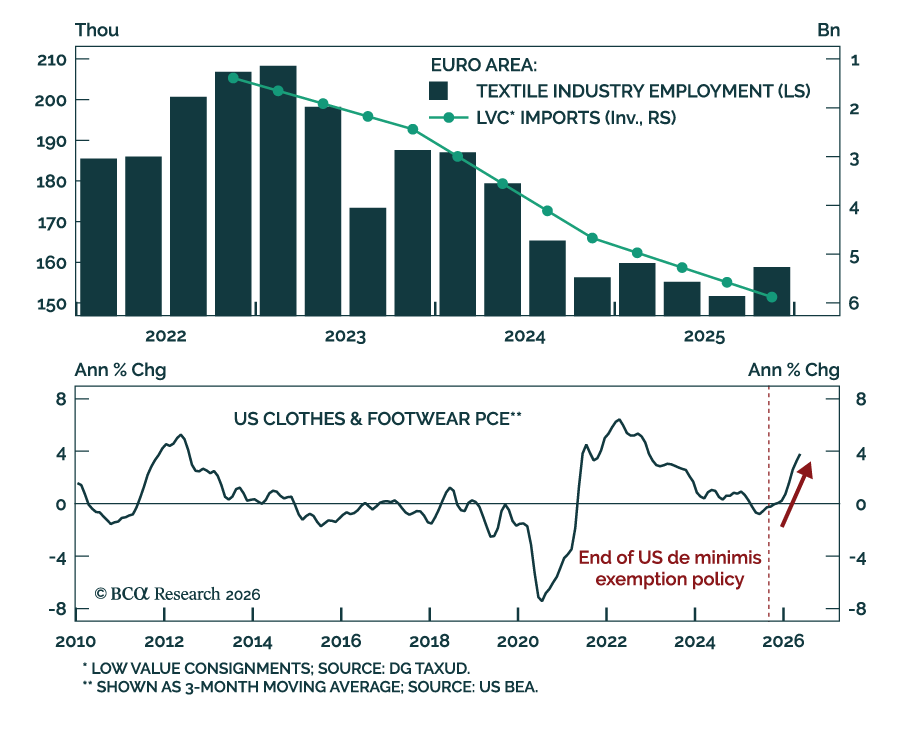
July marked the end of de minimis exemptions in Europe, pointing to the inflationary consequences of the retreat from globalization. Starting July 1st, the European Union imposed a flat €3 customs duty on all parcels valued under €150, ending a duty-free…

Our European investment strategists recommend reducing exposure to French risk assets as France heads into its most consequential election in decades. A strained budget, a paralyzed political system, and a turbulent geopolitical backdrop are pushing voters…
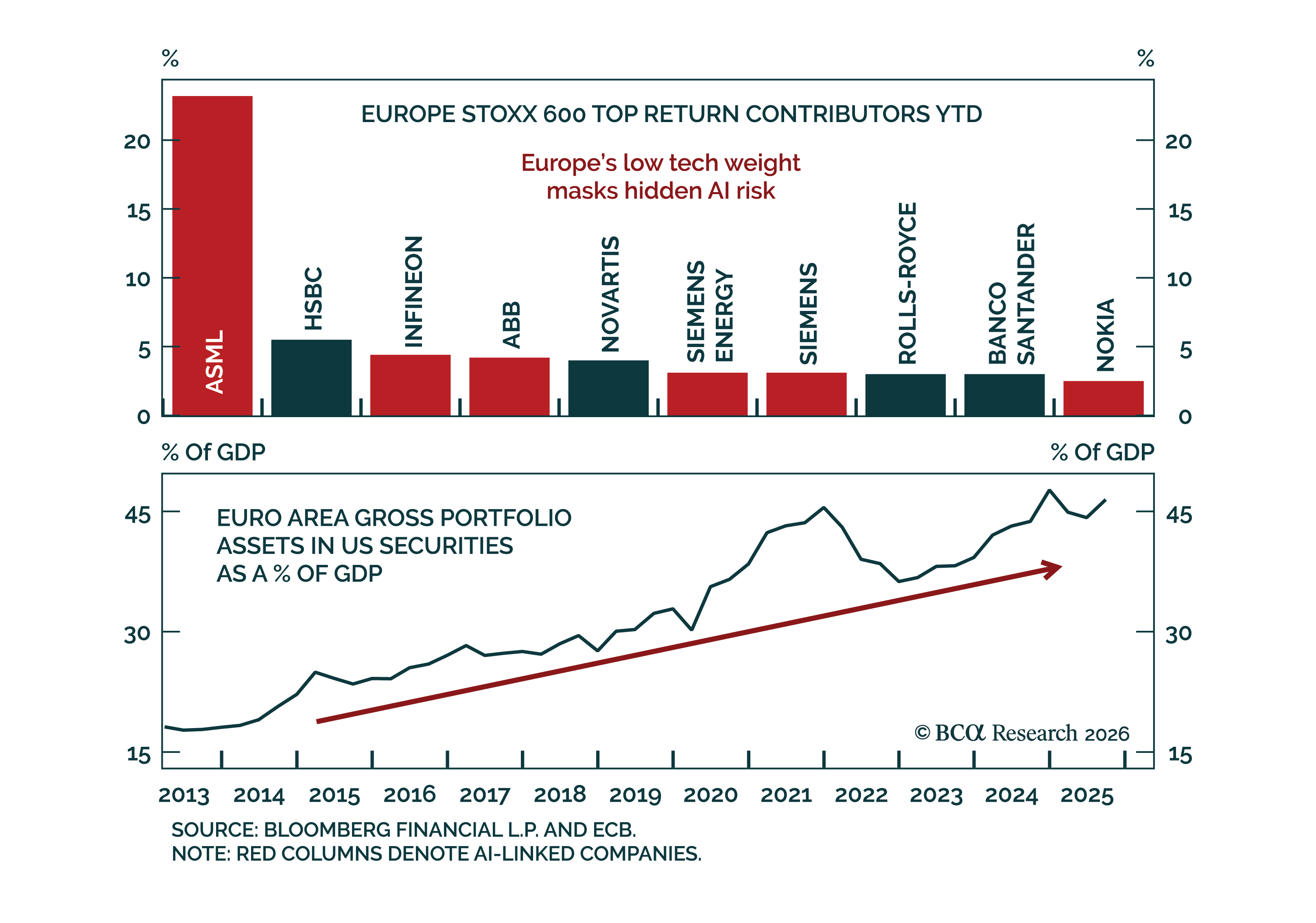
Europe is far less insulated from the AI trade than sector weights suggest. The Stoxx 600 has hit record highs on the back of earnings upgrades, improving macro data, and a rotation into laggards like healthcare, staples, financials, and domestic…

Algeria may offer the European Union some relief from its natural gas supply squeeze. Algeria has become the EU’s third-largest natural gas supplier, delivering around 40 billion cubic meters in 2025, accounting for roughly 14% of total EU imports. The timing…